![2-(2,6-Diisopropylphenyl)-3,3-dimethyl-2-azaspiro[4.5]dec-1-en-2-ium Hydrogen Dichloride (CAS 1141464-90-5) - TCI D5596 - AMI Scientific](http://amiscientific.com/cdn/shop/files/TCI2510D5596.jpg?v=1767108948&width=1946)
![2-(2,6-Diisopropylphenyl)-3,3-dimethyl-2-azaspiro[4.5]dec-1-en-2-ium Hydrogen Dichloride (CAS 1141464-90-5) - TCI D5596 - AMI Scientific](http://amiscientific.com/cdn/shop/files/TCI2510D5596.jpg?v=1767108948&width=1445)
TCI D5596, 2-(2,6-Diisopropylphenyl)-3,3-dimethyl-2-azaspiro[4.5]dec-1-en-2-ium Hydrogen Dichloride with CAS number 1141464-90-5, is a carbene precursor salt belonging to the CAAC family, that is, cyclic alkyl amino carbenes. The compound falls under the category of carbon-donor ligands for catalysis. In this salt form the carbene itself is not yet present; researchers must deprotonate the salt using a strong base to generate the free carbene, which is then bound to a transition metal centre such as palladium, gold, copper, nickel, or ruthenium. The resulting complexes are what serve as catalysts in a wide range of organic transformations carried out in the laboratory.
The characteristic advantage of CAAC ligands lies in the combination of very strong electron-donating ability and substantial steric bulk. Unlike ordinary N-heterocyclic carbenes, which carry two nitrogen atoms, a CAAC has only one nitrogen and one quaternary carbon, making it simultaneously more strongly donating and more capable of accepting back-donation from the metal. The metal–carbene bond that forms is therefore stronger, and the resulting catalyst complexes tend to be more robust. The 2,6-diisopropylphenyl group on nitrogen and the spiro cyclohexane framework together define the steric environment around the metal centre.
In Indonesian laboratories, this material is typically handled in university research groups, institutional chemistry laboratories, and industrial R&D units engaged in synthetic and catalytic chemistry. It is used at the bench scale, where the precursor salt is deprotonated in situ or isolated as the free carbene before complexation with the chosen metal precursor. Work of this kind is normally performed by researchers already familiar with air-sensitive and moisture-sensitive technique, since both the deprotonation step and the resulting carbene complexes demand careful handling.
Advantages (TCI brochure)
- Stronger σ-donating property than NHC
- Applicable to complexation with various metals
- CAAC-Rh complex efficiently catalyzes hydrogenation
TCI brochures (PDF)
- Rhodium Catalyst for cis-Selective Hydrogenation of Aromatic Rings 2026-01-05 · p. 1
- Cyclic Alkyl Amino Carbene (CAAC) Precursors 2025-12-23 · p. 1
- N-Heterocyclic Carbene (NHC) Ligands and Metal Complexes 2026-02-10 · p. 1
- Ligands 2025-12-01 · p. 9
Related TCI products
- TCI D3611 250285-32-6 1,3-Bis(2,6-diisopropylphenyl)imidazolium Chloride
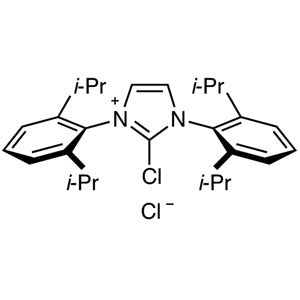
- TCI C3429 1228185-09-8 2-Chloro-1,3-bis(2,6-diisopropylphenyl)-1H-imidazolium Chloride
- TCI B3157 258278-25-0 1,3-Bis(2,6-diisopropylphenyl)imidazolinium Chloride
- TCI M2791 889617-36-1 3,3'-Methylenebis[1-(2,6-diisopropylphenyl)-3-imidazolium Bromide]
- TCI B3465 244187-81-3 1,3-Bis(2,6-diisopropylphenyl)imidazol-2-ylidene
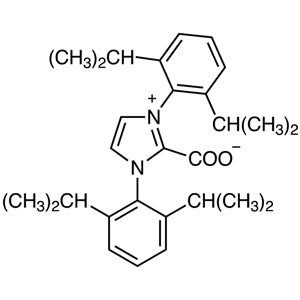
- TCI B5603 917604-39-8 1,3-Bis(2,6-diisopropylphenyl)imidazolium-2-carboxylate
- Preparation of transition metal carbene complexes: the salt is deprotonated with a strong base to release the free CAAC, which then coordinates directly to palladium, gold, copper, nickel, or ruthenium precursors.
- Development of catalysts for organic transformations: complexes derived from this ligand are employed as catalysts across the range of organic reactions studied in synthetic laboratories, making the precursor a starting point for catalyst screening.
- Studies of metal–ligand bonding: because CAAC combines strong donation with enhanced back-donation, the ligand is useful for investigating how bond strength at the metal centre influences the behaviour of the resulting complex.
- Work requiring sterically demanding ligands: the 2,6-diisopropylphenyl substituent on nitrogen and the spiro cyclohexane framework provide the steric bulk needed when the metal centre must be protected by a crowded coordination environment.
- Comparative studies against N-heterocyclic carbenes: with one nitrogen and one quaternary carbon rather than two nitrogens, this ligand offers a direct point of comparison for research groups evaluating classical NHC systems alongside CAAC alternatives.
From the TCI brochure
- CAAC-Rhodium Complexation
- CAAC-Rhodium Complex Catalyzed Hydrogenation
| Brand | TCI |
|---|---|
| CAS number | 1141464-90-5 |
| Molecular formula | — |
| Purity | — |
| Category | Chemistry > Catalysis and Inorganic Chemistry > Carbon-Donor Ligands [Catalysis] |
| Pack sizes | available in the research-scale pack sizes offered by the manufacturer for this catalogue item |
| Physical form | — |
| Storage | — |
- Product code: D5596
- Chemical name: 2-(2,6-Diisopropylphenyl)-3,3-dimethyl-2-azaspiro[4.5]dec-1-en-2-ium Hydrogen Dichloride
Store the container tightly closed in a cool, dry place, away from moisture and from sources of heat or ignition. Keep the material in its original manufacturer container, or transfer it to a chemically compatible, well-sealed vessel; where the work requires it, storage and handling under an inert atmosphere is advisable, since carbene chemistry is generally sensitive to air and moisture. Handle the compound in a functioning fume hood while wearing appropriate personal protective equipment, including safety goggles, chemical-resistant gloves, and a laboratory coat. Strong bases used in the deprotonation step require their own precautions. Always consult the manufacturer's safety data sheet before use, and keep the compound separated from incompatible materials.
References cited in the TCI brochure
- Mario P. Wiesenfeldt. Hydrogenation of fluoroarenes: Direct access to all- cis -(multi)fluorinated cycloalkanes Science, 2017. doi:10.1126/science.aao0270
Product Categories
- Catalysis and Inorganic ChemistryCarbon-Donor Ligands [Catalysis]Imidazolinium Salts, Cyclic Alkyl Amino Carbene (CAAC) Pecursors [Carbon-Donor Ligands]
- Catalysis and Inorganic ChemistryCross-coupling Reaction using Transition Metal Catalysts [C-C Bond Formation]N-Heterocyclic Carbene (NHC) Ligands [Cross-coupling Reaction using Transition Metal Catalysts]
- Synthetic ReagentsC-C Bond Formation [Synthetic Reagents]Cross-coupling Reaction using Transition Metal Catalysts [C-C Bond Formation]
Produk Terkait
-
1,3-Bis(2,6-diisopropylphenyl)imidazoliumChloride TCI D3611
Regular price From Rp 1.008.000,00Regular price -
2-Chloro-1,3-bis(2,6-diisopropylphenyl)-1H-imidazoliumChloride TCI C3429
Regular price Rp 5.089.350,00Regular price -
1,3-Bis(2,6-diisopropylphenyl)imidazoliniumChloride TCI B3157
Regular price From Rp 1.193.850,00Regular price -
3,3'-Methylenebis[1-(2,6-diisopropylphenyl)-3-imidazoliumBromide] TCI M2791
Regular price From Rp 4.531.800,00Regular price -
1,3-Bis(2,6-diisopropylphenyl)imidazol-2-ylidene TCI B3465
Regular price From Rp 3.578.400,00Regular price -
1,3-Bis(2,6-diisopropylphenyl)imidazolium-2-carboxylate TCI B5603
Regular price Rp 2.625.000,00Regular price -
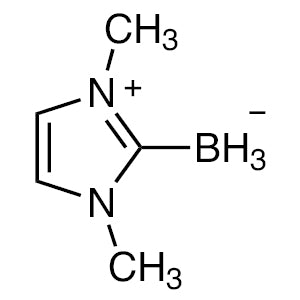
(1,3-Dimethyl-1H-imidazol-3-ium-2-yl)trihydroborate TCI D5679
Regular price Rp 3.683.400,00Regular price -
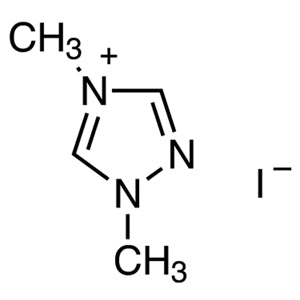
1,4-Dimethyl-1,2,4-triazoliumIodide TCI D3962
Regular price From Rp 1.431.150,00Regular price


![889617-36-1 3,3'-Methylenebis[1-(2,6-diisopropylphenyl)-3-imidazolium Bromide] - AMI Scientific](http://amiscientific.com/cdn/shop/files/TCI2510M2791.jpg?v=1767127228&width=533)