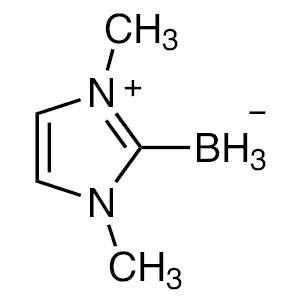
(1,3-Dimethyl-1H-imidazol-3-ium-2-yl)trihydroborate is a chemical compound widely used in catalytic reactions and organic synthesis within laboratory settings. This material plays a crucial role in facilitating chemical transformations by acting as a ligand or catalyst in various processes. Its unique structure allows for strong interactions with transition metals, making it a valuable component in both homogeneous and heterogeneous catalysis. Due to its reactivity and stability under controlled conditions, it is frequently employed in research aimed at improving reaction efficiency and selectivity.
The compound’s chemical properties, particularly the presence of boron in its structure, contribute to its reactivity and versatility. This makes it an ideal choice for applications requiring high reactivity and metal-binding capabilities. Its stability in specific conditions ensures consistent performance in laboratory experiments, while its sensitivity to moisture and air necessitates careful handling. These characteristics make it a preferred option for researchers seeking reliable and effective catalytic agents.
In Indonesian laboratories, (1,3-Dimethyl-1H-imidazol-3-ium-2-yl)trihydroborate is commonly used in organic chemistry and catalysis research. It is a key material for studies involving hydroformylation, oxidation, and the synthesis of heterocyclic compounds. Many research institutions and universities in Indonesia rely on this compound for experiments that demand high reactivity and selectivity in catalytic processes. Its application is central to advancing chemical research in the region.
- Organic synthesis reactions benefit from this compound due to its ability to act as a ligand and enhance catalytic efficiency in complex chemical transformations.
- Catalytic hydrogenation processes utilize this material because of its strong interaction with transition metals, which improves reaction rates and selectivity.
- Oxidation reactions are supported by this compound’s reactivity, allowing for more controlled and efficient oxidation pathways in laboratory settings.
- Hydroformylation reactions are enhanced by its metal-binding properties, making it a preferred catalyst for producing aldehydes from alkenes and carbon monoxide.
- Heterocyclic compound synthesis relies on this material’s unique structure, enabling the formation of complex ring systems with high yield and purity.
| Brand | TCI |
|---|---|
| CAS number | 1211417-77-4 |
| Molecular formula | — |
| Purity | — |
| Category | Chemistry > Catalysis and Inorganic Chemistry > Carbon-Donor Ligands [Catalysis] |
| Pack sizes | Available in various quantities as per supplier specifications |
| Physical form | Solid powder |
| Storage | Store in a dry, cool, and well-ventilated area away from moisture and air exposure |
This compound should be stored in a dry, cool, and well-ventilated area to prevent moisture absorption and degradation. It is recommended to use airtight containers to minimize exposure to air, which can affect its stability. Due to its sensitivity to environmental factors, it should be handled in a controlled laboratory setting with appropriate personal protective equipment. Avoid direct contact with skin and inhalation of vapors. Ensure that storage conditions are consistent to maintain the compound’s effectiveness in catalytic applications. Always follow standard laboratory safety protocols when working with this material.
—
Produk Terkait
-
1-Butyl-3-methylimidazoliumTrifluoroacetate TCI B5526
Regular price From Rp 1.829.100,00Regular price -
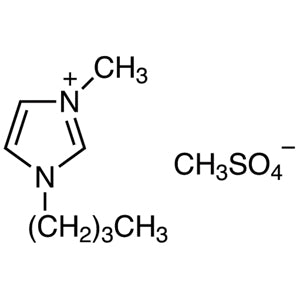
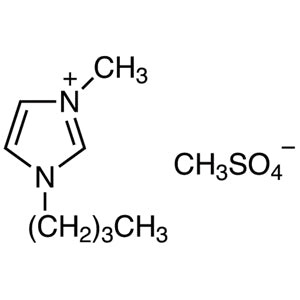
1-Butyl-3-methylimidazoliumMethylSulfate TCI B5527
Regular price From Rp 1.485.750,00Regular price -
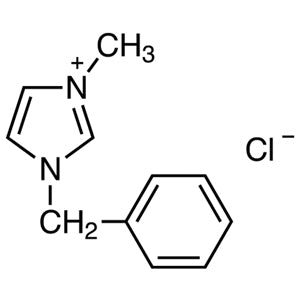
1-Benzyl-3-methylimidazoliumChloride TCI B5543
Regular price Rp 823.200,00Regular price -
1-Butyl-3-methylimidazoliumHydrogenSulfate TCI B5569
Regular price From Rp 823.200,00Regular price -
1-Butyl-3-methylimidazoliumAcetate TCI B5582
Regular price From Rp 875.700,00Regular price -
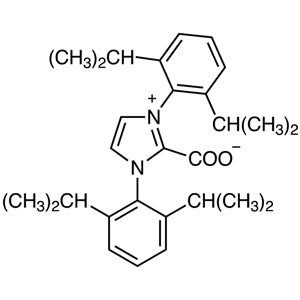
1,3-Bis(2,6-diisopropylphenyl)imidazolium-2-carboxylate TCI B5603
Regular price Rp 2.625.000,00Regular price -
1-Butyl-3-methylimidazoliumHexafluoroantimonate TCI B5724
Regular price From Rp 1.749.300,00Regular price -
1-Benzyl-3-methylimidazoliumTetrafluoroborate TCI B5725
Regular price Rp 717.150,00Regular price