![DAPI 2HCl (0.2mL*5) (1mg/mL in Water) [for Cell Staining] (CAS 28718-90-3) - TCI D5888 - AMI Scientific](http://amiscientific.com/cdn/shop/files/TCI2510D5888.jpg?v=1767109399&width=1946)
![DAPI 2HCl (0.2mL*5) (1mg/mL in Water) [for Cell Staining] (CAS 28718-90-3) - TCI D5888 - AMI Scientific](http://amiscientific.com/cdn/shop/files/TCI2510D5888.jpg?v=1767109399&width=1445)
DAPI 2HCl (0.2mL*5) is a chemical compound widely used in cell staining applications within laboratory settings. It serves as a fluorescent dye that binds specifically to DNA within the nucleus of cells, enhancing the visibility of nuclear structures under a fluorescence microscope. This makes it an essential tool for researchers studying cellular morphology, gene expression, and nuclear organization. Its ability to fluoresce under ultraviolet light allows for precise and detailed analysis of cellular components, supporting a wide range of biological investigations.
The strong fluorescent properties of DAPI 2HCl, particularly under UV wavelengths, make it a preferred choice for fluorescence microscopy. Its stability under certain conditions ensures consistent results, reducing the risk of degradation during experiments. The concentration of 1mg/mL in water provides a convenient and safe working solution, minimizing potential toxicity while maintaining effectiveness. These characteristics contribute to its reliability and ease of use in laboratory environments.
In Indonesian laboratories, DAPI 2HCl is commonly used in cell biology research, including studies on cell morphology, differentiation, and genetic expression. It is also employed in public health and biomedical research to analyze cellular structures and support diagnostic procedures. Its widespread application highlights its importance in both academic and applied scientific research in Indonesia.
TCI brochures (PDF)
- Cell Biology Reagents 2025-07-23 · p. 2
- Cell Imaging Reagents 2026-06-25 · p. 2
- Organelle Research Reagents 2026-08-06 · p. 2
- Antibodies and Related Reagents 2026-07-29 · p. 13
- Cancer Research Reagents 2025-04-01 · p. 7
- Reagents for Biological Research 2025-03-11 · p. 7
Related TCI products
- TCI T4072 T-Fluor 480 [for RNA staining]
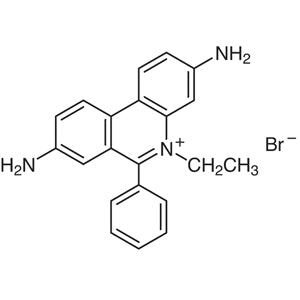
- TCI E1363 1239-45-8 Ethidium Bromide (0.5mg/mL in Water) (in Dropper Bottle) [for Electrophoresis]
- TCI A2412 28718-90-3 DAPI 2HCl [for Biochemical Research]
- TCI H1343 23491-45-4 Bisbenzimide H 33258 [for Biochemical Research]
- TCI E0370 1239-45-8 Ethidium Bromide
- TCI T4300 3520-43-2 JC-1
- Cell morphology analysis: DAPI 2HCl enables clear visualization of nuclear structures, aiding in the identification and classification of different cell types.
- Gene expression studies: The dye's ability to bind to DNA allows researchers to track and analyze gene expression patterns in various cell lines.
- Fluorescence microscopy: Its strong UV-induced fluorescence makes it ideal for use in fluorescence microscopes, enhancing image clarity and detail.
- Nuclear staining in cytology: DAPI 2HCl is used to stain nuclei in cytological samples, providing a clear contrast for microscopic examination.
- Research in biotechnology: It supports biotechnological applications by enabling the study of cellular processes and molecular interactions.
| Brand | TCI |
|---|---|
| CAS number | 28718-90-3 |
| Molecular formula | — |
| Purity | — |
| Category | Life Science > Cell Culture > Cell Staining |
| Pack sizes | 0.2mL*5 |
| Physical form | Solution in water |
| Storage | Store at 2–8°C in a dark, cool place |
DAPI 2HCl should be stored in a dark, cool environment at temperatures between 2–8°C to maintain its stability and fluorescence properties. It is recommended to use amber-colored containers to protect the solution from light exposure, which can cause degradation. Due to its fluorescent nature, it is important to handle the solution with care to avoid contamination. In laboratory settings, it should be kept away from incompatible substances and stored in a secure location. Proper labeling and documentation are essential to ensure safe handling and accurate use in experiments. Always follow standard laboratory safety protocols when working with this compound.
—
Produk Terkait
-
T-Fluor480[forRNAstaining] TCI T4072
Regular price Rp 1.458.450,00Regular priceRp 1.019.550,00Sale price Rp 1.458.450,00 -
EthidiumBromide(0.5mg/mLinWater)(inDropperBottle)[forElectrophoresis] TCI E1363
Regular price Rp 1.298.850,00Regular priceRp 924.000,00Sale price Rp 1.298.850,00 -
DAPI2HCl[forBiochemicalResearch] TCI A2412
Regular price Rp 1.590.750,00Regular price -
BisbenzimideH33258[forBiochemicalResearch] TCI H1343
Regular price Rp 1.510.950,00Regular priceRp 1.072.050,00Sale price Rp 1.510.950,00 -
EthidiumBromide TCI E0370
Regular price Rp 1.483.650,00Regular priceRp 1.053.150,00Sale price Rp 1.483.650,00 -
JC-1 TCI T4300
Regular price Rp 7.473.900,00Regular priceRp 5.241.600,00Sale price Rp 7.473.900,00 -
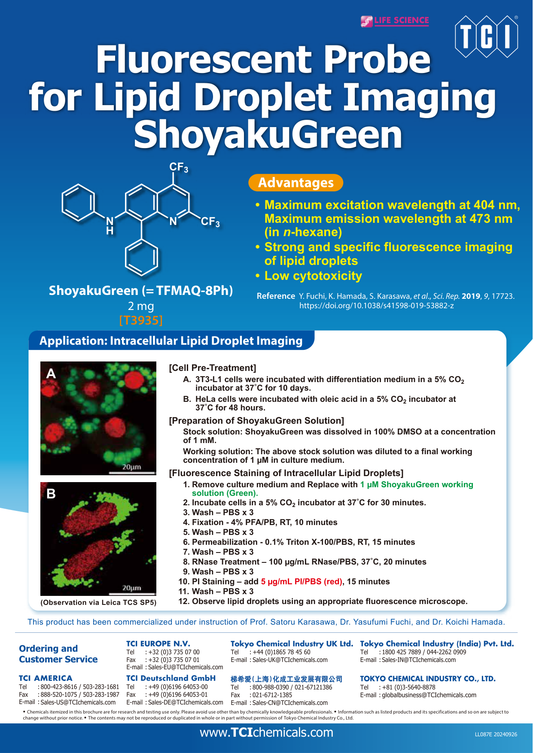
ShoyakuGreen(=TFMAQ-8Ph) TCI T3935
Regular price Rp 4.399.500,00Regular priceRp 3.092.250,00Sale price Rp 4.399.500,00 -
TetramethylrhodamineMethylEsterPerchlorate TCI T3608
Regular price Rp 3.498.600,00Regular priceRp 2.462.250,00Sale price Rp 3.498.600,00
![Ethidium Bromide (0.5mg/mL in Water) (in Dropper Bottle) [for Electrophoresis] (CAS 1239-45-8) - TCI E1363 - AMI Scientific](http://amiscientific.com/cdn/shop/files/TCI2510E1363.jpg?v=1769142303&width=533)
![28718-90-3 DAPI 2HCl [for Biochemical Research] - AMI Scientific](http://amiscientific.com/cdn/shop/files/TCI2510A2412.jpg?v=1767082817&width=533)
![23491-45-4 Bisbenzimide H 33258 [for Biochemical Research] - AMI Scientific](http://amiscientific.com/cdn/shop/files/TCI2510H1343.jpg?v=1767117845&width=533)