

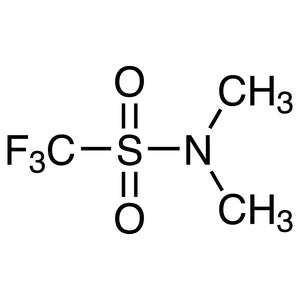
1,1,1-Trifluoro-N,N-dimethylmethanesulfonamide is a chemical compound widely used as a building block in the synthesis of complex organic molecules. It plays a crucial role in laboratory settings by facilitating reactions involving fluorine substitution or sulfonamide activation. This compound is particularly valuable in the development of new compounds, especially in pharmaceutical and organic chemistry research. Its unique chemical structure, featuring three fluorine atoms attached to a carbon, makes it a versatile reagent in various synthetic pathways.
The compound is preferred due to its stable chemical properties and controlled reactivity, which allow it to be used in a wide range of experimental conditions. Its fluorinated structure enhances its polarity and solubility, making it suitable for diverse reaction environments. Additionally, its non-toxic and non-degradable nature ensures safety in laboratory use, reducing potential hazards. These characteristics make it a reliable and efficient choice for researchers seeking consistent results in their experiments.
In Indonesian laboratories, this compound is commonly utilized in scientific research, particularly in the fields of chemistry and pharmacology. It is a key component in the development of new drugs and materials, supporting both academic and industrial research. Its availability through trusted suppliers like AMI Scientific ensures that researchers have access to high-quality reagents for their experiments. The compound’s role in advancing scientific discovery is well-recognized in the Indonesian scientific community.
- Fluorine Substitution Reactions: This compound is ideal for fluorine substitution reactions due to its stable fluorinated structure and controlled reactivity, enabling precise chemical modifications.
- Sulfonamide Activation Studies: Its sulfonamide functionality makes it suitable for activation studies, supporting the development of new synthetic methods in organic chemistry.
- Pharmaceutical Compound Synthesis: It is frequently used in the synthesis of pharmaceutical compounds, where its reactivity and solubility properties aid in creating complex molecular structures.
- Organic Chemistry Research: The compound is a valuable tool in organic chemistry research, facilitating the creation of novel compounds with specific functional groups.
- Material Science Investigations: Its unique chemical properties make it useful in material science, where it contributes to the development of new materials with tailored characteristics.
| Brand | TCI |
|---|---|
| CAS number | 28048-17-1 |
| Molecular formula | — |
| Purity | — |
| Category | Chemistry > Building Blocks > Non-Heterocyclic Building Blocks |
| Pack sizes | Available in various quantities as per supplier specifications |
| Physical form | Solid or liquid, depending on the specific product variant |
| Storage | Store in a cool, dry place away from direct sunlight and moisture |
This compound should be stored in a cool, dry environment, away from direct sunlight and moisture to maintain its chemical integrity. It is recommended to use airtight containers made of glass or high-density polyethylene to prevent contamination and degradation. Due to its stable nature, it does not require special refrigeration, but it should be kept in a secure location to avoid accidental exposure. In laboratory settings, proper personal protective equipment should be worn when handling the compound to ensure safety. Regular monitoring of storage conditions is advised to ensure optimal performance and safety during use.
—
Produk Terkait
-
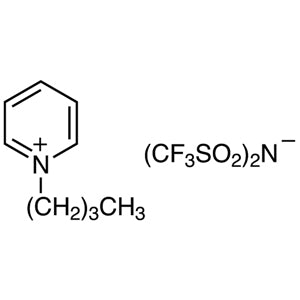
1-ButylpyridiniumBis(trifluoromethanesulfonyl)imide TCI B5571
Regular price From Rp 2.094.750,00Regular price -
2-(tert-Butyldimethylsilyl)-N,N-dimethyl-1H-imidazole-1-sulfonamide TCI B5658
Regular price From Rp 2.650.200,00Regular price -
3-Bromobenzenesulfonamide TCI B5734
Regular price From Rp 1.405.950,00Regular price -
1-Butyl-4-methylpyridiniumBis(trifluoromethanesulfonyl)imide TCI B5763
Regular price From Rp 903.000,00Regular price -
[3-(Bromomethyl)-1-tosylazetidin-3-yl]methanol TCI B5852
Regular price From Rp 1.378.650,00Regular price -
Belinostat TCI B5888
Regular price From Rp 2.306.850,00Regular price -
(-)-4-tert-Butyl-2,6-bis[(4S,5S)-4,5-tetramethylene-1-(2,4,6-trimethylbenzenesulfonyl)imidazolin-2-yl]phenol(contains5%Dichloromethaneatmaximum) TCI B6146
Regular price Rp 8.322.300,00Regular price


![[3-(Bromomethyl)-1-tosylazetidin-3-yl]methanol (CAS 1041026-55-4) - TCI B5852 - AMI Scientific](http://amiscientific.com/cdn/shop/files/TCI2510B5852_08c96097-28a8-4e07-aa20-fbef24394b16.jpg?v=1767863600&width=533)

![(-)-4-tert-Butyl-2,6-bis[(4S,5S)-4,5-tetramethylene-1-(2,4,6-trimethylbenzenesulfonyl)imidazolin-2-yl]phenol (contains 5% Dichloromethane at maximum) (CAS 2102316-91-4) - TCI B6146 - AMI Scientific](http://amiscientific.com/cdn/shop/files/TCI2510B6146.jpg?v=1767093225&width=533)