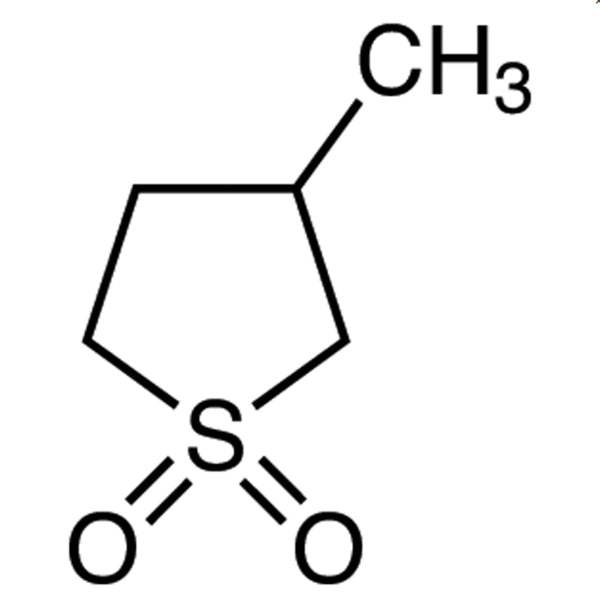
3-Methylsulfolane is an organic compound widely utilized in scientific and industrial applications, particularly within the field of battery materials. As a versatile solvent, it plays a crucial role in laboratory settings where chemical separation, dilution, or synthesis processes are required. Its unique chemical properties make it an essential component in various research and development activities, especially in the production of battery components. This compound is favored for its ability to dissolve a wide range of organic substances, offering a reliable solution for complex chemical reactions.
The key attributes of 3-Methylsulfolane include its high solubility in organic compounds and its chemical stability under normal conditions. These characteristics make it a preferred choice for applications requiring a non-polar or semi-polar environment. Additionally, its relatively high boiling point ensures that it remains stable during distillation or evaporation processes, reducing the risk of evaporation during critical steps of experimentation. This combination of solubility, stability, and boiling point makes it an ideal solvent for a variety of chemical processes.
In Indonesian laboratories, 3-Methylsulfolane is commonly used in battery material research, particularly in the development of electrolytes. It is also employed in organic chemistry and analytical chemistry for isolating specific components from mixtures. Due to its reliability and effectiveness, it is a staple in many research labs across Indonesia, supporting both academic and industrial chemical investigations.
- Battery Material Research - 3-Methylsulfolane is ideal for electrolyte formulation due to its high solubility and stability in organic systems.
- Organic Chemistry Synthesis - Its non-polar nature makes it suitable for dissolving and isolating organic compounds during synthesis.
- Analytical Chemistry - It is used for separating and purifying components in complex mixtures through solvent extraction techniques.
- Electrochemical Testing - Its chemical stability allows for consistent performance in electrochemical experiments and battery testing.
- Solvent Blending - It is commonly used as a base solvent in custom solvent blends for specialized chemical applications.
| Brand | TCI |
|---|---|
| CAS number | 872-93-5 |
| Molecular formula | — |
| Purity | — |
| Category | Materials Science > Battery Materials > Organic Solvents |
| Pack sizes | Available in various sizes as per supplier specifications |
| Physical form | Liquid |
| Storage | Store in a cool, dry place away from direct sunlight and incompatible materials |
3-Methylsulfolane should be stored in a cool, dry location, away from direct sunlight and sources of heat. It is recommended to use sealed, non-reactive containers such as glass or stainless steel to prevent contamination and ensure long-term stability. Due to its chemical nature, it should be kept away from strong oxidizers and incompatible substances. In laboratory settings, proper ventilation is essential to minimize exposure. Always follow standard safety protocols when handling this compound, including the use of personal protective equipment. Regular monitoring of storage conditions ensures the material remains effective and safe for use in research applications.
—
Produk Terkait
-
TCI B5774 5,10-Bis(4,4,5,5-tetramethyl-1,3,2-dioxaborolan-2-yl)naphtho[1,2-c:5,6-c']bis([1,2,5]oxadiazole)
Regular price Rp 10.255.350,00Regular price -
Dihydroiodide TCI B6569
Regular price From Rp 1.936.200,00Regular price -
Trifluoromethanesulfonate TCI B7003
Regular price From Rp 1.936.200,00Regular price
![5,10-Bis(4,4,5,5-tetramethyl-1,3,2-dioxaborolan-2-yl)naphtho[1,2-c:5,6-c']bis([1,2,5]oxadiazole) - TCI B5774 - AMI Scientific](http://amiscientific.com/cdn/shop/files/TCI2510B5774.jpg?v=1769180228&width=533)