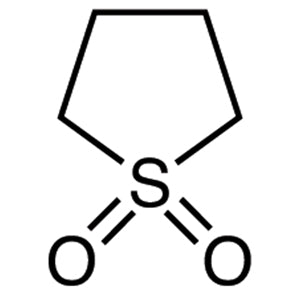
Tetrahydrothiophene 1,1-Dioxide, better known as sulfolane, is a five-membered cyclic sulfone. It forms when the sulfur atom in tetrahydrothiophene is fully oxidized. This TCI product is a very stable polar aprotic solvent with a long history of use in industry and in the laboratory. Laboratories use sulfolane as a solvent for high-temperature reactions and as a selective extraction solvent for aromatic compounds. It is also widely studied as a component in the development of battery electrolytes and electrochemical devices.
Chemists choose sulfolane for its high polarity, excellent thermal and chemical stability, and resistance to oxidation. The sulfone group gives the molecule a large dipole moment, so it can dissolve salts and polar compounds well. Because it is aprotic, anions stay reactive, which makes it a useful medium for nucleophilic substitution reactions. Sulfolane mixes with water and with many organic solvents, so it fits easily into different experimental setups. Its wide electrochemical stability window makes it a candidate electrolyte solvent for high-voltage batteries.
In Indonesia, sulfolane is relevant to petrochemical laboratories that study aromatic extraction and separation processes. University and research institute laboratories use it in synthetic organic chemistry, especially for reactions that need a stable polar solvent at high temperature. Groups working on energy storage and battery electrolytes also use it as a reference or test solvent in electrochemical studies. Analytical and quality control laboratories in the chemical sector can likewise use it as a well-characterized solvent for method development.
TCI brochures (PDF)
- High Purity and Low Water Content Sulfolane-type Electrolyte Solvent MESL 2025-06-10 · p. 1
- Battery Research Reagents 2026-09-18 · p. 5
- High-temperature reaction solvent: sulfolane's excellent thermal and chemical stability lets it stay intact under demanding heating conditions, so researchers can run reactions where many common solvents would degrade.
- Nucleophilic substitution reactions: as a polar aprotic solvent, sulfolane dissolves salts while keeping anions reactive, which helps substitution reactions that depend on a strong, poorly solvated nucleophile.
- Selective extraction of aromatic compounds: its high polarity and selectivity make sulfolane a well-established extraction solvent for separating aromatic compounds from mixtures in petrochemical research.
- Battery electrolyte research: its wide electrochemical stability window and resistance to oxidation make sulfolane a widely studied candidate solvent for high-voltage battery electrolytes and related electrochemical devices.
- Heterocyclic building block chemistry: as a cyclic sulfone, the compound is also a structural reference and starting point for researchers exploring sulfur-containing heterocyclic chemistry and related synthetic routes.
| Brand | TCI |
|---|---|
| CAS number | 126-33-0 |
| Molecular formula | — |
| Purity | — |
| Category | Chemistry > Building Blocks > Heterocyclic Building Blocks |
| Pack sizes | as listed on the product page; please check the available options when ordering |
| Physical form | solid or viscous liquid, depending on ambient temperature |
| Storage | keep tightly closed in a cool, dry, well-ventilated place |
Data from the TCI brochure
| Melting Point | 25 °C |
|---|---|
| Heat Generation Temperature | 210 °C |
| Vapor Pressure | 36.4 Pa (373K) |
| Potential Window | 6.4 V (1 mol/L LiPF6 solution) |
| Electric Resistance | - (Solidified) (1 mol/L LiPF6 solution, -20°C) |
| Electric Resistance | 50 Ω·cm (1 mol/L LiPF6 solution, 20°C) |
Source: TCI brochure FF104 (2025-06-10)
Store sulfolane in its original, tightly sealed container in a cool, dry, well-ventilated area, away from direct sunlight, heat sources, and incompatible materials such as strong oxidizing agents. Because the material can be solid or a viscous liquid depending on ambient temperature, it may need gentle, controlled warming before dispensing. Use suitable chemical-resistant glass or compatible containers for transfers. Wear laboratory gloves, safety glasses, and a lab coat, and work in a fume hood or well-ventilated area. Avoid skin and eye contact and inhaling vapors. Always read the supplier's Safety Data Sheet before use, and dispose of waste according to local regulations.
—
Product Categories
Produk Terkait
-
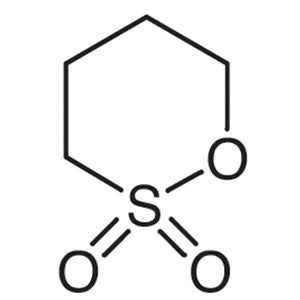
1,4-Butanesultone TCI B0136
Regular price From Rp 1.670.550,00Regular price -
1,3-Propanesultone TCI P0324
Regular price From Rp 717.150,00Regular price -
Tetrahydrothiophene TCI T0114
Regular price From Rp 769.650,00Regular price -
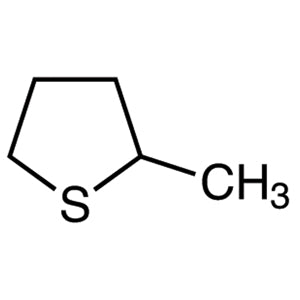
2-Methyltetrahydrothiophene TCI B0257
Regular price From Rp 8.772.750,00Regular price -
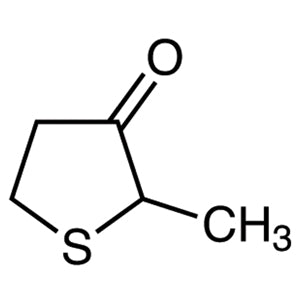
2-Methyl-3-tetrahydrothiophenone TCI M1839
Regular price From Rp 1.565.550,00Regular price -
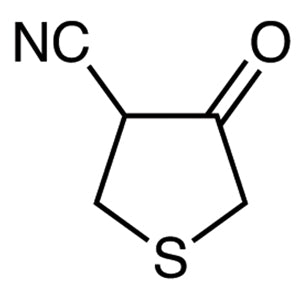
4-Cyano-3-tetrahydrothiophenone TCI C1164
Regular price From Rp 1.115.100,00Regular price -
Tetrahydrothiopyran-4-one1,1-Dioxide TCI T3320
Regular price From Rp 1.644.300,00Regular price -
Thiomorpholine1,1-Dioxide TCI T2193
Regular price From Rp 4.559.100,00Regular price