Tetrahydrothiophene (THT) from TCI is a saturated five-membered heterocycle containing a single sulfur atom, and can be regarded as the sulfur analogue of tetrahydrofuran. It is widely known for its very strong, distinctive odor, which is used to odorize natural gas so that leaks can be detected easily. In the laboratory, THT serves as a ligand in coordination chemistry, as a sulfur-containing heterocyclic building block, and as a reference compound in the analysis of sulfur compounds.
THT is a preferred choice because its sulfur atom is a soft donor that binds to transition metals such as gold, platinum, and palladium. That bond is labile enough to be displaced readily by other ligands. This balance makes complexes such as chlorido(tetrahydrothiophene)gold(I) popular precursors in the synthesis of gold compounds. The sulfur atom can also be oxidized to the corresponding sulfoxide or sulfone, which opens routes to a range of derivatives. Because its odor can be detected at very low concentrations, THT is also an important standard in odorant analysis.
In Indonesia, THT is relevant to gas and energy analysis laboratories that monitor odorant levels in gas distribution networks, where reliable reference material supports quality control. Research groups working in organometallic and coordination chemistry use it as a labile ligand and a source of metal precursors. University and industrial synthesis laboratories also use THT as a sulfur heterocyclic building block when preparing sulfoxide and sulfone derivatives for further study.
Related TCI products
- TCI T0115 126-33-0 Tetrahydrothiophene 1,1-Dioxide
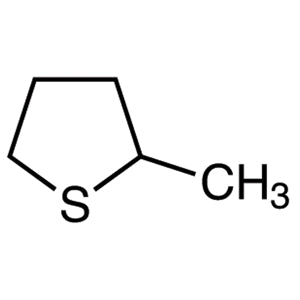
- TCI B0257 1795-09-1 2-Methyltetrahydrothiophene
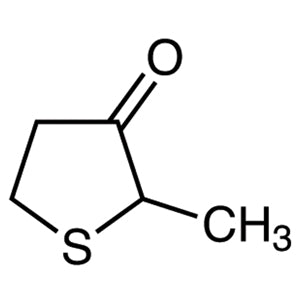
- TCI M1839 13679-85-1 2-Methyl-3-tetrahydrothiophenone
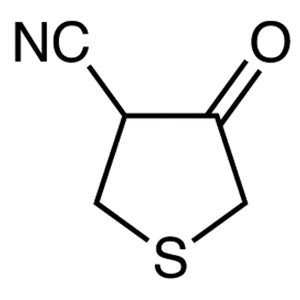
- TCI C1164 16563-14-7 4-Cyano-3-tetrahydrothiophenone
- TCI T3320 17396-35-9 Tetrahydrothiopyran-4-one 1,1-Dioxide
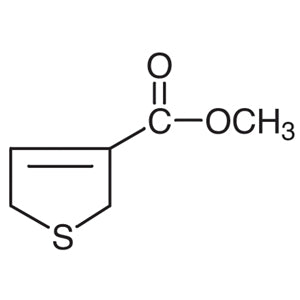
- TCI D2882 67488-46-4 Methyl 2,5-Dihydrothiophene-3-carboxylate
- Natural gas odorant analysis: THT is the odorant added to natural gas, so it is the obvious reference compound for calibrating and checking odorant levels in gas samples.
- Coordination chemistry ligand: Its soft sulfur donor binds gold, platinum, and palladium, but the bond is labile, so THT can be replaced by other ligands when a complex is built up step by step.
- Gold precursor synthesis: THT is used to prepare chlorido(tetrahydrothiophene)gold(I), a popular and convenient starting material for making a wide variety of gold compounds.
- Sulfur heterocyclic building block: As a simple saturated sulfur ring, THT gives synthetic chemists a clean entry point for introducing sulfur-containing heterocyclic structures into target molecules.
- Oxidation to sulfoxides and sulfones: The sulfur atom can be oxidized selectively to sulfoxide or sulfone, which gives access to derivatives with different polarity and reactivity for further research.
| Brand | TCI (product code T0114) |
|---|---|
| CAS number | 110-01-0 |
| Molecular formula | — |
| Purity | — |
| Category | Chemistry > Building Blocks > Heterocyclic Building Blocks |
| Pack sizes | Available in several pack sizes; please check the product page or contact AMI Scientific for the options currently offered |
| Physical form | Liquid with a strong, characteristic sulfurous odor |
| Storage | Keep tightly closed in a cool, well-ventilated place, away from heat and ignition sources |
Store tetrahydrothiophene in its original, tightly sealed container in a cool, dry, well-ventilated area away from heat, sparks, open flames, and strong oxidizing agents. Because the compound has an intense odor that is detectable at very low concentrations, keep containers well closed. Consider secondary containment so the smell does not spread through the laboratory. Handle it only in a fume hood while wearing suitable gloves, safety goggles, and a lab coat, and avoid inhaling the vapor or letting it touch the skin. Clean up spills promptly and dispose of waste according to local regulations. Always read the TCI Safety Data Sheet before use.
—
Produk Terkait
-
Tetrahydrothiophene1,1-Dioxide TCI T0115
Regular price From Rp 530.250,00Regular priceRp 386.400,00Sale price From Rp 530.250,00 -
2-Methyltetrahydrothiophene TCI B0257
Regular price From Rp 8.825.250,00Regular priceRp 6.186.600,00Sale price From Rp 8.825.250,00 -
2-Methyl-3-tetrahydrothiophenone TCI M1839
Regular price From Rp 1.618.050,00Regular priceRp 1.146.600,00Sale price From Rp 1.618.050,00 -
4-Cyano-3-tetrahydrothiophenone TCI C1164
Regular price From Rp 1.167.600,00Regular priceRp 831.600,00Sale price From Rp 1.167.600,00 -
Tetrahydrothiopyran-4-one1,1-Dioxide TCI T3320
Regular price From Rp 1.696.800,00Regular priceRp 1.202.250,00Sale price From Rp 1.696.800,00 -
Methyl2,5-Dihydrothiophene-3-carboxylate TCI D2882
Regular price From Rp 1.192.800,00Regular priceRp 849.450,00Sale price From Rp 1.192.800,00 -
5,6,7,7a-Tetrahydrothieno[3,2-c]pyridin-2(4H)-oneHydrochloride TCI T2984
Regular price From Rp 769.650,00Regular priceRp 553.350,00Sale price From Rp 769.650,00 -
4,5,6,7-Tetrahydrothieno[3,2-c]pyridineHydrochloride TCI T2770
Regular price From Rp 557.550,00Regular priceRp 405.300,00Sale price From Rp 557.550,00