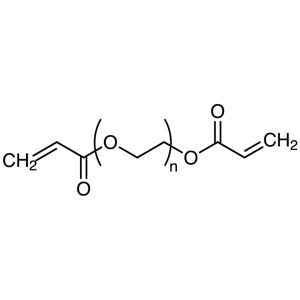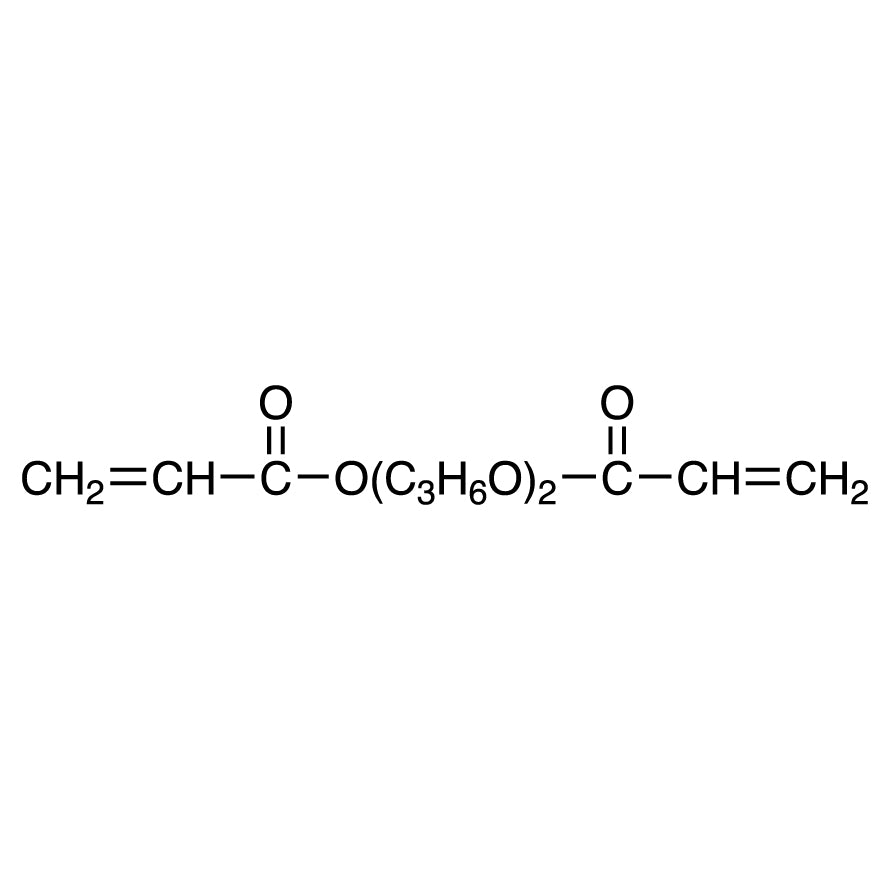
Dipropylene Glycol Diacrylate (DPGDA), with CAS number 57472-68-1, is a versatile chemical compound widely used in laboratory settings, particularly in organic chemistry and materials science. As a monomer, it is capable of undergoing polymerization reactions, making it essential for the production of polymers such as resins, gels, and composites. Its reactivity and ability to form cross-linked structures make it a valuable tool for researchers aiming to develop new materials or synthesize complex organic compounds. In laboratory applications, DPGDA serves as a key component in various synthetic processes, contributing to the creation of functional materials with tailored properties.
DPGDA is known for its chemical stability and high boiling point, which allows it to remain in liquid form under normal laboratory conditions. The stabilization with MEHQ (methyl ethyl glycol hydroquinone) ensures that the compound maintains its integrity during storage and use, reducing the risk of premature degradation. This stability, combined with its reactivity, makes DPGDA a preferred choice for laboratories requiring reliable and consistent chemical performance. Its compatibility with various reaction conditions and its ability to participate in controlled polymerization reactions further enhance its utility in both academic and industrial research environments.
In Indonesian laboratories, DPGDA is commonly used in the synthesis of organic compounds and the development of polymer-based materials. Its application spans across multiple disciplines, including polymer chemistry, coatings, and composite manufacturing. The compound’s stability and reactivity make it an essential reagent for researchers working on projects that require precise chemical control and high-performance materials. Its relevance in Indonesian laboratories is underscored by its role in supporting both educational and industrial research initiatives.
Related TCI products
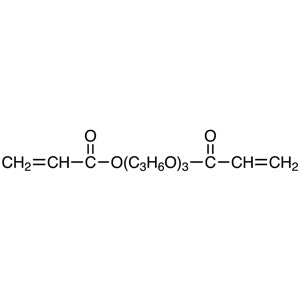
- TCI T2389 42978-66-5 Tripropylene Glycol Diacrylate (stabilized with MEHQ)
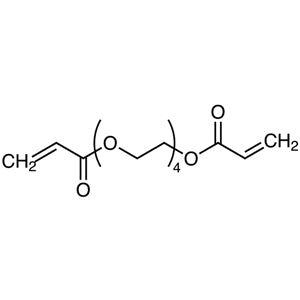
- TCI T1569 17831-71-9 Tetraethylene Glycol Diacrylate (stabilized with MEHQ)
- TCI P2895 52277-33-5 Polytetramethylene Glycol Diacrylate (n=approx. 9) (stabilized with MEHQ)
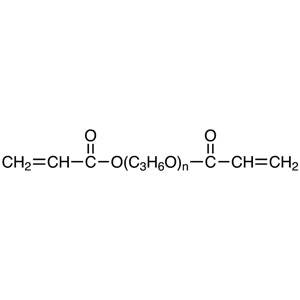
- TCI P2759 52496-08-9 Polypropylene Glycol Diacrylate (n=approx 12) (stabilized with MEHQ)
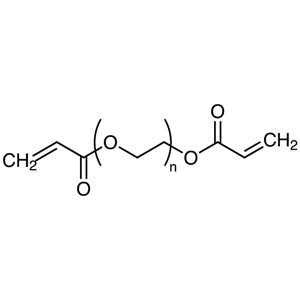
- TCI P2757 26570-48-9 Polyethylene Glycol Diacrylate (n=approx 14) (stabilized with MEHQ)
- TCI P2756 26570-48-9 Polyethylene Glycol Diacrylate (n=approx 4) (stabilized with MEHQ)
- Polymer synthesis and resin production due to its ability to undergo cross-linking reactions and form stable polymers.
- Organic chemistry research for the synthesis of complex molecules and functional materials.
- Coating and adhesion applications in material science due to its reactivity and compatibility with various substrates.
- Composite manufacturing where DPGDA contributes to the formation of durable and high-performance materials.
- Photopolymerization processes in laboratories requiring light-sensitive chemical reactions for material development.
| Brand | TCI |
|---|---|
| CAS number | 57472-68-1 |
| Molecular formula | — |
| Purity | — |
| Category | TCI |
| Pack sizes | — |
| Physical form | Liquid |
| Storage | Store in a cool, dark place away from heat and direct sunlight. |
DPGDA should be stored in a cool, dark environment to maintain its stability and prevent degradation. It is recommended to keep the compound in a sealed container made of glass or high-density polyethylene to minimize exposure to air and moisture. Due to its reactivity, it should be handled in a well-ventilated area, preferably under a fume hood, to ensure safety. Avoid contact with incompatible materials such as strong oxidizing agents. Always use appropriate personal protective equipment, including gloves and safety goggles, when handling this substance. Proper storage and handling practices are essential to maintain the quality and effectiveness of DPGDA in laboratory applications.
—
Produk Terkait
-
TripropyleneGlycolDiacrylate(stabilizedwithMEHQ) TCI T2389
Regular price From Rp 477.750,00Regular price -
TetraethyleneGlycolDiacrylate(stabilizedwithMEHQ) TCI T1569
Regular price Rp 955.500,00Regular price -
PolytetramethyleneGlycolDiacrylate(n=approx.9)(stabilizedwithMEHQ) TCI P2895
Regular price From Rp 955.500,00Regular price -
PolypropyleneGlycolDiacrylate(n=approx12)(stabilizedwithMEHQ) TCI P2759
Regular price From Rp 769.650,00Regular price -
PolyethyleneGlycolDiacrylate(n=approx14)(stabilizedwithMEHQ) TCI P2757
Regular price From Rp 557.550,00Regular price -
PolyethyleneGlycolDiacrylate(n=approx4)(stabilizedwithMEHQ) TCI P2756
Regular price From Rp 557.550,00Regular price -
PolyethyleneGlycolDiacrylate(n=approx9)(stabilizedwithMEHQ) TCI P2708
Regular price From Rp 557.550,00Regular price -
NeopentylGlycolDiacrylate(stabilizedwithMEHQ) TCI N0790
Regular price From Rp 823.200,00Regular price