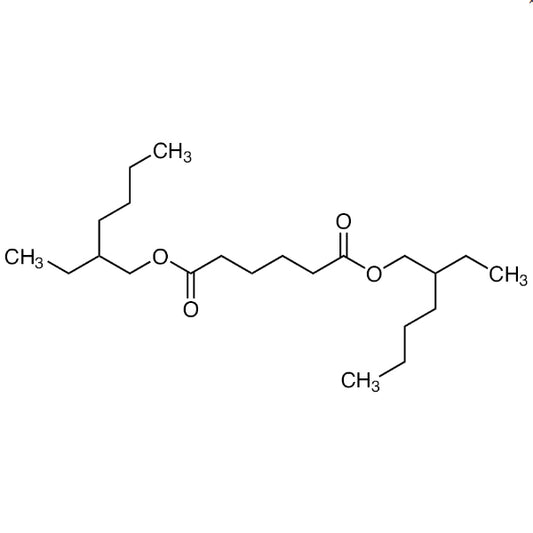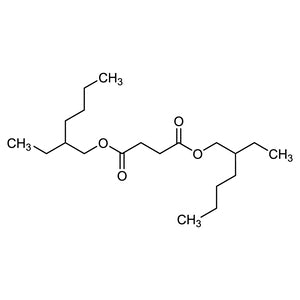
Bis(2-ethylhexyl) Succinate is a chemical compound widely used as a building block in organic synthesis. It plays a crucial role in laboratory settings where the creation of complex organic molecules is required. This compound is particularly valued for its ability to participate in various chemical reactions, offering versatility in synthetic pathways. Its structural characteristics make it an essential component in the development of new chemical entities, especially in research environments that require precision and control over reaction outcomes.
The compound's chemical properties, including its reactivity and solubility in organic solvents, make it a preferred choice for chemists. Its stability under specific conditions allows for controlled reaction environments, while its reactivity ensures efficient chemical transformations. These properties are essential for achieving desired outcomes in synthetic processes. Additionally, its compatibility with a wide range of solvents simplifies handling and application in different experimental setups.
In Indonesian laboratories, Bis(2-ethylhexyl) Succinate is commonly used in academic and research institutions. It is integral to organic chemistry experiments, especially those involving the synthesis of specific molecular structures. Its availability and reliability make it a go-to material for researchers aiming to produce high-quality chemical compounds with precise structural features.
- Organic synthesis applications benefit from its reactivity and compatibility with various reaction conditions, making it ideal for creating complex molecular structures.
- It is widely used in research settings where precise chemical transformations are required, supporting the development of new compounds with specific properties.
- In academic laboratories, it serves as a key reagent in teaching and experimental courses, facilitating hands-on learning in organic chemistry.
- Its solubility in organic solvents makes it suitable for purification processes, aiding in the isolation of target compounds during synthesis.
- It is frequently employed in industrial research to develop new materials and products, contributing to innovation in chemical manufacturing.
| Brand | TCI |
|---|---|
| CAS number | 2915-57-3 |
| Molecular formula | — |
| Purity | — |
| Category | Chemistry > Building Blocks > Non-Heterocyclic Building Blocks |
| Pack sizes | Available in various quantities to meet different laboratory needs |
| Physical form | Solid |
| Storage | Store in a cool, dry place away from direct sunlight and moisture |
Bis(2-ethylhexyl) Succinate should be stored in a cool, dry environment to maintain its chemical integrity. It is recommended to keep it in airtight containers to prevent exposure to moisture and air, which may affect its stability. Proper labeling of storage containers is essential for safety and traceability. In laboratory settings, it should be handled with care, using appropriate personal protective equipment such as gloves and safety goggles. Due to its reactivity, it should be stored separately from incompatible substances to avoid unintended chemical interactions. Regular monitoring of storage conditions ensures that the compound remains suitable for use in chemical experiments.
—
Produk Terkait
-
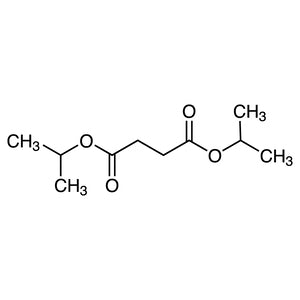
DiisopropylSuccinate TCI S0269
Regular price From Rp 1.273.650,00Regular price -
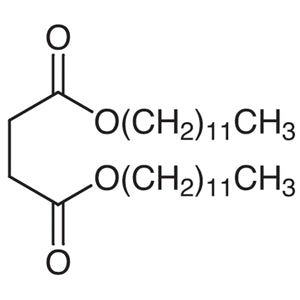
DidodecylSuccinate TCI S0255
Regular price Rp 1.193.850,00Regular price -
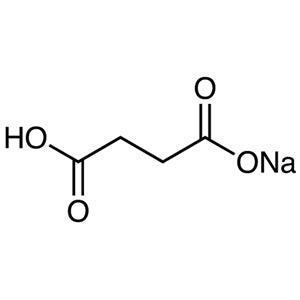
MonosodiumSuccinate TCI S0106
Regular price From Rp 955.500,00Regular price -
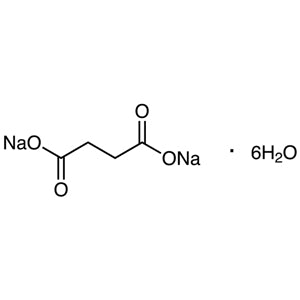
DisodiumSuccinateHexahydrate TCI S0105
Regular price From Rp 477.750,00Regular price -
DimethylSuccinate TCI S0104
Regular price From Rp 477.750,00Regular price -
MonomethylSuccinate TCI M3262
Regular price From Rp 1.670.550,00Regular price -
Mono-tert-butylSuccinate TCI M3033
Regular price Rp 795.900,00Regular price -
Bis(2-ethylhexyl)Adipate TCI A0163
Regular price Rp 452.550,00Regular price