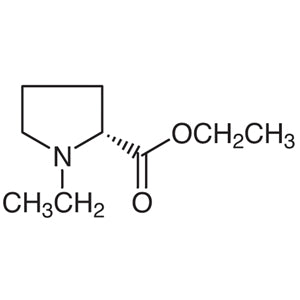
Ethyl (S)-(-)-1-Ethyl-2-pyrrolidinecarboxylate is a chemical compound widely used in laboratory settings for its versatility in chemical and biochemical applications. As a key reagent in peptide chemistry, it plays a crucial role in the synthesis of complex molecules and the study of protein structures and functions. This compound is particularly valuable for its ability to participate in various chemical reactions, such as esterification and nucleophilic reactions, making it an essential tool for researchers working in organic and biochemical fields. Its chemical stability and reactivity contribute to its effectiveness in a wide range of experimental protocols.
The compound is preferred due to its high purity and consistent performance in laboratory experiments. Its reactive nature allows it to be a reliable component in chemical reactions, especially those requiring precise control over molecular modifications. The stability of its chemical structure ensures that it maintains its properties under controlled conditions, making it suitable for use in both academic and industrial research environments. Additionally, its compatibility with various reagents and solvents enhances its utility in diverse synthetic pathways.
In Indonesian laboratories, this compound is commonly used in scientific research, particularly in organic chemistry and biochemical studies. It is frequently employed in the development of new compounds, peptide synthesis, and molecular modification experiments. Its availability through reputable suppliers like AMI Scientific ensures that researchers have access to high-quality materials for their work, supporting advancements in both academic and applied research.
TCI brochures (PDF)
- Amino Acids and Peptide Synthesis Reagents 2025-08-14 · p. 27
Related TCI products
- TCI E0469 381670-33-3 Ethyl (R)-(+)-1-Ethyl-2-pyrrolidinecarboxylate
- TCI B3178 203866-13-1 (2S,4S)-1-(tert-Butoxycarbonyl)-4-fluoro-2-pyrrolidinecarboxylic Acid
- TCI B3177 203866-14-2 (2S,4R)-1-(tert-Butoxycarbonyl)-4-fluoro-2-pyrrolidinecarboxylic Acid
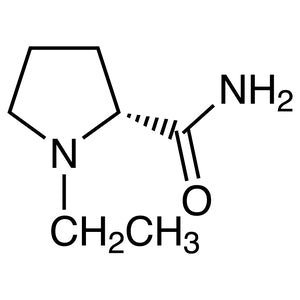
- TCI E0468 381670-32-2 (R)-(+)-1-Ethyl-2-pyrrolidinecarboxamide
- TCI E0452 114812-34-9 (S)-(-)-1-Ethyl-2-pyrrolidinecarboxamide
- TCI D5586 58166-38-4 (4R)-2,2-Dimethyl-4-thiazolidinecarboxylic Acid
- Peptide Synthesis: This compound is ideal for synthesizing peptides due to its ability to form peptide bonds during chemical reactions.
- Organic Chemistry Research: It is widely used in organic chemistry for its reactivity in esterification and nucleophilic reactions.
- Protein Structure Studies: It supports research on protein structures by enabling the modification and analysis of molecular components.
- Molecular Modification Experiments: Its chemical stability and reactivity make it suitable for various molecular modification protocols.
- Biochemical Analysis: It is used in biochemical experiments to study the behavior and interactions of complex molecules.
| Brand | TCI |
|---|---|
| CAS number | 938-54-5 |
| Molecular formula | — |
| Purity | — |
| Category | Chemistry > Chemical Biology > Peptide Chemistry |
| Pack sizes | Available in various quantities as per supplier specifications |
| Physical form | Liquid or solid, depending on supplier packaging |
| Storage | Store in a cool, dry place away from direct sunlight |
This compound should be stored in a cool, dry environment to maintain its chemical stability and prevent degradation. It is recommended to use airtight containers to minimize exposure to moisture and air, which could affect its reactivity. Proper labeling of storage containers is essential for safety and traceability. In laboratory settings, it should be handled with appropriate personal protective equipment, such as gloves and safety goggles, to ensure safe handling. Due to its reactivity, it should be stored separately from incompatible substances to avoid any potential chemical interactions. Regular monitoring of storage conditions is advised to maintain the integrity of the compound for experimental use.
—
Product Categories
Produk Terkait
-
Ethyl(R)-(+)-1-Ethyl-2-pyrrolidinecarboxylate TCI E0469
Regular price Rp 1.618.050,00Regular priceRp 1.146.600,00Sale price Rp 1.618.050,00 -
(2S,4S)-1-(tert-Butoxycarbonyl)-4-fluoro-2-pyrrolidinecarboxylicAcid TCI B3178
Regular price Rp 530.250,00Regular priceRp 386.400,00Sale price Rp 530.250,00 -
(2S,4R)-1-(tert-Butoxycarbonyl)-4-fluoro-2-pyrrolidinecarboxylicAcid TCI B3177
Regular price Rp 610.050,00Regular priceRp 442.050,00Sale price Rp 610.050,00 -
(R)-(+)-1-Ethyl-2-pyrrolidinecarboxamide TCI E0468
Regular price Rp 3.524.850,00Regular priceRp 2.480.100,00Sale price Rp 3.524.850,00 -
(S)-(-)-1-Ethyl-2-pyrrolidinecarboxamide TCI E0452
Regular price Rp 2.914.800,00Regular priceRp 2.053.800,00Sale price Rp 2.914.800,00 -
(4R)-2,2-Dimethyl-4-thiazolidinecarboxylicAcid TCI D5586
Regular price Rp 1.618.050,00Regular priceRp 1.146.600,00Sale price Rp 1.618.050,00 -
4-Nitrobenzyl(2S,4S)-2-(Dimethylcarbamoyl)-4-mercapto-1-pyrrolidinecarboxylate TCI N0828
Regular price Rp 3.763.200,00Regular priceRp 2.647.050,00Sale price Rp 3.763.200,00 -
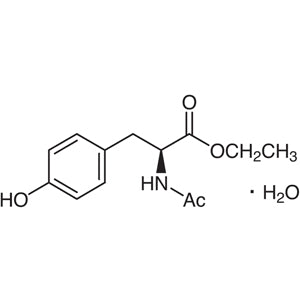
N-Acetyl-L-tyrosineEthylEsterMonohydrate TCI A0118
Regular price Rp 662.550,00Regular priceRp 478.800,00Sale price Rp 662.550,00