4-(trans-4-Ethylcyclohexyl)phenol is a chemical compound widely used in scientific research, particularly in the field of liquid crystals. This material plays a crucial role in laboratories where the study of molecular interactions and material behavior is essential. Its unique molecular structure enables specific interactions with its surrounding environment, making it a valuable component in the development of materials with distinctive properties. In scientific laboratories, this compound is frequently employed to investigate the physical and chemical characteristics of complex substances, as well as to conduct experiments related to molecular structure and behavior.
The compound’s balanced polarity, both polar and non-polar, allows it to interact effectively with a variety of solvents. This property makes it highly versatile for experiments requiring molecular engagement under different conditions. Additionally, its ability to form specific structures enhances its appeal in material and organic chemistry research. Its chemical stability and compatibility with various experimental setups further contribute to its popularity among researchers.
In Indonesian laboratories, 4-(trans-4-Ethylcyclohexyl)phenol is commonly used in scientific research focused on the development of new materials, especially in the fields of liquid crystals and construction materials. Many research institutions and universities utilize this compound for experiments that require substances with specific molecular structures. Its application is widespread in both academic and industrial research settings, supporting advancements in material science and chemical innovation.
Related TCI products
- TCI B2644 88581-00-4 4-(trans-4-Butylcyclohexyl)phenol
- TCI A1827 82575-69-7 4-(trans-4-Amylcyclohexyl)phenol
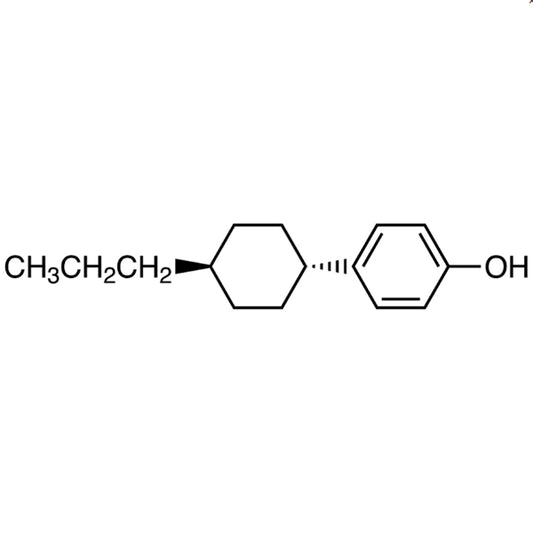
- TCI P1616 81936-33-6 4-(trans-4-Propylcyclohexyl)phenol
- TCI E1253 87592-41-4 4-(trans-4-Ethylcyclohexyl)benzoic Acid
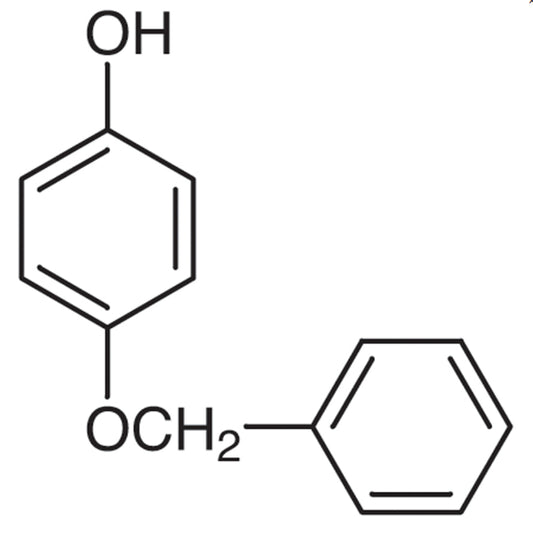
- TCI B1104 103-16-2 4-(Benzyloxy)phenol
- TCI E0703 72928-54-2 4-(trans-4-Ethylcyclohexyl)benzonitrile
- Liquid Crystal Research – This compound is ideal for studying the behavior and properties of liquid crystals due to its molecular structure that facilitates phase transitions and alignment.
- Organic Chemistry Experiments – Its balanced polarity allows it to interact with various solvents, making it suitable for synthesizing and analyzing organic compounds.
- Material Development Studies – It is used to create and test new materials with unique properties, especially in the field of advanced construction materials.
- Molecular Interaction Analysis – The compound’s ability to form specific structures makes it useful for examining molecular interactions and environmental responses.
- Structural Chemistry Investigations – It supports research into molecular architecture and how different structures influence material properties.
| Brand | TCI |
|---|---|
| CAS number | 89100-78-7 |
| Molecular formula | — |
| Purity | — |
| Category | Materials Science > Material Building Blocks > Liquid Crystal (LC) Building Blocks |
| Pack sizes | — |
| Physical form | — |
| Storage | Store in a cool, dry place away from direct sunlight |
This compound should be stored in a cool, dry place, away from direct sunlight and sources of heat. It is recommended to use airtight containers to prevent moisture absorption and contamination. Due to its chemical nature, it should be handled with care, using appropriate personal protective equipment such as gloves and safety goggles. Avoid inhalation of vapors and ensure proper ventilation in the laboratory. Keep the compound away from incompatible substances to prevent any chemical reactions. Regularly inspect storage containers for signs of damage or leakage to maintain the integrity of the material.
—
Produk Terkait
-
4-(trans-4-Butylcyclohexyl)phenol TCI B2644
Regular price From Rp 2.094.750,00Regular price -
4-(trans-4-Amylcyclohexyl)phenol TCI A1827
Regular price Rp 1.035.300,00Regular price -
4-(trans-4-Propylcyclohexyl)phenol TCI P1616
Regular price From Rp 980.700,00Regular price -
4-(trans-4-Ethylcyclohexyl)benzoicAcid TCI E1253
Regular price Rp 1.326.150,00Regular price -
4-(Benzyloxy)phenol TCI B1104
Regular price From Rp 1.749.300,00Regular price -
4-(trans-4-Ethylcyclohexyl)benzonitrile TCI E0703
Regular price Rp 1.140.300,00Regular price -
1-EthylcyclohexylMethacrylate(stabilizedwithMEHQ) TCI E1407
Regular price From Rp 1.140.300,00Regular price -
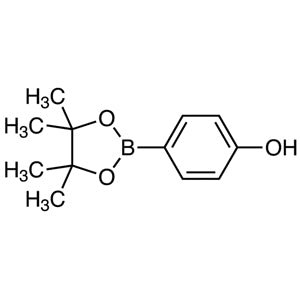
4-(4,4,5,5-Tetramethyl-1,3,2-dioxaborolan-2-yl)phenol TCI T1954
Regular price From Rp 1.298.850,00Regular price