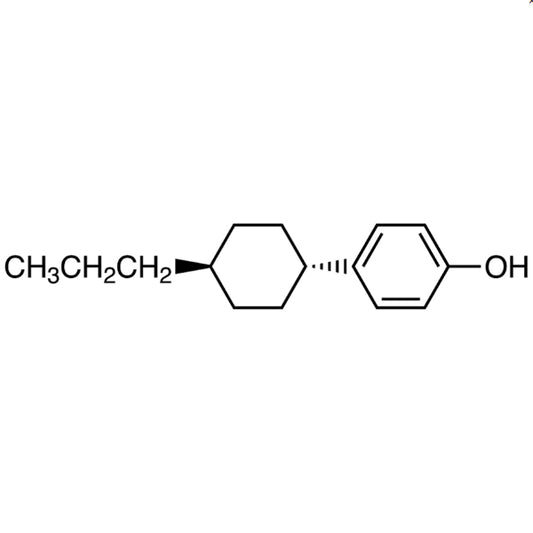
4-(trans-4-Amylcyclohexyl)phenol is a chemical compound widely used in scientific research, particularly in the field of liquid crystals. This material serves as a fundamental building block for creating materials with unique optical and thermal properties. In laboratory settings, it plays a critical role in the development of complex structures that respond to environmental changes, such as temperature or electric fields. Its presence is essential in the synthesis of advanced materials that exhibit specific behaviors under controlled conditions.
The compound’s molecular structure features a long hydrocarbon chain, which enables strong intermolecular interactions. These properties make it a preferred choice for applications requiring stability and responsiveness. Its ability to form ordered structures under specific conditions is a key factor in its use in material science. The compound’s versatility allows it to be adapted for various research purposes, from fundamental studies to the development of new technologies.
In Indonesian laboratories, 4-(trans-4-Amylcyclohexyl)phenol is commonly used by researchers in higher education institutions and research organizations. It supports experiments related to liquid crystals and innovative materials. Its availability in the local market ensures that scientists have access to high-quality raw materials for their research. This compound is a vital component in advancing material science in Indonesia.
Related TCI products
- TCI B2644 88581-00-4 4-(trans-4-Butylcyclohexyl)phenol
- TCI P1616 81936-33-6 4-(trans-4-Propylcyclohexyl)phenol
- TCI E1252 89100-78-7 4-(trans-4-Ethylcyclohexyl)phenol
- TCI A2593 65355-30-8 4-(trans-4-Amylcyclohexyl)benzoic Acid
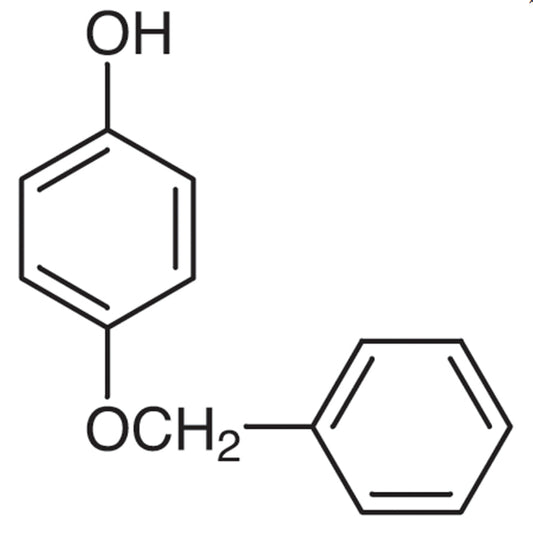
- TCI B1104 103-16-2 4-(Benzyloxy)phenol
- TCI A2568 68065-81-6 trans-4'-(4-Amylcyclohexyl)biphenyl-4-carbonitrile
- Liquid Crystal Research – This compound is ideal for studying phase transitions and molecular alignment in liquid crystal systems due to its structural complexity and responsiveness.
- Optical Material Development – Its unique optical properties make it suitable for creating materials with tunable light interaction characteristics.
- Thermal Response Studies – The compound’s thermal sensitivity allows it to be used in experiments examining how materials behave under varying temperature conditions.
- Sensor Technology – Its ability to respond to environmental stimuli makes it a valuable component in the development of advanced sensor systems.
- Advanced Material Synthesis – It serves as a building block for creating novel materials with specific mechanical and chemical properties.
| Brand | TCI |
|---|---|
| CAS number | 82575-69-7 |
| Molecular formula | — |
| Purity | — |
| Category | Materials Science > Material Building Blocks > Liquid Crystal (LC) Building Blocks |
| Pack sizes | Available in standard laboratory quantities as per supplier specifications |
| Physical form | Liquid |
| Storage | Store in a cool, dry place away from direct sunlight |
This compound should be stored in a cool, dry environment, away from direct sunlight and sources of heat. It is recommended to use airtight containers to prevent contamination and maintain its chemical integrity. Due to its potential reactivity, it should be handled with appropriate personal protective equipment, such as gloves and safety goggles. Proper ventilation is essential when working with this material to minimize exposure. It is important to store it separately from incompatible substances to avoid any chemical interactions. Regular inspection of storage conditions ensures the material remains in optimal condition for laboratory use.
—
Produk Terkait
-
4-(trans-4-Butylcyclohexyl)phenol TCI B2644
Regular price From Rp 2.147.250,00Regular priceRp 1.517.250,00Sale price From Rp 2.147.250,00 -
4-(trans-4-Propylcyclohexyl)phenol TCI P1616
Regular price From Rp 1.033.200,00Regular priceRp 738.150,00Sale price From Rp 1.033.200,00 -
4-(trans-4-Ethylcyclohexyl)phenol TCI E1252
Regular price Rp 2.013.900,00Regular priceRp 1.423.800,00Sale price Rp 2.013.900,00 -
4-(trans-4-Amylcyclohexyl)benzoicAcid TCI A2593
Regular price From Rp 1.087.800,00Regular priceRp 775.950,00Sale price From Rp 1.087.800,00 -
4-(Benzyloxy)phenol TCI B1104
Regular price From Rp 1.801.800,00Regular priceRp 1.275.750,00Sale price From Rp 1.801.800,00 -
trans-4'-(4-Amylcyclohexyl)biphenyl-4-carbonitrile TCI A2568
Regular price From Rp 795.900,00Regular priceRp 572.250,00Sale price From Rp 795.900,00 -
4-(trans-4-Amylcyclohexyl)benzonitrile TCI A1828
Regular price From Rp 2.702.700,00Regular priceRp 1.905.750,00Sale price From Rp 2.702.700,00 -
trans-4-Amylcyclohexanol TCI A2315
Regular price Rp 4.531.800,00Regular priceRp 3.184.650,00Sale price Rp 4.531.800,00