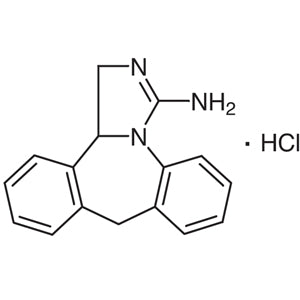
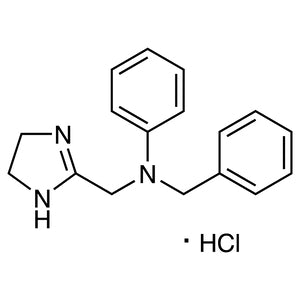
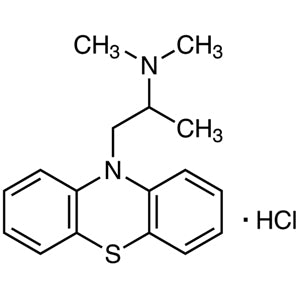
Epinastine is a chemical compound widely used in pharmacological and biochemical research. It plays a crucial role in laboratories focused on life sciences, particularly in experimental studies related to pharmacological effects and drug mechanisms. As a key reagent in pharmaceutical research, Epinastine is essential for understanding how substances interact with biological systems. Its presence in Indonesian laboratories supports the development of new therapeutic agents and the testing of existing ones.
Epinastine is valued for its antihistaminic and anti-allergic properties, making it a preferred choice for researchers studying allergic reactions and skin disorders. Its chemical stability ensures consistent performance across various experimental conditions, while its complex molecular structure allows for advanced analytical techniques such as spectroscopy and chromatography. This versatility enhances its utility in both basic and applied research settings.
In Indonesian laboratories, Epinastine is commonly used in pharmacological studies, especially in the development of new drugs and clinical trials. Its availability in multiple packaging options makes it convenient for researchers to use according to their experimental needs. The compound’s reliability and adaptability make it an essential tool for advancing scientific knowledge and innovation in the field of pharmaceutical research.
TCI brochures (PDF)
- Immune System, Inflammation, Allergy Research Reagents 2025-05-26 · p. 4
- Pharmaceutical Ingredients for Research and Experimental Use 2026-03-09 · p. 35
- Pharmaceutical Research: Epinastine is ideal for studying drug mechanisms and pharmacological effects due to its antihistaminic properties.
- Allergy and Skin Disorder Studies: Its anti-allergic activity makes it suitable for investigating allergic responses and dermatological conditions.
- Biochemical Analysis: The compound’s complex molecular structure supports advanced analytical techniques such as spectroscopy and chromatography.
- Drug Development: Epinastine is used in the formulation and testing of new therapeutic agents for various medical applications.
- Clinical Trial Support: It aids in evaluating the biological responses to specific compounds in controlled experimental settings.
| Brand | TCI |
|---|---|
| CAS number | 80012-43-7 |
| Molecular formula | — |
| Purity | — |
| Category | Life Science > Biochemicals and Reagents > Pharmaceutical Research Reagents |
| Pack sizes | Available in various packaging options for experimental use |
| Physical form | Solid (as per standard reagent specifications) |
| Storage | Store in a cool, dry place away from light and moisture |
Epinastine should be stored in a cool, dry environment, away from direct light and moisture to maintain its chemical stability. It is recommended to use airtight containers to prevent contamination and degradation. In laboratory settings, proper labeling and secure storage are essential to ensure safe handling. Researchers should avoid exposure to high temperatures and humidity, as these conditions may affect the compound’s integrity. Regular monitoring of storage conditions ensures the reagent remains suitable for experimental use. Proper handling and storage practices help preserve the quality and effectiveness of Epinastine in research applications.
—
Product Categories
- Biochemicals and ReagentsPharmaceutical Research Reagents (for Experimental Use)Anti-allergic Ingredients (for Research and Experimental Use)
- Cell BiologyImmune System, Inflammation, Allergy ResearchHistamine Receptor Antagonists
- Pharmaceutical Development and Drug Discovery ResearchPharmaceutical Research Reagents (for Experimental Use)Anti-allergic Ingredients (for Research and Experimental Use)
Produk Terkait
-
EpinastineHydrochloride TCI E0799
Regular price Rp 1.510.950,00Regular priceRp 1.072.050,00Sale price Rp 1.510.950,00 -
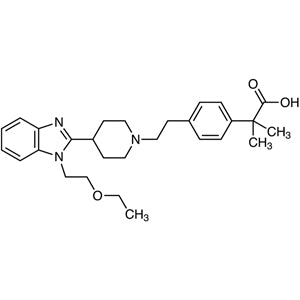
Bilastine TCI B5392
Regular price Rp 6.811.350,00Regular priceRp 4.778.550,00Sale price Rp 6.811.350,00 -
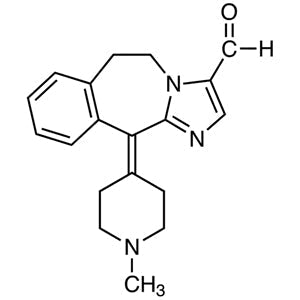
Alcaftadine TCI A3237
Regular price Rp 3.949.050,00Regular priceRp 2.777.250,00Sale price Rp 3.949.050,00 -
AlimemazineTartrate TCI A2813
Regular price Rp 1.776.600,00Regular priceRp 1.257.900,00Sale price Rp 1.776.600,00 -
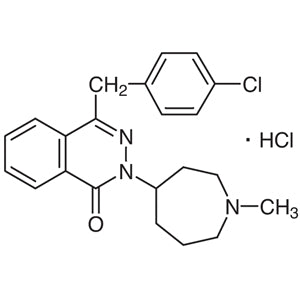
AzelastineHydrochloride TCI A2340
Regular price Rp 1.405.950,00Regular priceRp 998.550,00Sale price Rp 1.405.950,00 -
AntazolineHydrochloride TCI A2132
Regular price Rp 3.683.400,00Regular priceRp 2.591.400,00Sale price Rp 3.683.400,00 -
PromethazineHydrochloride TCI P2029
Regular price Rp 1.563.450,00Regular priceRp 1.108.800,00Sale price Rp 1.563.450,00 -
OlopatadineHydrochloride TCI O0361
Regular price Rp 10.758.300,00Regular priceRp 7.539.000,00Sale price Rp 10.758.300,00