![Fluorescin [Reagent for Oxydases and Peroxydases] (CAS 518-44-5) - TCI F0028 - AMI Scientific](http://amiscientific.com/cdn/shop/files/TCI2510F0028.jpg?v=1767113210&width=1946)
![Fluorescin [Reagent for Oxydases and Peroxydases] (CAS 518-44-5) - TCI F0028 - AMI Scientific](http://amiscientific.com/cdn/shop/files/TCI2510F0028.jpg?v=1767113210&width=1445)
Fluorescin is a chemical compound widely used as a reagent in laboratory experiments, particularly in the analysis of oxidases and peroxidases. It serves as a key tool for detecting and analyzing enzymatic activity in biochemical and microbiological studies. Its ability to emit green light when exposed to specific wavelengths of light makes it an essential component in fluorescence-based assays. This property enables researchers to visualize and quantify biochemical reactions with high sensitivity and accuracy. Fluorescin is a versatile reagent that supports a wide range of experimental applications due to its chemical stability and high reactivity.
One of the main reasons fluorescin is preferred in laboratory settings is its chemical stability and high reactivity. It dissolves well in organic solvents such as ethanol and water, making it easy to handle and incorporate into various experimental protocols. Its fluorescent properties allow for precise detection of enzymatic activity, even at low concentrations. Additionally, fluorescin's ability to change color based on environmental conditions makes it ideal for both qualitative and quantitative analysis. These characteristics make it a reliable and effective reagent for researchers in multiple scientific disciplines.
In Indonesian laboratories, fluorescin is commonly used in biochemical, microbiological, and environmental analysis. It is frequently employed in enzyme detection experiments, water quality testing, and biological sample analysis. Its widespread application in these fields highlights its importance as a fundamental reagent in research and experimental work. The compound's versatility and reliability make it a valuable asset for scientists and researchers in Indonesia.
- Biochemical enzyme activity assays due to its fluorescent properties that enable detection of oxidase and peroxidase reactions.
- Microbiological studies for identifying enzymatic activity in microbial cultures and metabolic processes.
- Environmental analysis for detecting pollutants and assessing water quality through fluorescence-based methods.
- Biological sample analysis for identifying and quantifying enzymatic reactions in tissue and cell samples.
- Fluorescence-based imaging techniques for visualizing biochemical reactions and cellular processes in research experiments.
| Brand | TCI |
|---|---|
| CAS number | 518-44-5 |
| Molecular formula | — |
| Purity | — |
| Category | Chemistry > Stains and Dyes (for Research and Experimental Use) > Stains and Dyes (Other) (for Research and Experimental Use) |
| Pack sizes | Available in various quantities as per supplier specifications |
| Physical form | Solid or powder, depending on packaging |
| Storage | Store in a cool, dry place away from light and moisture |
Fluorescin should be stored in a cool, dry place away from direct light and moisture to maintain its chemical stability. It is recommended to use airtight containers to prevent exposure to air and contaminants. Due to its fluorescent properties, it is important to handle it with care to avoid contamination. Proper labeling of storage containers is essential for safety and traceability. Always ensure that the working area is clean and free from potential chemical interactions. Regular inspection of storage conditions ensures the reagent remains effective for experimental use.
—
Produk Terkait
-
BasicOrange14 TCI B6599
Regular price Rp 1.696.800,00Regular price -
Calcein(mixtureofisomers)[forFluorometricDeterminationofCa] TCI C0004
Regular price From Rp 1.670.550,00Regular price -
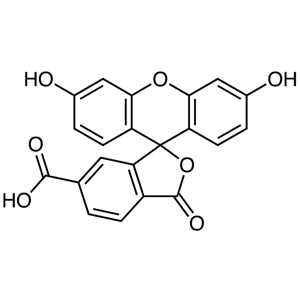
5-Carboxyfluorescein TCI C2477
Regular price Rp 3.207.750,00Regular price -
6-Carboxyfluorescein TCI C2478
Regular price Rp 4.611.600,00Regular price -
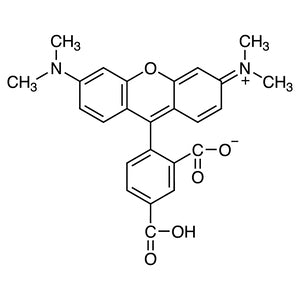
5-TAMRA TCI C2686
Regular price Rp 4.957.050,00Regular price -
Coumarin510 TCI C3072
Regular price From Rp 2.332.050,00Regular price -
2',7'-Difluorofluorescein TCI D6682
Regular price Rp 4.479.300,00Regular price -
Fluorescein TCI F0095
Regular price Rp 875.700,00Regular price