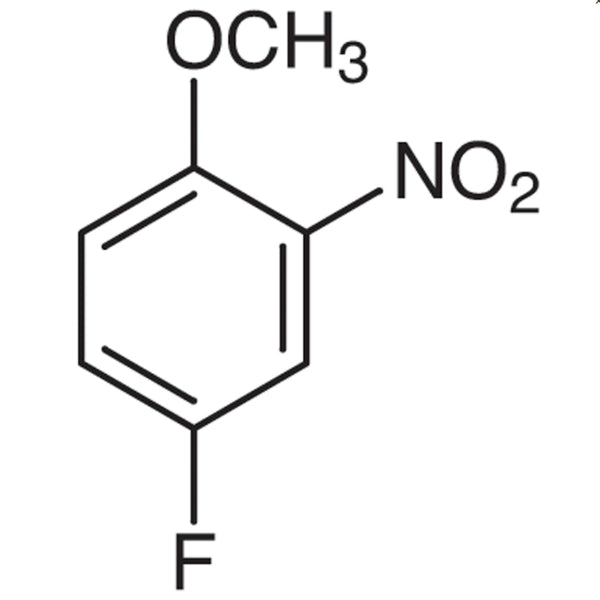
TCI F0615 with CAS number 445-83-0 is 4-Fluoro-2-nitroanisole, an aromatic compound carrying three different functional groups on a single benzene ring: a methoxy group, a nitro group, and a fluorine atom. The compound belongs to the family of fluorinated building blocks and is used in organic synthesis laboratories as a starting material for constructing more elaborate aromatic frameworks. Because three groups with distinctly different electronic characters sit in close proximity to one another, this molecule serves as an efficient entry point toward a range of aniline derivatives, heterocycles, and multiply substituted aromatic compounds.
The characteristic that makes this compound a preferred choice is a substitution pattern that is already organised from the outset. The nitro group is a strong electron-withdrawing substituent and can be reduced to an amine, opening the route toward fluorinated anilines that are ready to be acylated, diazotised, or cyclised into benzimidazoles and benzoxazoles. The fluorine atom on the aromatic ring imparts a distinctive electronic and metabolic influence and is frequently retained through to the final product, since it can improve the stability and lipophilicity of drug compounds. The methoxy group completes the framework with electron-donating character while also remaining available for further transformation.
In Indonesian laboratories, this reagent is typically employed in university research groups, pharmaceutical development units, and contract synthesis facilities working on fluorinated intermediates. It is generally used at bench scale for multi-step route development, method exploration, and the preparation of reference compounds. Laboratories select building blocks of this kind when a defined substitution pattern removes several preparatory steps from a synthetic sequence and shortens the path to the target molecule.
TCI brochures (PDF)
- Fluorination Reagents, Fluorinated Building Blocks 2026-03-18 · p. 25
Related TCI products
- TCI F0703 448-19-1 5-Fluoro-2-nitroanisole
- TCI F0617 455-93-6 2-Fluoro-4-nitroanisole
- TCI B5213 537050-14-9 2-Bromo-4'-fluoro-3'-(trifluoromethyl)acetophenone
- TCI B5074 749927-69-3 4-Bromo-2-fluoro-N-methylbenzamide
- TCI B4872 10472-88-5 2-Bromo-4-fluoro-6-nitroaniline
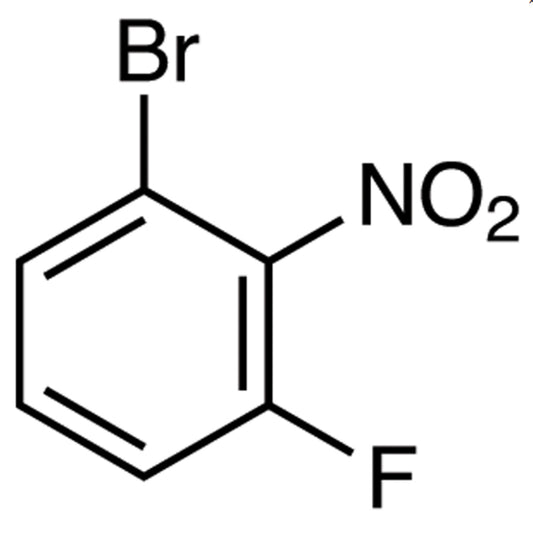
- TCI B4842 886762-70-5 1-Bromo-3-fluoro-2-nitrobenzene
- Fluorinated aniline synthesis: reduction of the nitro group delivers a fluorinated aniline in which the methoxy and fluorine substituents are already correctly positioned for downstream chemistry.
- Heterocycle construction: the amine obtained after reduction can be cyclised into benzimidazole and benzoxazole scaffolds, making this compound a direct precursor to nitrogen-containing ring systems.
- Medicinal chemistry intermediate preparation: the retained fluorine atom contributes stability and lipophilicity to candidate molecules, so the ring is commonly carried through an entire synthetic route.
- Diazotisation and functional group interconversion: the aniline derived from this material can be diazotised, giving access to a broad family of further substituted aromatic products.
- Multi-substituted aromatic model studies: three groups of differing electronic character on one ring make this compound useful for probing substitution behaviour and reaction selectivity in organic synthesis.
| Brand | TCI |
|---|---|
| CAS number | 445-83-0 |
| Molecular formula | — |
| Purity | — |
| Category | Chemistry > Building Blocks > Fluorinated Building Blocks |
| Pack sizes | available in standard TCI research-scale packaging; please confirm the size required when ordering |
| Physical form | — |
| Storage | keep in the closed original container under the conditions indicated on the manufacturer's label |
- Chemical name: 4-Fluoro-2-nitroanisole
Store the material in its original, tightly closed container in a cool, dry, well-ventilated area away from direct sunlight, heat sources, and incompatible substances such as strong oxidising and reducing agents. Use chemically resistant containers and keep them clearly labelled. Handle the compound in a fume hood while wearing safety glasses, gloves, and a laboratory coat, and avoid contact with skin and eyes as well as inhalation of vapour or dust. Transfer only the quantity needed for the work in progress, close the container promptly afterwards, and consult the manufacturer's safety data sheet before first use and for waste disposal guidance.
—
Produk Terkait
-
5-Fluoro-2-nitroanisole TCI F0703
Regular price From Rp 505.050,00Regular price -
2-Fluoro-4-nitroanisole TCI F0617
Regular price From Rp 452.550,00Regular price -
2-Bromo-4'-fluoro-3'-(trifluoromethyl)acetophenone TCI B5213
Regular price From Rp 505.050,00Regular price -
4-Bromo-2-fluoro-N-methylbenzamide TCI B5074
Regular price From Rp 1.035.300,00Regular price -
2-Bromo-4-fluoro-6-nitroaniline TCI B4872
Regular price Rp 1.140.300,00Regular price -
1-Bromo-3-fluoro-2-nitrobenzene TCI B4842
Regular price From Rp 1.273.650,00Regular price -
N2-(tert-Butoxycarbonyl)-4-fluoro-1,2-phenylenediamine TCI B4237
Regular price From Rp 980.700,00Regular price -
N1-(tert-Butoxycarbonyl)-4-fluoro-1,2-phenylenediamine TCI B4236
Regular price From Rp 1.326.150,00Regular price