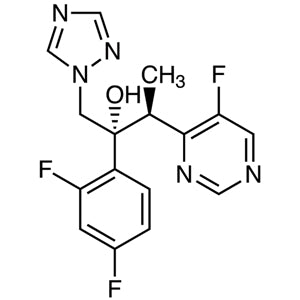
Fluconazole is a widely used antifungal compound in laboratory research, playing a critical role in the study of fungal growth inhibition. As a member of the azole class of antifungal agents, it is essential for biochemical and microbiological experiments. Its primary function is to inhibit the synthesis of fungal cell membranes, thereby preventing microbial proliferation and reproduction. This makes it an indispensable tool for researchers working on antifungal drug development and microbial interaction studies. Fluconazole is commonly utilized in both academic and industrial research settings, supporting a broad range of scientific investigations.
One of the key reasons Fluconazole is a preferred choice in laboratories is its chemical stability and solubility in organic solvents. These properties make it easy to prepare solutions for various experimental applications. Additionally, Fluconazole is non-toxic and has a relatively high safety profile, making it suitable for use in pharmacological and microbiological research. Its solid form also facilitates storage and handling, allowing for consistent use across different experimental scales. These characteristics contribute to its reliability and versatility in laboratory environments.
In Indonesian laboratories, Fluconazole is frequently used in research related to fungal diseases, antibiotic testing, and the development of new pharmaceuticals. It is an essential component of the materials and reagents required for public health research, supporting studies on infectious diseases and antimicrobial resistance. Its availability and reliability make it a standard choice for many research teams in the country.
TCI brochures (PDF)
- Antimicrobials and Antitumor Agents for Research and Experimental Use 2025-04-24 · p. 9
- Pharmaceutical Ingredients for Research and Experimental Use 2026-03-09 · p. 9
- Fluconazole is used in antifungal research to study the mechanisms of fungal growth inhibition and drug interactions.
- It is applied in microbiological studies to test the efficacy of antifungal agents against various fungal strains.
- Fluconazole supports pharmacological research by enabling the evaluation of drug effects on microbial activity.
- It is utilized in antibiotic testing to assess the effectiveness of different antifungal compounds.
- Fluconazole is employed in the development of new pharmaceuticals to explore its potential as a therapeutic agent.
| Brand | TCI |
|---|---|
| CAS number | 86386-73-4 |
| Molecular formula | — |
| Purity | — |
| Category | Life Science > Biochemicals and Reagents > Antibiotics |
| Pack sizes | Available in various quantities as per standard laboratory requirements |
| Physical form | Solid |
| Storage | Store in a cool, dry place away from direct sunlight |
Fluconazole should be stored in a cool, dry environment to maintain its chemical stability and prevent degradation. It is recommended to keep it in airtight containers to avoid moisture exposure, which could affect its solubility and effectiveness. Due to its non-toxic nature, it is generally safe to handle, but standard laboratory safety protocols should still be followed. Proper labeling of containers is essential to ensure safe handling and prevent accidental contamination. Fluconazole is suitable for storage in standard chemical storage cabinets, provided it is kept away from incompatible substances. Regular inspection of storage conditions is advised to ensure product integrity and availability for research use.
—
Product Categories
- Biochemicals and ReagentsAntibioticsAntibiotics (by Application)
- Biochemicals and ReagentsPharmaceutical Research Reagents (for Experimental Use)Antifungal Ingredients (for Research and Experimental Use)
- Biochemicals and Reagents
- Cell BiologyCancer ResearchChemopreventive Agents [Cancer Research]
- Cell BiologyCancer Research
- MicrobiologyAntibioticsAntibiotics (by Application)
- Pharmaceutical Development and Drug Discovery ResearchPharmaceutical Research Reagents (for Experimental Use)Antifungal Ingredients (for Research and Experimental Use)
- Pharmaceutical Development and Drug Discovery ResearchAntibioticsAntibiotics (by Application)
Produk Terkait
-
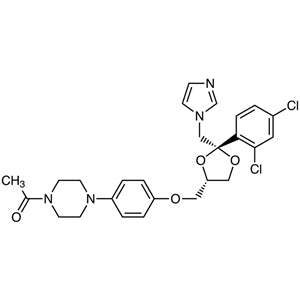
Ketoconazole TCI K0045
Regular price From Rp 1.881.600,00Regular priceRp 1.331.400,00Sale price From Rp 1.881.600,00 -
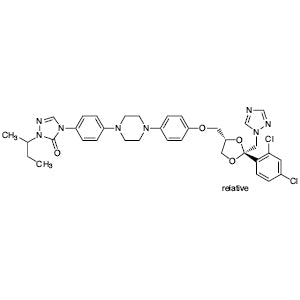
Itraconazole TCI I0732
Regular price From Rp 3.392.550,00Regular priceRp 2.387.700,00Sale price From Rp 3.392.550,00 -
Terbinafine TCI T3677
Regular price From Rp 2.173.500,00Regular priceRp 1.535.100,00Sale price From Rp 2.173.500,00 -
MiconazoleNitrate TCI M1769
Regular price From Rp 1.246.350,00Regular priceRp 887.250,00Sale price From Rp 1.246.350,00 -
Ritonavir TCI R0116
Regular price From Rp 2.121.000,00Regular priceRp 1.498.350,00Sale price From Rp 2.121.000,00 -
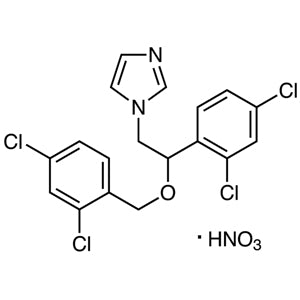
EconazoleNitrate TCI E0957
Regular price From Rp 1.326.150,00Regular priceRp 942.900,00Sale price From Rp 1.326.150,00 -
Voriconazole TCI V0116
Regular price From Rp 1.696.800,00Regular priceRp 1.202.250,00Sale price From Rp 1.696.800,00 -
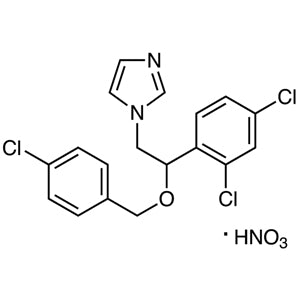
ButoconazoleNitrate TCI B4801
Regular price Rp 2.464.350,00Regular priceRp 1.738.800,00Sale price Rp 2.464.350,00