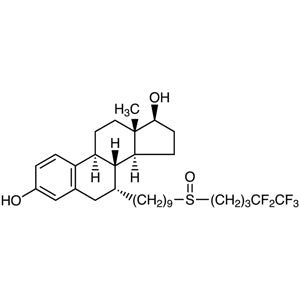
Fulvestrant TCI F1144, with CAS number 129453-61-8, is a pharmacological compound widely used in pharmaceutical research, particularly in oncology and endocrinology. As an estrogen receptor antagonist, it plays a critical role in laboratory experiments by inhibiting the activity of estrogen within the body. This compound is essential for studying the effects of estrogen suppression on breast cancer cells, which are among the most common cancer types in Indonesia. Its application in experimental research helps scientists understand the molecular mechanisms of hormone-related diseases and develop targeted therapeutic strategies.
The chemical stability and strong biological activity of Fulvestrant make it a preferred choice for high-precision experiments. Its ability to maintain effectiveness under various laboratory conditions ensures reliable results across different experimental setups. Additionally, its specificity and potency contribute to its widespread use in pharmacological and biochemical studies. These properties make it an indispensable tool for researchers aiming to explore the role of estrogen in disease progression and treatment response.
In Indonesian laboratories, Fulvestrant is commonly used in cancer and endocrine-related research. It is a key component in studies focused on breast cancer, hormonal imbalances, and drug development. Its role in advancing therapeutic approaches for patients with hormone-sensitive cancers underscores its importance in both academic and applied research settings. As a fundamental reagent, it supports the development of more effective and safe treatment options for various health conditions.
- Breast Cancer Research – Fulvestrant is used to study the effects of estrogen receptor antagonism on breast cancer cell proliferation, aiding in the development of targeted therapies.
- Endocrine Disorder Studies – It helps investigate the role of estrogen in hormonal imbalances, supporting research into conditions like endometriosis and infertility.
- Pharmacological Testing – Its strong biological activity makes it ideal for testing the efficacy of new drugs in hormone-related disease models.
- Biochemical Assays – Fulvestrant is used in assays that measure receptor binding and signaling pathways, providing insights into cellular responses.
- Drug Development Programs – It serves as a key reagent in the screening of potential therapeutic agents for hormone-sensitive cancers and endocrine disorders.
| Brand | TCI |
|---|---|
| CAS number | 129453-61-8 |
| Molecular formula | — |
| Purity | — |
| Category | Life Science > Biochemicals and Reagents > Pharmaceutical Research Reagents |
| Pack sizes | Available in various quantities as per standard laboratory requirements |
| Physical form | Solid (as per standard product description) |
| Storage | Store in a cool, dry place away from light and moisture |
Fulvestrant should be stored in a cool, dry environment, away from direct sunlight and moisture to maintain its chemical stability. It is recommended to use airtight containers to prevent exposure to air and contaminants. Proper labeling of storage containers is essential to ensure safe handling and prevent cross-contamination. Laboratory personnel should wear appropriate personal protective equipment when handling the compound. Regular monitoring of storage conditions is advised to ensure the integrity of the reagent. Adherence to standard laboratory safety protocols is crucial to maintain a safe working environment.
—
Produk Terkait
-
Corticosterone TCI C0388
Regular price From Rp 769.650,00Regular price -
CholesterylChloride TCI C0610
Regular price Rp 2.625.000,00Regular price -
CholesterylBromide TCI C0695
Regular price Rp 4.559.100,00Regular price -
CyproteroneAcetate TCI C2942
Regular price From Rp 2.518.950,00Regular price -
ClostebolAcetate TCI C3497
Regular price From Rp 2.016.000,00Regular price -
ClobetasoneButyrate TCI C3510
Regular price From Rp 1.618.050,00Regular price -
Ciclesonide TCI C3701
Regular price From Rp 1.326.150,00Regular price -
DehydrocholicAcid TCI D0042
Regular price From Rp 1.590.750,00Regular price