Ethyl Gallate is a chemical compound widely used in various laboratory applications, particularly in organic chemistry and analytical fields. As a derivative of gallic acid, it possesses a phenolic structure that provides strong antioxidant properties. This makes it a valuable material for researchers seeking to stabilize compounds or prevent oxidation during chemical reactions. Its versatility allows it to be used as a building block in the synthesis of more complex molecules, contributing to its popularity in chemical research.
The physical and chemical properties of Ethyl Gallate make it a preferred choice in laboratory settings. It is stable under certain conditions and dissolves well in organic solvents, which enhances its usability in a range of experimental setups. Its ability to interact with various functional groups enables it to be a key component in both qualitative and quantitative analyses. Additionally, its resistance to degradation ensures that it maintains its effectiveness over time, making it a reliable reagent for long-term research projects.
In Indonesian laboratories, Ethyl Gallate is commonly used in scientific research across multiple disciplines, including pharmaceuticals, food chemistry, and analytical testing. It is frequently found in research facilities that focus on developing new compounds, analyzing natural products, and conducting quality control assessments. Its consistent performance and broad applicability have made it a staple in the chemical supply chain within the country’s academic and industrial sectors.
TCI brochures (PDF)
- Phytochemicals 2025-12-17 · p. 14
- Organic synthesis where Ethyl Gallate acts as a stabilizing agent due to its antioxidant properties and reactivity with functional groups.
- Analytical chemistry applications where its solubility in organic solvents allows for accurate detection and quantification of compounds.
- Pharmaceutical research for the development of antioxidant formulations and drug stability testing in controlled environments.
- Food chemistry studies where it is used to assess the oxidative stability of food components and natural product extracts.
- Quality control in laboratories that require reliable reagents for consistent and reproducible experimental results.
| Brand | TCI |
|---|---|
| CAS number | 831-61-8 |
| Molecular formula | — |
| Purity | — |
| Category | Chemistry > Building Blocks > Non-Heterocyclic Building Blocks |
| Pack sizes | Available in various quantities as per standard laboratory supply formats |
| Physical form | Solid, typically in crystalline or powder form |
| Storage | Store in a cool, dry place away from direct sunlight and moisture |
Ethyl Gallate should be stored in a cool, dry place, away from direct sunlight and moisture to maintain its stability and effectiveness. It is recommended to use airtight containers to prevent exposure to air and humidity, which could affect its chemical integrity. In laboratory settings, it should be handled with care, using appropriate personal protective equipment such as gloves and safety goggles. Due to its phenolic nature, it may have mild irritant properties, so proper ventilation should be ensured when working with it. Ethyl Gallate is generally stable under normal storage conditions, making it suitable for long-term use in research environments. Always ensure that it is kept out of reach of children and stored separately from incompatible substances to maintain safety standards.
—
Produk Terkait
-
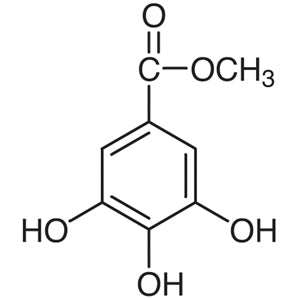
MethylGallate TCI G0017
Regular price From Rp 637.350,00Regular price -
(-)-GallocatechinGallate TCI G0628
Regular price Rp 6.943.650,00Regular price -
n-OctylGallate TCI G0206
Regular price From Rp 1.590.750,00Regular price -
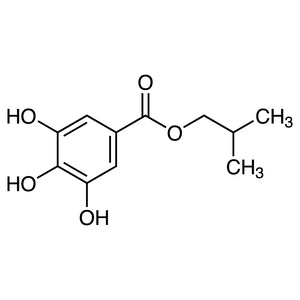
IsobutylGallate TCI G0205
Regular price Rp 1.538.250,00Regular price -
ButylGallate TCI G0186
Regular price Rp 1.115.100,00Regular price -
StearylGallate TCI G0019
Regular price Rp 2.254.350,00Regular price -
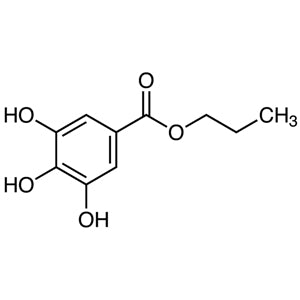
PropylGallate TCI G0018
Regular price From Rp 637.350,00Regular price -
DodecylGallate TCI G0015
Regular price From Rp 1.087.800,00Regular price