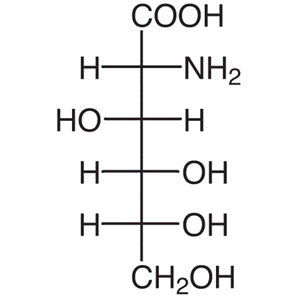
D-Glucosamic Acid (TCI G0042), with CAS number 3646-68-2, is a chemical compound widely used in chemical and biochemical experiments. As a derivative of glucosamine, it plays a crucial role in glycoscience research, particularly in the study of glycosides and glycoproteins. Its complex molecular structure makes it an essential component in various laboratory processes, supporting both synthetic and analytical applications. This compound is commonly found in research settings where stability and reactivity are key factors in experimental design.
D-Glucosamic Acid is valued for its chemical stability under controlled conditions, making it a reliable reagent for laboratory use. It is typically supplied as a white solid and is known for its resistance to degradation, which ensures consistent results in experiments. However, it is sensitive to moisture and air exposure, requiring careful handling and storage. These properties make it a preferred choice for researchers looking for a stable and effective compound in their work.
In Indonesian laboratories, D-Glucosamic Acid is used extensively in scientific research and educational settings. It supports studies in organic chemistry and biochemistry, particularly in carbohydrate metabolism and molecular interactions. Its application extends to pharmaceutical research, where it is used to investigate the properties of bioactive compounds. The compound’s versatility and reliability make it a valuable resource for both academic and industrial research in Indonesia.
TCI brochures (PDF)
Related TCI products
- Organic synthesis experiments benefit from D-Glucosamic Acid as a building block for complex molecule creation due to its structural versatility and reactivity.
- Biochemical research utilizes this compound to study carbohydrate metabolism and molecular interactions in biological systems.
- Pharmaceutical research employs D-Glucosamic Acid to investigate the properties and behavior of bioactive compounds in drug development.
- Educational institutions use it to teach students about glycoscience and the role of carbohydrates in biological processes.
- Analytical chemistry applications leverage its stability and reactivity for accurate and reproducible experimental results.
| Brand | TCI |
|---|---|
| CAS number | 3646-68-2 |
| Molecular formula | — |
| Purity | — |
| Category | Chemistry > Chemical Biology > Glycoscience |
| Pack sizes | Available in standard laboratory quantities |
| Physical form | White solid |
| Storage | Requires protection from moisture and air exposure |
D-Glucosamic Acid should be stored in a cool, dry place away from moisture and direct sunlight. It is recommended to use airtight containers to prevent exposure to air, which can lead to degradation. Laboratory personnel should handle the compound with care, using appropriate personal protective equipment such as gloves and safety goggles. Due to its sensitivity, it is best stored in a sealed container within a desiccator or a controlled environment to maintain its chemical integrity. Regular monitoring of storage conditions is essential to ensure the compound remains stable and suitable for use in experiments.
—
Produk Terkait
-
N-Acetyl-D-glucosamine TCI A0092
Regular price From Rp 928.200,00Regular price -
N-Valeryl-D-glucosamine TCI V0011
Regular price Rp 1.565.550,00Regular price -
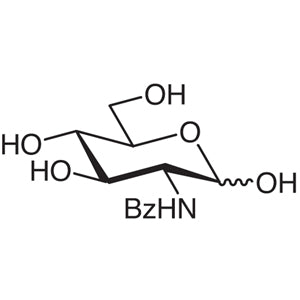
N-Benzoyl-D-glucosamine TCI B0200
Regular price From Rp 1.298.850,00Regular price -
PhenylN-Acetyl-alpha-D-glucosaminide TCI P0130
Regular price Rp 3.100.650,00Regular price -
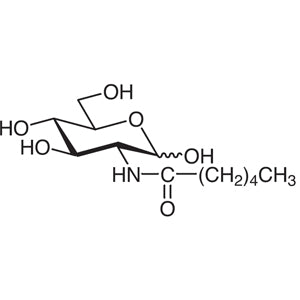
N-Hexanoyl-D-glucosamine TCI H0118
Regular price Rp 1.881.600,00Regular price -
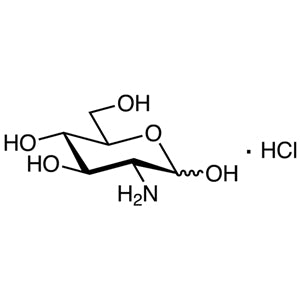
D-(+)-GlucosamineHydrochloride TCI G0044
Regular price From Rp 610.050,00Regular price -
2-Acetamido-1,3,4,6-tetra-O-acetyl-2-deoxy-beta-D-glucopyranose TCI A1459
Regular price From Rp 1.035.300,00Regular price -
4-Methoxyphenyl3-O-Allyl-6-O-benzyl-2-deoxy-2-phthalimido-beta-D-glucopyranoside TCI M1604
Regular price From Rp 2.837.100,00Regular price