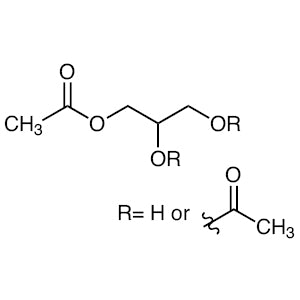
Diacetin is a chemical compound widely used in various chemical reactions and the synthesis of complex molecules. As one of the fundamental building blocks in organic chemistry, it serves as a source of ester groups that can react with other compounds to form new substances. Its versatility makes it an essential component in many laboratory processes, supporting both research and development activities. In the laboratory, Diacetin is commonly used to produce intermediate compounds that are essential for the production of pharmaceuticals and other chemical products.
Diacetin is valued for its stable chemical properties and its ability to react under specific conditions, which simplifies the synthesis process. It has good solubility in organic solvents such as ethyl acetate and ethanol, making it easy to handle and manipulate in various experimental setups. The compound’s molecular structure allows it to participate in a wide range of chemical reactions, particularly in the synthesis of both heterocyclic and non-heterocyclic compounds. This makes it a preferred choice for chemists working on diverse synthetic pathways.
In Indonesian laboratories, Diacetin is frequently used in organic chemistry research and the development of new chemical materials. It is an integral part of chemical synthesis processes and plays a key role in the creation of intermediate compounds. Its availability and reliability make it a standard material in both academic and industrial research settings, supporting ongoing scientific innovation and discovery.
Related TCI products
- TCI G0591 5459-38-1 Glycerol Triacrylate (stabilized with MEHQ)
- TCI B0526 5655-61-8 Bornyl Acetate (contains ca. 20% Isobornyl Acetate)
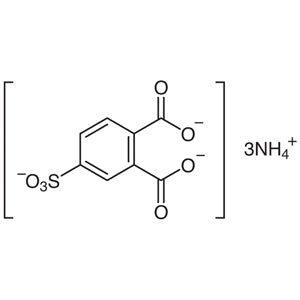
- TCI S0315 22411-24-1 Triammonium 4-Sulfophthalate (contains 3-Sulfophthalate)
- TCI S0136 89-08-7 4-Sulfophthalic Acid (contains 3-Sulfophthalic Acid) (ca 50% in Water)
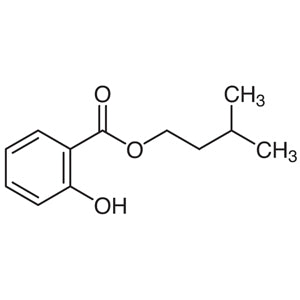
- TCI S0012 87-20-7 Isoamyl Salicylate (contains 2-Methylbutyl Salicylate)
- TCI P3165 593-29-3 Potassium Stearate (contains Potassium Palmitate)
- Organic synthesis is a key application where Diacetin is used as an ester source for creating complex molecules.
- Pharmaceutical development benefits from Diacetin's ability to form intermediates in drug synthesis processes.
- Cosmetic formulation utilizes Diacetin as a component in the creation of solvents and additives for personal care products.
- Analytical chemistry applications rely on Diacetin for its solubility and reactivity in various experimental conditions.
- Industrial chemical production uses Diacetin as a building block for the synthesis of diverse chemical compounds.
| Brand | TCI |
|---|---|
| CAS number | 25395-31-7 |
| Molecular formula | — |
| Purity | — |
| Category | Chemistry > Building Blocks > Non-Heterocyclic Building Blocks |
| Pack sizes | Available in various quantities as per standard laboratory supply |
| Physical form | Solid or powder, depending on the specific product variant |
| Storage | Store in a cool, dry place away from direct sunlight and moisture |
Diacetin should be stored in a cool, dry environment to maintain its chemical stability. It is recommended to keep it in airtight containers to prevent exposure to moisture and air, which may affect its properties. Due to its solubility in organic solvents, it should be handled in a well-ventilated area to minimize inhalation risks. Laboratory personnel should wear appropriate personal protective equipment, such as gloves and safety goggles, when handling Diacetin. It is important to avoid contact with skin and eyes, and to follow standard safety protocols for chemical handling. Proper storage and handling ensure the material remains effective and safe for use in laboratory applications.
—
Produk Terkait
-
GlycerolTriacrylate(stabilizedwithMEHQ) TCI G0591
Regular price Rp 2.889.600,00Regular price -
BornylAcetate(containsca.20%IsobornylAcetate) TCI B0526
Regular price Rp 717.150,00Regular price -
Triammonium4-Sulfophthalate(contains3-Sulfophthalate) TCI S0315
Regular price Rp 2.227.050,00Regular price -
4-SulfophthalicAcid(contains3-SulfophthalicAcid)(ca50%inWater) TCI S0136
Regular price From Rp 557.550,00Regular price -
IsoamylSalicylate(contains2-MethylbutylSalicylate) TCI S0012
Regular price From Rp 505.050,00Regular price -
PotassiumStearate(containsPotassiumPalmitate) TCI P3165
Regular price From Rp 769.650,00Regular price -
PentaerythritolTetrastearate(containspalmitate) TCI P0739
Regular price From Rp 1.298.850,00Regular price -
PropyleneGlycolMonostearate(containsca.35%Monopalmitate) TCI P0614
Regular price Rp 477.750,00Regular price