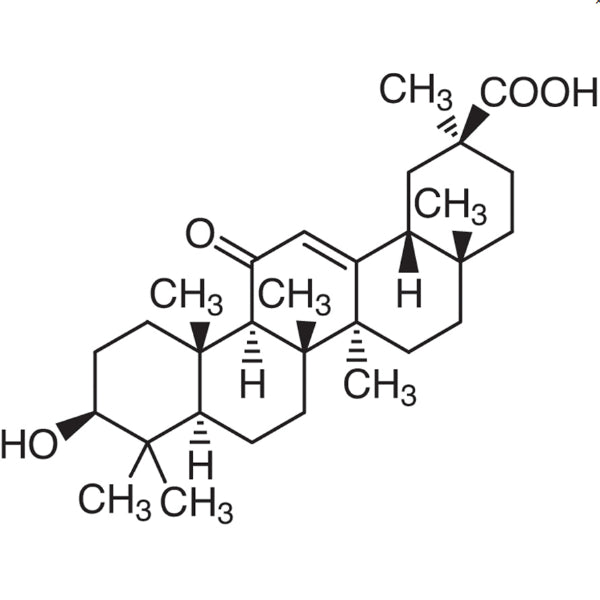
Glycyrrhetic Acid (471-53-4) is a widely used organic compound in pharmacological and biochemical research. As a derivative of glucocorticoids, it possesses a complex chemical structure that makes it valuable for various scientific experiments. In the laboratory, this compound is commonly employed as a building block for the synthesis of other compounds or as a testing agent in drug research. Its unique properties make it an essential tool for researchers aiming to explore biological effects on the human body, particularly in the context of metabolism and hormonal activity.
Glycyrrhetic Acid is chemically stable and soluble in organic solvents such as ethyl acetate and acetone. These characteristics allow it to be easily incorporated into a wide range of chemical reactions, making it suitable for precise and consistent laboratory applications. Its high purity and consistent quality ensure reliable results, which are critical for experiments requiring accuracy and reproducibility. The compound’s stability and solubility also contribute to its versatility in different experimental setups, enhancing its appeal among researchers.
In Indonesian laboratories, Glycyrrhetic Acid is frequently used in pharmaceutical and biochemical research. It plays a key role in studies related to drug development, metabolic processes, and hormonal activity. Its availability and reliability make it a preferred choice for scientists working in academic and industrial research settings. The compound’s application is supported by its well-documented properties and its relevance to various scientific disciplines.
TCI brochures (PDF)
- Terpenes 2025-09-22 · p. 9
- Phytochemicals 2025-12-17 · p. 6
- Pharmaceutical Ingredients for Research and Experimental Use 2026-03-09 · p. 45
- Pharmaceutical Research Reagents: Glycyrrhetic Acid is ideal for drug development due to its role in synthesizing compounds with potential therapeutic applications.
- Biochemical Analysis: Its chemical stability and solubility make it suitable for use in biochemical assays that require precise and reproducible results.
- Hormonal Activity Studies: The compound is frequently used to investigate the effects of glucocorticoid derivatives on hormonal pathways and metabolic processes.
- Metabolic Research: Glycyrrhetic Acid helps in studying how substances are processed and metabolized within the body, offering insights into biological mechanisms.
- Synthetic Chemistry: Its complex structure makes it a valuable starting material for the synthesis of other organic compounds in laboratory settings.
| Brand | TCI |
|---|---|
| CAS number | 471-53-4 |
| Molecular formula | — |
| Purity | — |
| Category | Life Science > Biochemicals and Reagents > Pharmaceutical Research Reagents |
| Pack sizes | Available in various quantities as per standard laboratory requirements |
| Physical form | Solid |
| Storage | Store in a cool, dry place away from direct sunlight |
Glycyrrhetic Acid should be stored in a cool, dry environment to maintain its chemical stability and prevent degradation. It is recommended to keep the compound in a tightly sealed container to avoid exposure to moisture and air. Due to its solubility in organic solvents, it is important to ensure that the storage area is free from incompatible materials. Laboratory personnel should handle the compound with care, using appropriate personal protective equipment when necessary. Proper storage and handling practices help ensure the compound remains effective and safe for use in experimental research.
—
Product Categories
- Biochemicals and ReagentsPharmaceutical Research Reagents (for Experimental Use)Pharmaceutical Research Reagents (Others)
- Biochemicals and ReagentsTerpenesTriterpenes
- Cell BiologyNutrition ResearchPhytochemicals
- Pharmaceutical Development and Drug Discovery ResearchPharmaceutical Research Reagents (for Experimental Use)Pharmaceutical Research Reagents (Others)
Produk Terkait
-
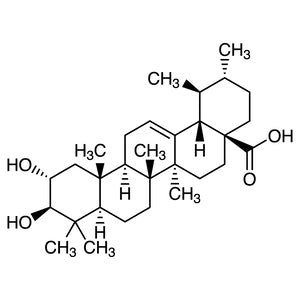
CorosolicAcid TCI C3921
Regular price Rp 8.770.650,00Regular priceRp 6.148.800,00Sale price Rp 8.770.650,00 -
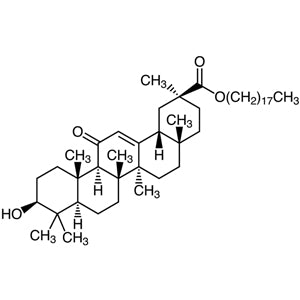
StearylGlycyrrhetinate TCI S0988
Regular price From Rp 1.483.650,00Regular priceRp 1.053.150,00Sale price From Rp 1.483.650,00 -
AsiaticAcid TCI A2475
Regular price Rp 3.445.050,00Regular priceRp 2.424.450,00Sale price Rp 3.445.050,00 -
Paeoniflorin TCI P1876
Regular price Rp 4.611.600,00Regular priceRp 3.240.300,00Sale price Rp 4.611.600,00 -
MoronicAcid TCI M2610
Regular price From Rp 4.559.100,00Regular priceRp 3.203.550,00Sale price From Rp 4.559.100,00 -
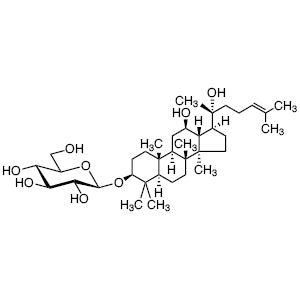
20(R)-GinsenosideRh2 TCI G0567
Regular price From Rp 4.293.450,00Regular priceRp 3.017.700,00Sale price From Rp 4.293.450,00 -
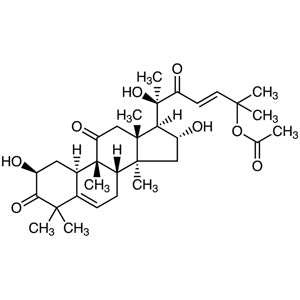
CucurbitacinB TCI C3442
Regular price From Rp 3.472.350,00Regular priceRp 2.427.600,00Sale price From Rp 3.472.350,00 -
Xanthotoxin TCI X0009
Regular price From Rp 557.550,00Regular priceRp 405.300,00Sale price From Rp 557.550,00