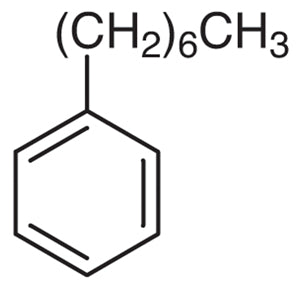
Heptylbenzene is an organic compound widely used in chemical reactions for the synthesis of complex molecules. It serves as a building block in the creation of aromatic compounds and their derivatives, playing a vital role in both research and industrial applications. In laboratory settings, heptylbenzene functions as a substrate or reactant in substitution and catalytic reactions, contributing to the development of new chemical structures. Its versatility makes it a valuable resource for chemists working on synthetic pathways and molecular design.
One of the key attributes that make heptylbenzene a preferred choice is its non-polar nature and high volatility. These properties facilitate efficient separation and isolation of final products during chemical processes. Additionally, its stable molecular structure ensures minimal degradation under normal conditions, enhancing its reliability in repeated use. The compound’s resistance to chemical breakdown also supports its application in long-term experiments and multi-step syntheses. Furthermore, the absence of heterocyclic elements makes it suitable for applications requiring high chemical purity.
In Indonesian laboratories, heptylbenzene is commonly used in organic chemistry research, particularly in the synthesis of synthetic compounds and the development of new chemical materials. It is also found in various industrial applications, where its chemical properties support the creation of specialized products. The compound’s safety profile, especially in controlled laboratory environments, further enhances its utility in both academic and applied research settings.
- Organic synthesis applications benefit from heptylbenzene’s stability and reactivity, enabling the creation of complex molecular structures.
- It is ideal for substitution reactions due to its non-polar nature, which allows for efficient interaction with various reagents.
- Catalytic processes often utilize heptylbenzene as a substrate, supporting the development of new chemical pathways and reaction mechanisms.
- In the production of aromatic derivatives, heptylbenzene provides a reliable starting material for the synthesis of a wide range of compounds.
- Its use in high-purity chemical applications ensures minimal contamination, making it suitable for advanced research and industrial processes.
| Brand | TCI |
|---|---|
| CAS number | 1078-71-3 |
| Molecular formula | — |
| Purity | — |
| Category | Chemistry > Building Blocks > Non-Heterocyclic Building Blocks |
| Pack sizes | Available in various quantities as per supplier specifications |
| Physical form | Liquid |
| Storage | Store in a cool, dark place away from heat and direct sunlight |
Heptylbenzene should be stored in a cool, dark environment to maintain its stability and prevent degradation. It is recommended to use airtight containers made of materials such as glass or stainless steel to minimize exposure to air and moisture. Due to its high volatility, proper sealing is essential to avoid evaporation. The compound should be kept away from sources of heat and direct sunlight to ensure long-term preservation. In laboratory settings, it is important to handle heptylbenzene with care, using appropriate personal protective equipment to ensure safety. Regular monitoring of storage conditions helps maintain the integrity of the compound for consistent performance in chemical applications.
—
Produk Terkait
-
1,3,5-Tri-tert-butylbenzene TCI T1633
Regular price From Rp 1.378.650,00Regular price -
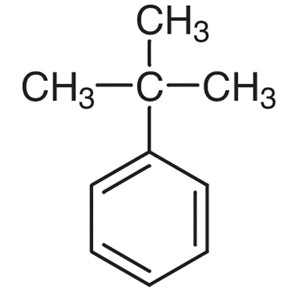
tert-Butylbenzene TCI B0715
Regular price From Rp 505.050,00Regular price -
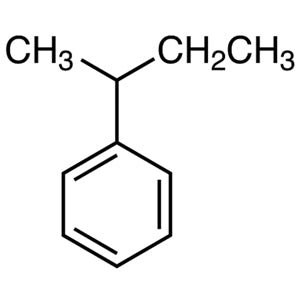
sec-Butylbenzene TCI B0714
Regular price From Rp 637.350,00Regular price -
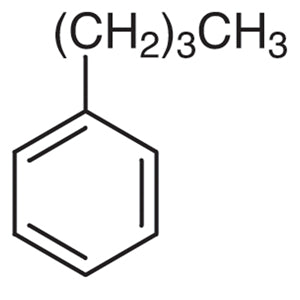
Butylbenzene TCI B0713
Regular price From Rp 875.700,00Regular price -
n-Octylbenzene TCI O0046
Regular price From Rp 2.757.300,00Regular price -
1-Ethyl-4-octylbenzene TCI E1431
Regular price From Rp 2.466.450,00Regular price -
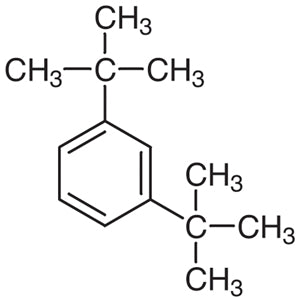
1,3-Di-tert-butylbenzene TCI D2431
Regular price From Rp 2.174.550,00Regular price -
1,4-Di-tert-butylbenzene TCI D2111
Regular price From Rp 903.000,00Regular price