

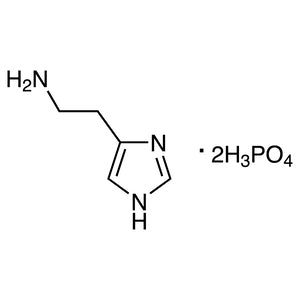
Histamine Diphosphate (51-74-1), also known as TCI H0147, is a chemical compound widely used in laboratory settings for its versatile role in chemical reactions and molecular synthesis. As a key component in heterocyclic compounds, it plays a crucial role in organic and analytical chemistry research. Its unique chemical structure allows it to act as a proton donor or a pH regulator, making it indispensable in processes that require precise pH control. This compound is particularly valuable in the synthesis of complex molecules where maintaining optimal reaction conditions is essential.
The properties of Histamine Diphosphate that make it a preferred choice include its chemical stability under specific conditions and its solubility in water. These characteristics ensure that it remains effective without significant degradation during chemical reactions. Additionally, its ability to bind with metal ions enhances its utility in complex reactions and quantitative analysis. The compound’s stability and reactivity make it a reliable reagent in various experimental setups, contributing to the accuracy and reproducibility of laboratory results.
In Indonesian laboratories, Histamine Diphosphate is commonly used in organic chemistry research, biological compound analysis, and product development. Its role in facilitating controlled chemical reactions and its compatibility with various experimental conditions make it a staple in both academic and industrial research environments. Its widespread application underscores its importance as a fundamental building block in chemical synthesis and analytical processes.
TCI brochures (PDF)
- Reagents for Preparing Animal Disease Models 2024-09-13 · p. 1
- Alkaloids 2025-10-10 · p. 7
- Immune System, Inflammation, Allergy Research Reagents 2025-05-26 · p. 1
- Immunology Research Reagents 2026-06-03 · p. 6
- Reagents for Biological Research 2025-03-11 · p. 49
Related TCI products
- Organic synthesis applications benefit from Histamine Diphosphate’s ability to regulate pH and act as a proton donor, enhancing reaction efficiency in complex molecule creation.
- Analytical chemistry relies on this compound for its capacity to bind metal ions, aiding in the detection and quantification of trace elements in samples.
- Biochemical research utilizes Histamine Diphosphate due to its role in maintaining pH stability during enzyme assays and protein studies.
- Pharmaceutical development incorporates this compound in the synthesis of drug molecules that require precise pH control during formulation.
- Environmental analysis employs Histamine Diphosphate to monitor and control pH levels in samples, ensuring accurate data collection in water and soil testing.
| Brand | TCI |
|---|---|
| CAS number | 51-74-1 |
| Molecular formula | — |
| Purity | — |
| Category | Chemistry > Building Blocks > Heterocyclic Building Blocks |
| Pack sizes | — |
| Physical form | — |
| Storage | Store in a cool, dry place away from moisture and direct sunlight |
Histamine Diphosphate should be stored in a cool, dry environment to maintain its chemical stability and prevent degradation. It is recommended to keep the compound in a sealed container to avoid exposure to moisture and air, which can affect its performance in reactions. While the physical form is not specified, it is advisable to use appropriate containers that are resistant to chemical reactions and ensure safe handling. Laboratory personnel should always follow standard safety protocols when working with this compound, including wearing protective gloves and goggles. Proper storage conditions are essential to ensure the compound remains effective and safe for use in various experimental applications.
—
Product Categories
- Biochemicals and ReagentsAlkaloidsImidazole Alkaloids
- Biochemicals and ReagentsAnimal Disease Models PreparationReagents for Inflammation and Immunity Disorder Models
- Biochemicals and ReagentsAnimal Disease Models PreparationReagents for Pain and Itch Models
- Cell BiologyImmune System, Inflammation, Allergy ResearchChemical Mediators
Produk Terkait
-
HistamineDihydrochloride TCI H0146
Regular price From Rp 505.050,00Regular price -
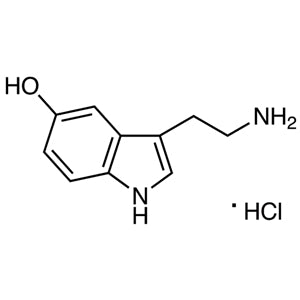
SerotoninHydrochloride TCI S0370
Regular price Rp 9.248.400,00Regular price -
ChloroquineDiphosphate TCI C2301
Regular price From Rp 1.485.750,00Regular price -
AdenineHydrochlorideHemihydrate TCI A0150
Regular price From Rp 664.650,00Regular price -
Capsaicin(Natural) TCI M1149
Regular price Rp 1.670.550,00Regular price -
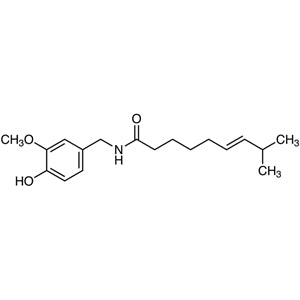
N-Vanillylnonanamide[=Capsaicin(Synthetic)] TCI M0900
Regular price Rp 5.194.350,00Regular price -
Adenosine5'-DiphosphateDisodiumSalt TCI A0626
Regular price From Rp 769.650,00Regular price -
Adenosine5'-TriphosphateDisodiumSaltHydrate TCI A0157
Regular price From Rp 557.550,00Regular price



![TCI M0900 2444-46-4 N-Vanillylnonanamide [=Capsaicin (Synthetic)] — struktur kimia](http://amiscientific.com/cdn/shop/files/TCI2510M0900-struktur.jpg?v=1791525106&width=533)

