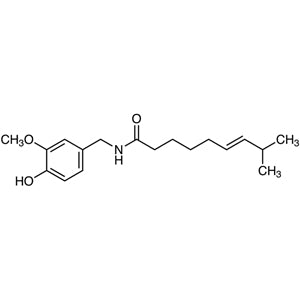
Capsaicin is a naturally occurring chemical compound found in chili peppers and paprika. In the laboratory, it serves as a key reagent for various scientific research applications, particularly in biochemistry and pharmacology. Its ability to activate the TRPV1 receptor triggers sensory responses in humans, making it essential for studies on heat and pain perception. This compound is widely used in research focused on sensory biology, neuropharmacology, and therapeutic applications. Its chemical stability and solubility in organic solvents like ethyl acetate and acetone further enhance its utility in chemical reactions and formulation processes.
Capsaicin is preferred due to its strong biological activity and chemical stability. It is soluble in organic solvents, which facilitates its use in a wide range of experimental setups. Its ability to interact with specific receptors makes it a valuable tool for studying cellular responses and signaling pathways. Additionally, its natural origin and well-documented properties make it a reliable choice for reproducible and accurate research outcomes. The compound's versatility supports its application in both basic and applied research fields.
In Indonesian laboratories, capsaicin is commonly used in neuropharmacology, analgesic research, and food product development. It plays a crucial role in studies exploring natural compounds for therapeutic and health-related applications. Researchers in Indonesia often incorporate capsaicin into projects aimed at uncovering the potential of natural substances in pharmaceutical and cosmetic industries. Its widespread use highlights its importance in both academic and industrial research settings.
TCI brochures (PDF)
- Efflux Pump Research Reagents 2024-12-24 · p. 1
- Reagents for Preparing Animal Disease Models 2024-09-13 · p. 1
- Traditional Medicine/Crude Medicine Research Reagents 2024-09-11 · p. 1
- Alkaloids 2025-10-10 · p. 8
- Immunology Research Reagents 2026-06-03 · p. 8
- Plant Research Reagents 2026-02-24 · p. 8
- Neuropharmacology research benefits from capsaicin's ability to activate TRPV1 receptors, aiding in the study of pain and sensory responses.
- Analgesic development utilizes capsaicin to investigate its potential in creating novel pain-relief formulations and therapeutic applications.
- Food science applications involve capsaicin in analyzing the heat-producing compounds in chili peppers and their impact on flavor and sensory perception.
- Cosmetic formulation studies leverage capsaicin's properties for developing topical treatments with therapeutic effects on skin conditions.
- Pharmaceutical research explores capsaicin's role in developing natural-based drugs for inflammatory and pain-related disorders.
| Brand | TCI |
|---|---|
| CAS number | 404-86-4 |
| Molecular formula | — |
| Purity | — |
| Category | Life Science > Biochemicals and Reagents > Alkaloids |
| Pack sizes | Available in various quantities as per standard laboratory requirements |
| Physical form | Solid powder |
| Storage | Store in a cool, dry place away from light and moisture |
Capsaicin should be stored in a cool, dry place, away from direct light and moisture to maintain its chemical stability. It is recommended to use airtight containers made of glass or polyethylene to prevent contamination and degradation. Due to its potency, handling should be done with appropriate personal protective equipment, such as gloves and safety goggles, to avoid skin and eye contact. In laboratory settings, it is important to ensure proper ventilation when working with capsaicin to minimize inhalation risks. The compound should never be stored near incompatible materials like strong oxidizing agents. Regular inspection of storage conditions is advised to ensure the integrity of the material remains intact for research use.
—
Product Categories
- Biochemicals and ReagentsAlkaloidsAlkaloids (Other)
- Biochemicals and ReagentsAnimal Disease Models PreparationReagents for Inflammation and Immunity Disorder Models
- Biochemicals and ReagentsAnimal Disease Models PreparationReagents for Pain and Itch Models
- Biochemicals and ReagentsCrude Medicine Ingredients for Research and Experimental Use
- Cell BiologyNutrition ResearchPhytochemicals
- MicrobiologyEfflux Pump ResearchEfflux Pump Inhibitors
- Pharmaceutical Development and Drug Discovery ResearchCrude Medicine Ingredients for Research and Experimental Use
Produk Terkait
-
N-Vanillylnonanamide[=Capsaicin(Synthetic)] TCI M0900
Regular price Rp 5.194.350,00Regular price -
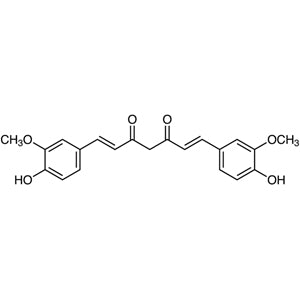
Curcumin(Natural) TCI C0434
Regular price From Rp 637.350,00Regular price -
Reserpine TCI R0007
Regular price Rp 1.936.200,00Regular price -
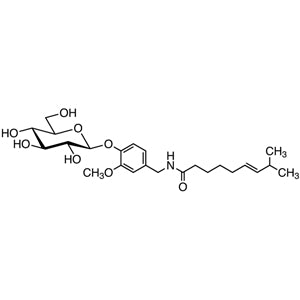
Capsaicinbeta-D-Glucopyranoside TCI C2548
Regular price Rp 3.605.700,00Regular price -
BerberineSulfate TCI B0451
Regular price From Rp 1.326.150,00Regular price -
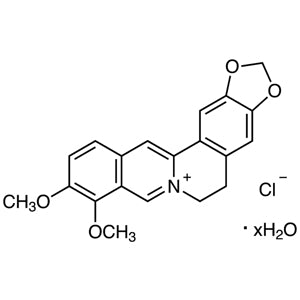
BerberineChlorideHydrate TCI B0450
Regular price From Rp 505.050,00Regular price -
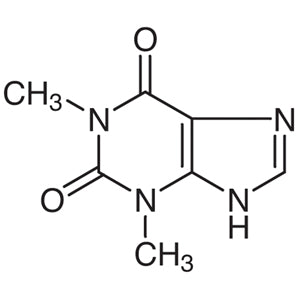
Theophylline TCI T0179
Regular price From Rp 505.050,00Regular price -
Theobromine TCI T0178
Regular price From Rp 1.220.100,00Regular price
![TCI M0900 2444-46-4 N-Vanillylnonanamide [=Capsaicin (Synthetic)] — struktur kimia](http://amiscientific.com/cdn/shop/files/TCI2510M0900-struktur.jpg?v=1791525106&width=533)