L-Histidine is a proteinogenic amino acid that naturally forms part of the proteins of living organisms, classified as essential for children and semi-essential for adults. Its molecular structure carries an imidazole side chain, which makes it one of the most chemically versatile of the amino acids. In the TCI catalogue this product is listed under the code H0149 and is grouped within the conjugation chemistry and click chemistry product lines, reflecting its role as a reactive and coordinating building block in modern biochemical work.
The main attraction of this compound lies in its imidazole ring, which can shift protonation state around physiological pH and therefore acts both as a buffering group and as an acid-base catalyst at the active sites of many enzymes. Its ability to form strong coordination bonds with nickel and cobalt ions underpins the purification of histidine-tagged proteins by immobilised metal affinity chromatography, one of the most widely used methods in modern molecular biology. As a pure L-enantiomer, the material suits experiments that demand optical purity.
In Indonesian laboratories, L-Histidine is used as a component of culture media formulations, as a constituent of buffer systems, as a metal-chelating ligand, and as a selective attachment point in a range of biomolecule conjugation and protein engineering strategies. These roles place it in university biochemistry teaching laboratories, molecular biology research groups, biotechnology facilities, and analytical laboratories preparing reference solutions and working media for routine and developmental work.
TCI brochures (PDF)
- Ligands Accelerating Click Reaction 2022-11-29 · p. 2
- Immune System, Inflammation, Allergy Research Reagents 2025-05-26 · p. 1
- Click Chemistry 2026-09-08 · p. 7
- Amino Acids and Peptide Synthesis Reagents 2025-08-14 · p. 4
- Reagents for Biological Research 2025-03-11 · p. 57
- Cell and microbial culture media preparation — supplied as a defined amino acid component so that media composition remains controlled and reproducible across repeated culture batches.
- Buffer system formulation — the imidazole side chain changes protonation state near physiological pH, allowing the compound to stabilise solution pH in biochemical work.
- Metal-chelating ligand chemistry — the side chain coordinates strongly with transition metal ions, making it useful wherever a defined amino acid chelator is required.
- Immobilised metal affinity chromatography studies — its strong nickel and cobalt coordination is the chemical basis of histidine-tagged protein purification, a standard molecular biology technique.
- Bioconjugation and protein engineering — serves as a selective attachment point in conjugation and click chemistry strategies for building modified biomolecules and protein constructs.
From the TCI brochure
- CuAAC of benzyl azide with a fluorophenyl alkyne (structure drawn, not named) with CuSO4 (cat.) and sodium ascorbate in t-BuOH/H2O
| Brand | TCI (catalogue code H0149) |
|---|---|
| CAS number | 71-00-1 |
| Molecular formula | — |
| Purity | — |
| Category | Chemistry > Chemical Biology > Conjugation Chemistry / Click Chemistry |
| Pack sizes | available in the pack sizes listed in the TCI catalogue for this item |
| Physical form | — |
| Storage | store according to the conditions stated on the manufacturer's label and safety data sheet |
- Chemical identity: L-Histidine, the pure L-enantiomer, suitable for work requiring optical purity
Keep the container tightly closed in a cool, dry, well-ventilated area, away from moisture, direct sunlight, and incompatible materials, and follow the storage conditions given on the manufacturer's label and safety data sheet. Original supplier packaging or clean, tightly sealed glass or chemically resistant plastic containers with clear labelling are appropriate. Handle with standard laboratory personal protective equipment, including a laboratory coat, safety glasses, and gloves, and weigh out portions on a clean balance to avoid contaminating the bulk stock. Use clean, dry spatulas, close the container promptly after dispensing, and consult the safety data sheet before first use and before disposal.
References cited in the TCI brochure
- Philipp Krapf. Seyferth–Gilbert Homologation as a Route to 18F‐Labeled Building Blocks: Preparation of Radiofluorinated Phenylacetylenes and Their Application in PET Chemistry European Journal of Organic Chemistry, 2015. doi:10.1002/ejoc.201501377
Product Categories
- Chemical BiologyConjugation Chemistry/Click ChemistryCatalysts, Ligands, Reagents [Conjugation Chemistry/Click Chemistry]
- Chemical BiologyPeptide ChemistryAmino Acid Derivatives [Peptide Chemistry]
- Specialty Synthesis
- Pharmaceutical Development and Drug Discovery Research ReagentsPeptide ChemistryAmino Acid Derivatives [Peptide Chemistry]
- Biochemicals and ReagentsAmino AcidsProteinogenic Amino Acids
- Cell BiologyImmune System, Inflammation, Allergy ResearchChemical Mediators
- MicrobiologyBacterial Spore (Endospore) ResearchBacterial Spore Germinants and Cogerminants
- Pharmaceutical Development and Drug Discovery ResearchPeptide ChemistryAmino Acid Derivatives [Peptide Chemistry]
- Pharmaceutical Development and Drug Discovery ResearchConjugation Chemistry/Click ChemistryCatalysts, Ligands, Reagents [Conjugation Chemistry/Click Chemistry]
Produk Terkait
-
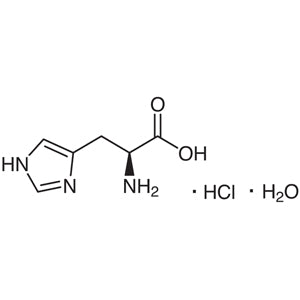
L-HistidineHydrochlorideMonohydrate TCI H0150
Regular price From Rp 530.250,00Regular priceRp 386.400,00Sale price From Rp 530.250,00 -
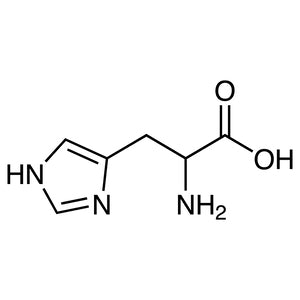
DL-Histidine TCI H0148
Regular price From Rp 689.850,00Regular priceRp 497.700,00Sale price From Rp 689.850,00 -
D-Histidine TCI H0998
Regular price From Rp 1.008.000,00Regular priceRp 720.300,00Sale price From Rp 1.008.000,00 -
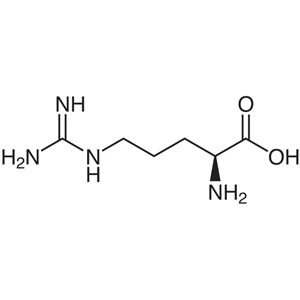
L-(+)-Arginine TCI A0526
Regular price From Rp 557.550,00Regular priceRp 405.300,00Sale price From Rp 557.550,00 -
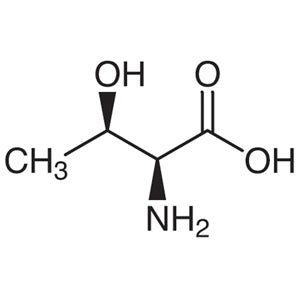
L-(-)-Threonine TCI T0230
Regular price From Rp 637.350,00Regular priceRp 460.950,00Sale price From Rp 637.350,00 -
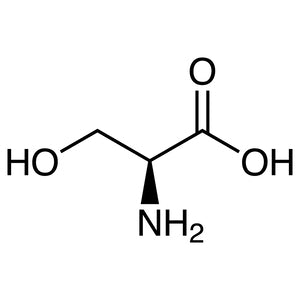
L-Serine TCI S0035
Regular price From Rp 530.250,00Regular priceRp 386.400,00Sale price From Rp 530.250,00 -
Nalpha-(tert-Butoxycarbonyl)-L-histidine TCI B1634
Regular price From Rp 1.008.000,00Regular priceRp 720.300,00Sale price From Rp 1.008.000,00 -
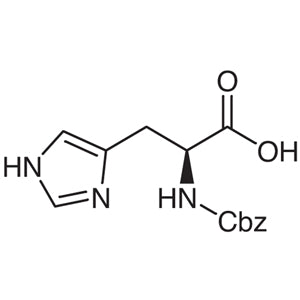
Nalpha-Carbobenzoxy-L-histidine TCI B0265
Regular price From Rp 955.500,00Regular priceRp 683.550,00Sale price From Rp 955.500,00