L-Serine is a chemical compound classified as an essential amino acid, playing a crucial role in various chemical and biochemical experiments. It is widely used in the synthesis of organic compounds, peptides, and proteins, making it a fundamental component in laboratory research. In the laboratory setting, L-Serine serves as a building block for the creation of complex molecules with applications in pharmaceuticals, biotechnology, and medical research. Its importance extends to studies involving protein metabolism and biological functions, where its chemical structure and reactivity are essential for accurate results.
L-Serine is a polar compound that is highly soluble in water, which makes it ideal for use in a variety of chemical reactions and solvent systems. Its ability to form hydrogen bonds enhances its reactivity and stability in molecular structures, making it a preferred choice for high-precision synthesis. The compound’s simple yet vital structure allows it to participate in numerous biochemical pathways, contributing to its widespread use in both basic and advanced research. Its chemical properties ensure compatibility with a wide range of experimental conditions, making it a reliable material for laboratory applications.
In Indonesian laboratories, L-Serine is extensively used in research, pharmaceutical industries, and educational institutions. It is a key component in both fundamental chemical experiments and advanced research projects. The availability of high-quality L-Serine ensures that laboratories can maintain consistent and reliable results. Its role in supporting scientific innovation and education is significant, making it an essential material for the scientific community in Indonesia.
TCI brochures (PDF)
- Amino Acids and Peptide Synthesis Reagents 2025-08-14 · p. 4
- Reagents for Biological Research 2025-03-11 · p. 57
- Organic Synthesis: L-Serine is commonly used in the synthesis of organic compounds due to its reactivity and ability to form stable molecular structures.
- Peptide Chemistry: It serves as a building block for peptide synthesis, contributing to the development of bioactive molecules and pharmaceuticals.
- Protein Research: L-Serine is essential in studies related to protein metabolism and biological functions, aiding in the understanding of molecular interactions.
- Biochemical Experiments: Its polar nature and solubility make it suitable for various biochemical assays and reaction systems.
- Educational Purposes: It is widely used in teaching laboratories to demonstrate fundamental chemical and biochemical principles.
| Brand | TCI |
|---|---|
| CAS number | 56-45-1 |
| Molecular formula | — |
| Purity | — |
| Category | Chemistry > Chemical Biology > Peptide Chemistry |
| Pack sizes | Available in various quantities as per standard laboratory requirements |
| Physical form | White crystalline powder |
| Storage | Store in a cool, dry place away from light and moisture |
L-Serine should be stored in a cool, dry environment, away from direct sunlight and sources of moisture. It is recommended to keep it in airtight containers to prevent degradation and contamination. Due to its hygroscopic nature, it is important to ensure that the storage area is well-ventilated and free from excessive humidity. When handling L-Serine, laboratory personnel should wear appropriate personal protective equipment, such as gloves and safety goggles, to avoid direct contact. The compound is non-toxic but should be handled with care to maintain laboratory safety standards. Proper storage and handling practices ensure the stability and effectiveness of L-Serine in experimental applications.
—
Product Categories
- Biochemicals and ReagentsAmino AcidsProteinogenic Amino Acids
- Cell BiologyMetabolomicsMetabolic Libraries
- Cell BiologyMetabolomicsMetabolic Pathways
- MicrobiologyBacterial Spore (Endospore) ResearchBacterial Spore Germinants and Cogerminants
- Pharmaceutical Development and Drug Discovery ResearchPeptide ChemistryAmino Acid Derivatives [Peptide Chemistry]
Produk Terkait
-
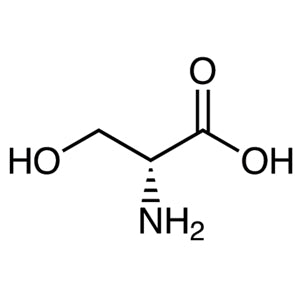
D-Serine TCI S0033
Regular price From Rp 822.150,00Regular priceRp 590.100,00Sale price From Rp 822.150,00 -
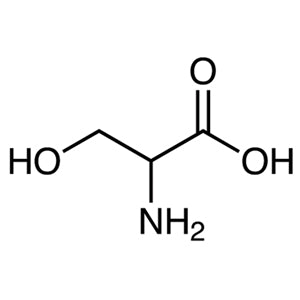
DL-Serine TCI S0034
Regular price From Rp 980.700,00Regular priceRp 701.400,00Sale price From Rp 980.700,00 -
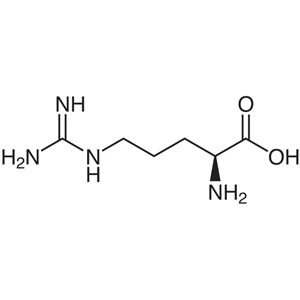
L-(+)-Arginine TCI A0526
Regular price From Rp 557.550,00Regular priceRp 405.300,00Sale price From Rp 557.550,00 -
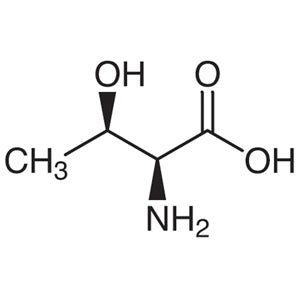
L-(-)-Threonine TCI T0230
Regular price From Rp 637.350,00Regular priceRp 460.950,00Sale price From Rp 637.350,00 -
L-Histidine TCI H0149
Regular price From Rp 662.550,00Regular priceRp 683.550,00Sale price From Rp 662.550,00Sale -
Pregnenolone TCI P0786
Regular price From Rp 1.167.600,00Regular priceRp 831.600,00Sale price From Rp 1.167.600,00 -
Progesterone TCI P0478
Regular price From Rp 1.113.000,00Regular priceRp 793.800,00Sale price From Rp 1.113.000,00 -
N-(Triphenylmethyl)-L-serineMethylEster TCI T2870
Regular price From Rp 1.431.150,00Regular priceRp 1.016.400,00Sale price From Rp 1.431.150,00