

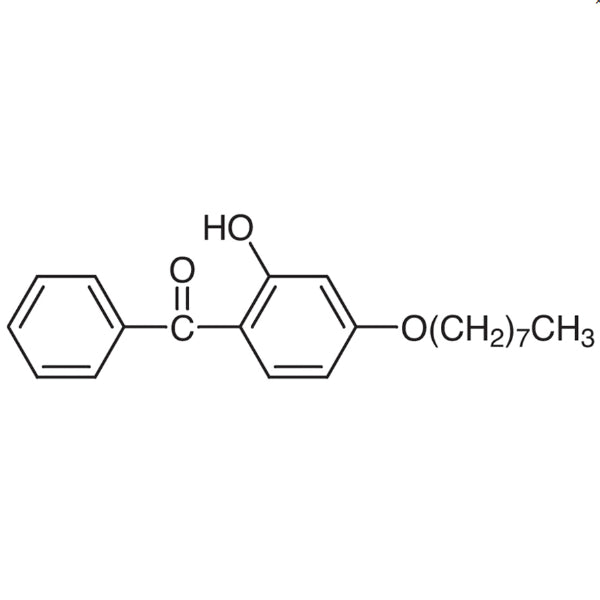
2-Hydroxy-4-n-octyloxybenzophenone is a chemical compound widely used as a polymer additive in laboratory settings. It functions as a photoinitiator, initiating chemical reactions when exposed to light, which accelerates the polymerization process. This compound plays a crucial role in the development of new materials and the testing of polymer properties. Its ability to trigger polymer formation under light exposure makes it an essential component in various research and industrial applications. In the context of material science, it is particularly valuable for studying chemical reactivity and the synthesis of advanced polymers.
The compound is known for its stability under specific conditions and its high solubility in organic solvents, which facilitates its use in a wide range of chemical processes. Its sensitivity to ultraviolet light makes it ideal for photopolymerization reactions that require light activation. These properties ensure that it remains a reliable and efficient reagent in laboratory environments. Its compatibility with various solvents and its predictable behavior under controlled conditions contribute to its popularity among researchers.
In Indonesian laboratories, 2-Hydroxy-4-n-octyloxybenzophenone is commonly used in polymer research and development. It is a key reagent in the study of material properties and the creation of new polymer-based materials. Its application is particularly prevalent in the fields of material science and chemical engineering, where precise control over polymer formation is essential. Its consistent performance and reliability make it a preferred choice for scientific experiments in Indonesia.
Related TCI products
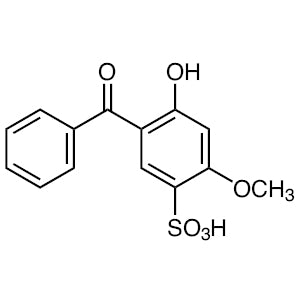
- TCI H0466 4065-45-6 2-Hydroxy-4-methoxybenzophenone-5-sulfonic Acid (contains ca 10% Isopropyl Alcohol)
- TCI H0266 131-57-7 2-Hydroxy-4-methoxybenzophenone
- TCI D0575 131-54-4 2,2'-Dihydroxy-4,4'-dimethoxybenzophenone
- TCI D0573 131-56-6 2,4-Dihydroxybenzophenone
- TCI T3804 90498-90-1 2,4,8,10-Tetraoxaspiro[5.5]undecane-3,9-diylbis(2-methylpropane-2,1-diyl) Bis[3-[3-(tert-butyl)-4-hydroxy-5-methylphenyl]propanoate]
- TCI T3277 36443-68-2 Triethylene Glycol Bis[3-(3-tert-butyl-4-hydroxy-5-methylphenyl)propionate]
- Polymer synthesis and crosslinking applications benefit from its photoinitiator properties, enabling controlled polymer formation under light exposure.
- Photopolymerization experiments rely on its sensitivity to ultraviolet light, making it ideal for initiating chemical reactions in light-activated processes.
- Material characterization studies use it to test the reactivity and behavior of polymers under different light conditions.
- Coating and film formation processes incorporate it to enhance the curing and stability of polymer-based coatings.
- Research on photoresponsive materials utilizes its ability to trigger chemical changes when exposed to specific wavelengths of light.
| Brand | TCI |
|---|---|
| CAS number | 1843-05-6 |
| Molecular formula | — |
| Purity | — |
| Category | Materials Science > Polymer/Macromolecule Reagents > Polymer Additives |
| Pack sizes | Available in various quantities as per supplier specifications |
| Physical form | Solid (as per standard product description) |
| Storage | Store in a cool, dark place away from direct sunlight |
This compound should be stored in a cool, dark environment to prevent degradation due to its sensitivity to ultraviolet light. It is recommended to use amber-colored glass containers to minimize light exposure. Proper ventilation is essential during handling to avoid inhalation of vapors. Keep the material away from heat sources and incompatible substances. Always wear appropriate personal protective equipment, such as gloves and safety goggles, when handling. Ensure that storage areas are secure and inaccessible to unauthorized personnel to maintain safety standards in the laboratory.
—
Produk Terkait
-
2-Hydroxy-4-methoxybenzophenone-5-sulfonicAcid(containsca10%IsopropylAlcohol) TCI H0466
Regular price From Rp 1.644.300,00Regular price -
2-Hydroxy-4-methoxybenzophenone TCI H0266
Regular price From Rp 717.150,00Regular price -
2,2'-Dihydroxy-4,4'-dimethoxybenzophenone TCI D0575
Regular price Rp 795.900,00Regular price -
2,4-Dihydroxybenzophenone TCI D0573
Regular price Rp 505.050,00Regular price -
2,4,8,10-Tetraoxaspiro[5.5]undecane-3,9-diylbis(2-methylpropane-2,1-diyl)Bis[3-[3-(tert-butyl)-4-hydroxy-5-methylphenyl]propanoate] TCI T3804
Regular price From Rp 823.200,00Regular price -
TriethyleneGlycolBis[3-(3-tert-butyl-4-hydroxy-5-methylphenyl)propionate] TCI T3277
Regular price From Rp 1.008.000,00Regular price -
1,3,5-Tris[4-(tert-butyl)-3-hydroxy-2,6-dimethylbenzyl]-1,3,5-triazinane-2,4,6-trione TCI T2974
Regular price From Rp 4.081.350,00Regular price -
2,4-Bis(2,4-dimethylphenyl)-6-(2-hydroxy-4-n-octyloxyphenyl)-1,3,5-triazine TCI B4399
Regular price From Rp 3.075.450,00Regular price


![90498-90-1 2,4,8,10-Tetraoxaspiro[5.5]undecane-3,9-diylbis(2-methylpropane-2,1-diyl) Bis[3-[3-(tert-butyl)-4-hydroxy-5-methylphenyl]propanoate] - AMI Scientific](http://amiscientific.com/cdn/shop/files/TCI2510T3804.jpg?v=1768819808&width=533)
![36443-68-2 Triethylene Glycol Bis[3-(3-tert-butyl-4-hydroxy-5-methylphenyl)propionate] - AMI Scientific](http://amiscientific.com/cdn/shop/files/TCI2510T3277.jpg?v=1769143710&width=533)
![40601-76-1 1,3,5-Tris[4-(tert-butyl)-3-hydroxy-2,6-dimethylbenzyl]-1,3,5-triazinane-2,4,6-trione - AMI Scientific](http://amiscientific.com/cdn/shop/files/TCI2510T2974.jpg?v=1768819713&width=533)
