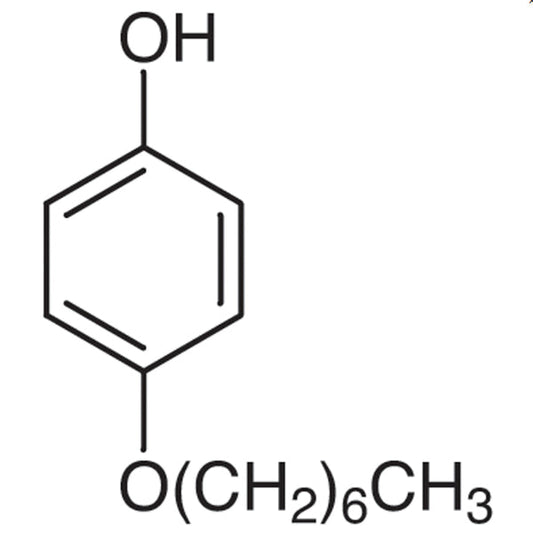
4-Hexyloxyphenol is a chemical compound widely used as a foundational building block in the synthesis of complex molecules. Its structure consists of a phenol group attached to a hexyl chain, making it a versatile intermediate in organic chemistry. In the laboratory, it plays a crucial role in the development of both heterocyclic and non-heterocyclic compounds. This compound is particularly valued for its ability to participate in a variety of chemical reactions, including substitution, oxidation, and reduction. Its adaptability makes it an essential component in the creation of compounds with specific functional properties.
The chemical properties of 4-Hexyloxyphenol make it a preferred choice for researchers. It exhibits stability under certain conditions while remaining highly reactive in appropriate chemical environments. This dual nature allows it to be used in a wide range of synthetic applications. Its molecular structure also enables it to be modified through various chemical transformations, making it a flexible tool in organic synthesis. These characteristics make it a valuable asset in both academic and industrial research settings.
In Indonesian laboratories, 4-Hexyloxyphenol is commonly used in organic chemistry research and the synthesis of complex compounds. It is often found in projects that require a specific structural foundation for further chemical modifications. Its broad range of applications has made it an important material in laboratories focused on material science, pharmaceutical development, and organic chemistry. Its role in these fields highlights its significance as a key reagent in modern chemical research.
- Organic synthesis projects benefit from 4-Hexyloxyphenol due to its ability to serve as a versatile building block for creating complex molecular structures.
- Pharmaceutical research utilizes this compound for the development of new drugs, as its structure can be modified to target specific biological activities.
- Material science applications leverage its chemical reactivity to create polymers and other advanced materials with tailored properties.
- Chemical modification studies often use 4-Hexyloxyphenol as a starting point for exploring new reaction pathways and functional group transformations.
- Industrial chemical processes incorporate this compound for the production of specialty chemicals and intermediates in various manufacturing sectors.
| Brand | TCI |
|---|---|
| CAS number | 18979-55-0 |
| Molecular formula | — |
| Purity | — |
| Category | Chemistry > Building Blocks > Non-Heterocyclic Building Blocks |
| Pack sizes | Available in various quantities as per standard laboratory supply |
| Physical form | Solid |
| Storage | Store in a cool, dry place away from direct sunlight and moisture |
4-Hexyloxyphenol should be stored in a cool, dry environment to maintain its chemical stability. It is recommended to keep it in a sealed container to prevent exposure to moisture and air. Due to its reactivity, it should be handled in a well-ventilated area, preferably under a fume hood. Avoid contact with strong oxidizing agents or reactive materials to prevent unwanted chemical reactions. Always use appropriate personal protective equipment, such as gloves and safety goggles, when handling this compound. Proper storage and handling are essential to ensure both the integrity of the compound and the safety of laboratory personnel.
—
Produk Terkait
-
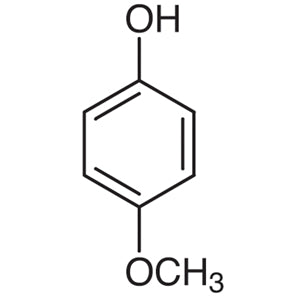
4-Methoxyphenol TCI M0123
Regular price From Rp 477.750,00Regular price -
4-Ethoxyphenol TCI E0216
Regular price From Rp 980.700,00Regular price -
4-Amyloxyphenol TCI A0728
Regular price Rp 1.035.300,00Regular price -
4-n-Octyloxyphenol TCI O0140
Regular price From Rp 1.405.950,00Regular price -
4-Heptyloxyphenol TCI H0441
Regular price Rp 5.539.800,00Regular price -
4-Butoxyphenol TCI B0923
Regular price Rp 1.193.850,00Regular price -
2-Bromo-4,5-dimethoxyphenol TCI B5297
Regular price Rp 2.466.450,00Regular price -
2-Bromo-6-methoxyphenol TCI B5026
Regular price From Rp 1.246.350,00Regular price