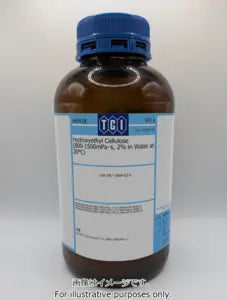
Hydroxypropyl Cellulose (HPC) is a versatile polymer widely used in laboratory settings, particularly in the fields of chemistry and chemical biology. It serves as a valuable tool for controlling the viscosity of aqueous solutions and enhancing the stability of suspensions or emulsions. Its unique properties make it an essential component in various experimental processes, supporting both basic research and applied studies. HPC is commonly utilized in formulations for pharmaceutical, cosmetic, and biomedical applications, where precise control over solution behavior is crucial. Its ability to dissolve in water and form viscous solutions allows for tailored use in different experimental contexts, making it a reliable material for researchers.
One of the key reasons HPC is preferred in laboratories is its high viscosity and excellent water solubility. These properties enable it to be used in a wide range of applications, from creating stable suspensions to modifying the rheological behavior of solutions. Its non-toxic nature and chemical stability also contribute to its popularity, as it ensures safe handling and minimizes the risk of contamination or adverse reactions. Additionally, HPC exhibits good compatibility with a variety of other substances, making it a flexible choice for different experimental setups. These characteristics collectively make HPC a preferred material for both routine and specialized laboratory work.
In Indonesian laboratories, HPC is extensively used in pharmaceutical, biochemical, and food technology research. It plays a critical role in the development of new products, such as drug formulations and cosmetic ingredients, where controlled viscosity and stability are essential. Its application in these fields supports innovation and scientific advancement, making it an indispensable tool for researchers in Indonesia.
- Pharmaceutical formulation for controlled release drug delivery systems due to its viscosity and stability.
- Cosmetic product development for thickening agents in creams and lotions to enhance texture and consistency.
- Biomedical research for creating stable suspensions in cell culture media and drug delivery vehicles.
- Food technology applications for thickening agents in sauces, syrups, and dairy products to improve mouthfeel.
- Analytical chemistry for preparing viscous solutions for chromatography and spectroscopy techniques requiring controlled flow properties.
| Brand | TCI |
|---|---|
| CAS number | 9004-64-2 |
| Molecular formula | — |
| Purity | — |
| Category | Chemistry > Chemical Biology > Glycoscience |
| Pack sizes | — |
| Physical form | — |
| Storage | Store in a cool, dry place away from direct sunlight and moisture |
Hydroxypropyl Cellulose should be stored in a cool, dry environment to maintain its integrity and prevent degradation. It is recommended to keep the material in a sealed container to avoid moisture absorption, which can affect its viscosity properties. As a water-soluble polymer, HPC should be handled with care to prevent accidental spills or exposure to incompatible substances. Laboratory personnel should wear appropriate personal protective equipment, such as gloves and safety goggles, when working with HPC to ensure safe handling. Proper storage and handling practices help preserve the material's effectiveness and ensure a safe working environment for all laboratory staff.
—
Produk Terkait
-
HydroxyethylCellulose(200-300mPa.s,2%inWaterat20degC) TCI H0242
Regular price From Rp 505.050,00Regular price -
HydroxypropylCellulose(150-400mPa.s,2%inWaterat20degC) TCI H0386
Regular price From Rp 664.650,00Regular price -
HydroxyethylCellulose(800-1500mPa.s,2%inWaterat20degC) TCI H0418
Regular price From Rp 505.050,00Regular price -
Harmine TCI H0001
Regular price Rp 1.881.600,00Regular price -
HarmineHydrochloride TCI H0002
Regular price From Rp 795.900,00Regular price -
Hecogenin TCI H0003
Regular price From Rp 955.500,00Regular price -
HeneicosanoicAcid TCI H0010
Regular price From Rp 3.790.500,00Regular price -
Hentriacontane TCI H0012
Regular price From Rp 3.683.400,00Regular price