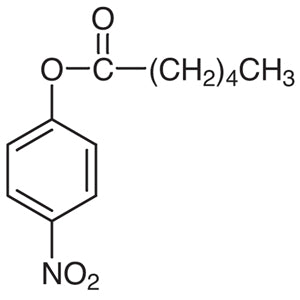
4-Nitrophenyl Hexanoate is a chemical compound widely used as a building block in various chemical reactions, particularly in the synthesis of complex organic compounds. It serves as a versatile reagent in laboratory settings, enabling chemists to create a wide range of derivatives through esterification and substitution reactions. Its molecular structure, featuring a nitro group on the phenyl ring and a hexanoate chain, contributes to its reactivity under different reaction conditions. This compound is essential for researchers aiming to develop new synthetic pathways or modify existing molecular structures.
The compound is valued for its stability under controlled laboratory conditions and its solubility in common organic solvents such as ethyl acetate and chloroform. These properties make it highly suitable for use in separation processes and synthetic procedures. Its consistent reactivity allows for precise control over chemical reactions, which is crucial in both academic and industrial research. Additionally, its predictable behavior in various solvents enhances its utility in a broad range of chemical applications.
In the context of Indonesian laboratories, 4-Nitrophenyl Hexanoate is frequently utilized in organic chemistry research, especially in higher education institutions and research organizations. Its availability and broad applicability make it an important material for both teaching and experimental purposes. It supports the development of practical skills and theoretical knowledge in chemical synthesis, contributing to the advancement of scientific research in the region.
Related TCI products
- Organic synthesis applications benefit from 4-Nitrophenyl Hexanoate due to its reactivity in esterification and substitution reactions, making it ideal for creating complex organic molecules.
- It is commonly used in academic research settings for teaching and experimental purposes, supporting the development of practical skills in chemical synthesis.
- The compound is suitable for analytical chemistry applications where precise control over reaction conditions is required for accurate results.
- In pharmaceutical research, it serves as a key intermediate in the synthesis of various drug compounds, aiding in the development of new therapeutic agents.
- Its solubility in organic solvents makes it a preferred choice for chromatographic and spectroscopic analyses in laboratory investigations.
| Brand | TCI |
|---|---|
| CAS number | 956-75-2 |
| Molecular formula | — |
| Purity | — |
| Category | Chemistry > Building Blocks > Non-Heterocyclic Building Blocks |
| Pack sizes | Available in various quantities as per standard laboratory supply |
| Physical form | Solid or liquid, depending on the specific product formulation |
| Storage | Store in a cool, dry place away from direct sunlight and moisture |
4-Nitrophenyl Hexanoate should be stored in a cool, dry environment, away from direct sunlight and moisture to maintain its chemical integrity. It is recommended to use airtight containers made of glass or high-density polyethylene to prevent contamination and degradation. Due to its reactivity, it should be handled with care, using appropriate personal protective equipment such as gloves and safety goggles. Avoid exposure to heat or open flames, as it may pose a fire hazard. Proper labeling and storage in designated chemical cabinets are essential to ensure safe handling and prevent accidental exposure. Regular monitoring of storage conditions helps maintain the compound's stability and effectiveness in laboratory applications.
—
Produk Terkait
-
4-NitrophenylButyrate TCI N1316
Regular price From Rp 1.988.700,00Regular price -
(E)-4-(4-Nitrophenyl)but-3-en-2-one TCI N1263
Regular price From Rp 1.988.700,00Regular price -
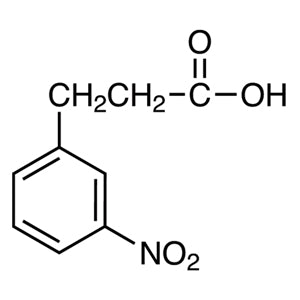
3-(3-Nitrophenyl)propionicAcid TCI N0960
Regular price From Rp 2.306.850,00Regular price -
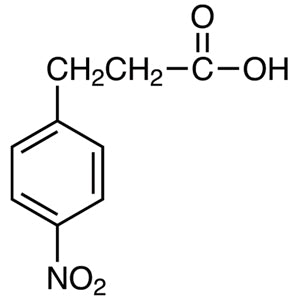
3-(4-Nitrophenyl)propionicAcid TCI N0944
Regular price Rp 1.458.450,00Regular price -
4-NitrophenylLaurate TCI L0100
Regular price From Rp 769.650,00Regular price -
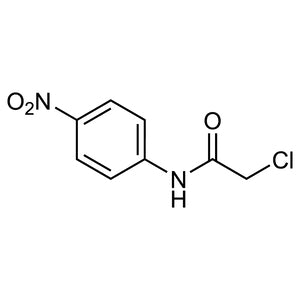
2-Chloro-N-(4-nitrophenyl)acetamide TCI C3966
Regular price Rp 2.174.550,00Regular price -
IsoamylHexanoate TCI I0899
Regular price From Rp 610.050,00Regular price -
PropylHexanoate TCI P1940
Regular price Rp 557.550,00Regular price