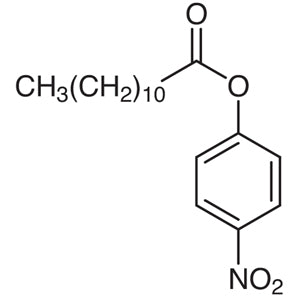
4-Nitrophenyl Laurate (TCI L0100) is a chemical compound widely used in laboratory settings as a foundational building block in organic synthesis. This compound is essential in various chemical reactions, particularly those involving the creation of organic molecules. Its molecular structure combines a laurate chain with a nitrophenyl group, making it highly reactive and versatile. In the laboratory, it serves as a key reagent or intermediate in the development of compounds with applications in pharmaceuticals, materials science, and organic chemistry. Due to its chemical stability and reactivity, it is a preferred choice for researchers seeking reliable and efficient chemical tools.
The compound's properties make it an ideal candidate for a range of chemical processes. It exhibits good solubility in organic solvents such as ethyl acetate and chloroform, which simplifies its use in experimental procedures. Its reactivity allows it to participate in esterification, substitution, and other types of reactions, making it a valuable asset in synthetic chemistry. These characteristics ensure consistency and reliability in laboratory experiments, supporting both educational and research activities. Its ease of handling and predictable behavior further enhance its appeal for routine and advanced chemical applications.
In Indonesian laboratories, 4-Nitrophenyl Laurate is commonly used in both academic and research environments. It is frequently found in organic chemistry experiments conducted at universities and research institutions. Its role in the synthesis of various compounds makes it an essential component in the curriculum and practical work of chemistry students. Its availability and performance make it a go-to material for those involved in chemical research and education in Indonesia.
Related TCI products
- Organic synthesis applications benefit from 4-Nitrophenyl Laurate due to its reactivity and solubility in organic solvents, enabling efficient reaction pathways.
- It is ideal for esterification reactions because of its ability to form ester bonds under appropriate conditions, enhancing the synthesis of complex organic molecules.
- In pharmaceutical research, it serves as a building block for the development of drug compounds, supporting the creation of novel therapeutic agents.
- Material science applications utilize this compound for the synthesis of functional materials, contributing to the development of advanced polymers and coatings.
- Educational institutions use it extensively in laboratory courses to teach fundamental chemical reactions and synthetic techniques to students.
| Brand | TCI |
|---|---|
| CAS number | 1956-11-2 |
| Molecular formula | — |
| Purity | — |
| Category | Chemistry > Building Blocks > Non-Heterocyclic Building Blocks |
| Pack sizes | Available in various quantities as per standard laboratory supply |
| Physical form | Solid or liquid, depending on the specific formulation |
| Storage | Store in a cool, dry place away from direct sunlight and moisture |
4-Nitrophenyl Laurate should be stored in a cool, dry environment to maintain its chemical stability and prevent degradation. It is recommended to use airtight containers to protect it from moisture and air exposure. Due to its reactivity, it should be handled in a well-ventilated area, and appropriate personal protective equipment should be worn when handling. Avoid contact with incompatible substances to ensure safety. Proper storage conditions help preserve the compound's integrity and effectiveness for use in laboratory experiments. Always follow standard laboratory safety protocols when working with this material.
—
Product Categories
- Building BlocksNon-Heterocyclic Building BlocksCarbonyl Compounds [Non-Heterocyclic Building Blocks]
- Building BlocksNon-Heterocyclic Building BlocksNitrogen Compounds [Non-Heterocyclic Building Blocks]
- Chemical BiologyBioconjugationAlbumin Binding Modification Reagents
- Pharmaceutical Development and Drug Discovery Research ReagentsAlbumin Binding AgentsAlbumin Binding Modification Reagents
- Biochemicals and ReagentsAlbumin Binding AgentsAlbumin Binding Modification Reagents
- Biochemicals and ReagentsBioconjugationAlbumin Binding Modification Reagents
- Pharmaceutical Development and Drug Discovery ResearchAlbumin Binding AgentsAlbumin Binding Modification Reagents
- Pharmaceutical Development and Drug Discovery ResearchBioconjugationAlbumin Binding Modification Reagents
Produk Terkait
-
VinylLaurate(stabilizedwithMEHQ) TCI L0090
Regular price From Rp 610.050,00Regular priceRp 442.050,00Sale price From Rp 610.050,00 -
4-NitrophenylButyrate TCI N1316
Regular price From Rp 1.988.700,00Regular priceRp 1.390.200,00Sale price From Rp 1.988.700,00 -
(E)-4-(4-Nitrophenyl)but-3-en-2-one TCI N1263
Regular price From Rp 2.041.200,00Regular priceRp 1.442.700,00Sale price From Rp 2.041.200,00 -
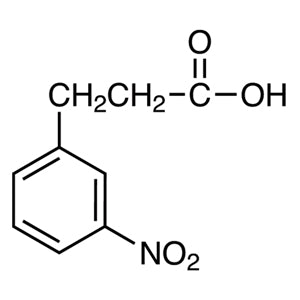
3-(3-Nitrophenyl)propionicAcid TCI N0960
Regular price From Rp 2.359.350,00Regular priceRp 1.665.300,00Sale price From Rp 2.359.350,00 -
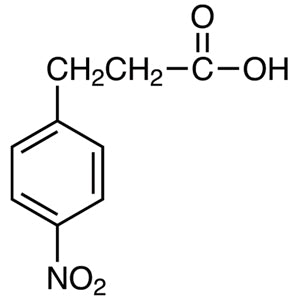
3-(4-Nitrophenyl)propionicAcid TCI N0944
Regular price Rp 1.510.950,00Regular priceRp 1.072.050,00Sale price Rp 1.510.950,00 -
4-NitrophenylHexanoate TCI H0484
Regular price From Rp 2.914.800,00Regular priceRp 2.053.800,00Sale price From Rp 2.914.800,00 -
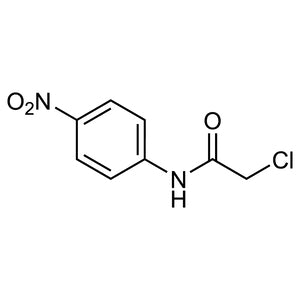
2-Chloro-N-(4-nitrophenyl)acetamide TCI C3966
Regular price Rp 2.227.050,00Regular priceRp 1.572.900,00Sale price Rp 2.227.050,00 -
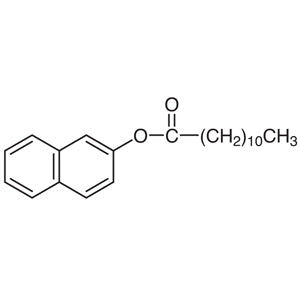
2-NaphthylLaurate TCI L0122
Regular price From Rp 1.749.300,00Regular priceRp 1.239.000,00Sale price From Rp 1.749.300,00