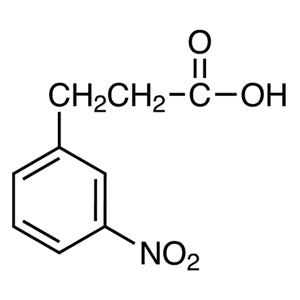
3-(3-Nitrophenyl)propionic Acid is a chemical compound widely used as a foundational building block in organic synthesis. It plays a crucial role in laboratories by enabling the creation of complex organic molecules through its reactive nature. This compound is particularly valuable in the development of heterocyclic structures and other intricate chemical frameworks. Its versatility allows it to participate in a variety of chemical reactions, making it an essential tool for researchers in both academic and industrial settings.
The compound is known for its solubility in organic solvents and its stability under controlled conditions, which are key factors in its widespread use. These properties make it a preferred choice for chemical synthesis, as it can be easily manipulated and integrated into various reaction schemes. Its simple molecular structure combined with high reactivity allows it to interact effectively with multiple substrates, offering flexibility in experimental design. This adaptability is especially beneficial for those working on diverse chemical projects.
In Indonesian laboratories, 3-(3-Nitrophenyl)propionic Acid is commonly used in organic chemistry research, particularly in the synthesis of pharmacological compounds and industrial chemicals. Its availability and ease of use make it a popular choice among researchers and academic institutions. Its role in facilitating the development of new chemical entities is significant, supporting both fundamental and applied research efforts.
Related TCI products
- Organic synthesis applications benefit from its reactivity and solubility, enabling the creation of complex molecular structures.
- Pharmaceutical research utilizes it for the development of drug compounds due to its ability to participate in diverse chemical transformations.
- Industrial chemical production relies on its stability and versatility for the synthesis of various functional compounds.
- Academic research in chemistry employs it as a fundamental building block for teaching and experimental purposes.
- Analytical chemistry uses it as a reference standard for testing and characterizing other chemical compounds.
| Brand | TCI |
|---|---|
| CAS number | 1664-57-9 |
| Molecular formula | — |
| Purity | — |
| Category | Chemistry > Building Blocks > Non-Heterocyclic Building Blocks |
| Pack sizes | Available in various quantities as per standard laboratory supply |
| Physical form | Solid |
| Storage | Store in a cool, dry place away from direct sunlight and moisture |
This compound should be stored in a cool, dry environment to maintain its stability and prevent degradation. It is recommended to keep it in a sealed container to avoid exposure to moisture and air, which can affect its chemical integrity. Proper labeling of storage containers is essential for safety and traceability. When handling, it is advisable to use appropriate personal protective equipment, such as gloves and safety goggles, to minimize direct contact. The compound should be kept away from incompatible materials to ensure safe storage conditions. Regular inspection of storage areas is recommended to ensure compliance with laboratory safety standards.
—
Produk Terkait
-
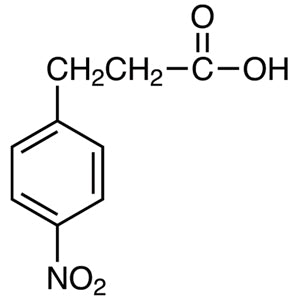
3-(4-Nitrophenyl)propionicAcid TCI N0944
Regular price Rp 1.458.450,00Regular price -
4-NitrophenylButyrate TCI N1316
Regular price From Rp 1.988.700,00Regular price -
(E)-4-(4-Nitrophenyl)but-3-en-2-one TCI N1263
Regular price From Rp 1.988.700,00Regular price -
4-NitrophenylLaurate TCI L0100
Regular price From Rp 769.650,00Regular price -
4-NitrophenylHexanoate TCI H0484
Regular price From Rp 2.862.300,00Regular price -
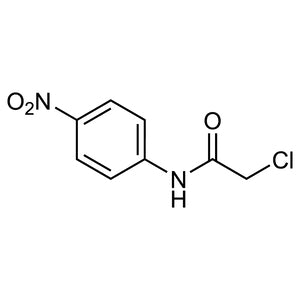
2-Chloro-N-(4-nitrophenyl)acetamide TCI C3966
Regular price Rp 2.174.550,00Regular price -
3-(p-Tolyl)propionicAcid TCI T2797
Regular price From Rp 2.359.350,00Regular price -
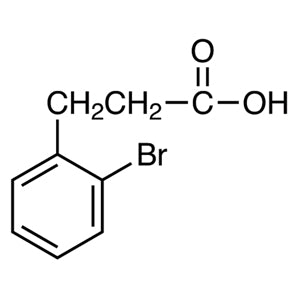
3-(2-Bromophenyl)propionicAcid TCI B4409
Regular price From Rp 1.087.800,00Regular price