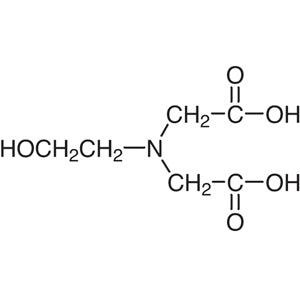
N-(2-Hydroxyethyl)iminodiacetic Acid is a chemical compound widely used in laboratory settings for its versatility in organic synthesis. As a building block, it plays a critical role in the development of complex organic molecules, particularly in the creation of ligands that are essential for coordination reactions and quantitative analysis. Its ability to form stable complexes with heavy metals makes it a valuable tool in various chemical processes. This compound is commonly utilized in research and development, where precise chemical interactions are required. Its adaptability to different reaction conditions enhances its utility in diverse experimental setups.
The compound is known for its high reactivity in basic environments and its capacity to interact with metal ions, making it ideal for applications that require metal-organic interactions. Its stability under specific conditions ensures reliable performance in laboratory experiments. These properties contribute to its popularity among researchers and students who need a dependable and flexible reagent for their work. The compound’s chemical structure allows it to participate in a wide range of reactions, making it a preferred choice for both academic and industrial applications.
In Indonesian laboratories, N-(2-Hydroxyethyl)iminodiacetic Acid is frequently used in pure chemistry research, environmental analysis, and pharmaceutical development. Its broad range of applications makes it a sought-after material for scientists and students engaged in experimental work. The compound’s reliability and effectiveness in various chemical processes ensure its continued use in both academic and applied research settings.
Related TCI products
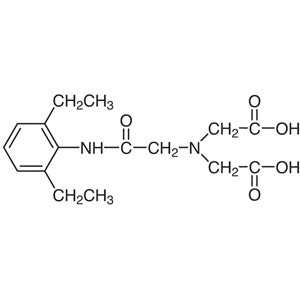
- TCI D1735 63245-28-3 N-(2,6-Diethylphenylcarbamoylmethyl)iminodiacetic Acid
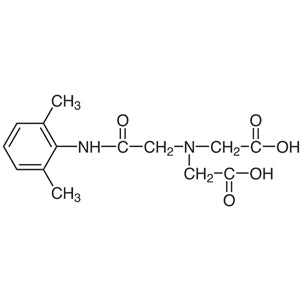
- TCI D1730 59160-29-1 N-(2,6-Dimethylphenylcarbamoylmethyl)iminodiacetic Acid
- TCI T1679 3645-00-9 2-Hydroxyethyl Methyl Terephthalate
- TCI B3429 959-26-2 Bis(2-hydroxyethyl) Terephthalate
- TCI A1059 542-59-6 2-Hydroxyethyl Acetate
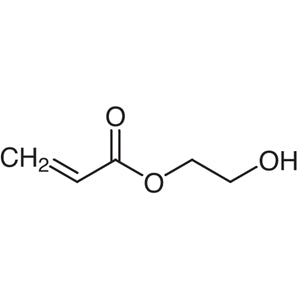
- TCI A0743 818-61-1 2-Hydroxyethyl Acrylate (stabilized with MEHQ)
- Organic synthesis where metal-ligand interactions are essential for creating complex molecules.
- Environmental analysis to detect and quantify heavy metal ions in water and soil samples.
- Pharmaceutical research for developing chelating agents that bind to toxic metals.
- Coordination chemistry experiments requiring stable metal complexes for structural studies.
- Analytical chemistry applications involving quantitative analysis of metal-containing compounds.
| Brand | TCI |
|---|---|
| CAS number | 93-62-9 |
| Molecular formula | — |
| Purity | — |
| Category | Chemistry > Building Blocks > Non-Heterocyclic Building Blocks |
| Pack sizes | 25g, 100g, 500g |
| Physical form | White crystalline powder |
| Storage | Store in a cool, dry place away from moisture and direct sunlight. |
This compound should be stored in a cool, dry place, away from moisture and direct sunlight to maintain its chemical integrity. It is recommended to use airtight containers to prevent exposure to humidity, which could affect its stability. As a reactive compound in basic conditions, it should be handled with care, using appropriate personal protective equipment such as gloves and safety goggles. It is important to ensure proper ventilation in the laboratory when working with this material. Avoid contact with incompatible substances, and always follow standard laboratory safety protocols to minimize risks. Proper storage and handling are essential to maintain the compound’s effectiveness and ensure safe usage in experimental procedures.
—
Product Categories
Produk Terkait
-
N-(2,6-Diethylphenylcarbamoylmethyl)iminodiaceticAcid TCI D1735
Regular price Rp 2.199.750,00Regular price -
N-(2,6-Dimethylphenylcarbamoylmethyl)iminodiaceticAcid TCI D1730
Regular price Rp 1.220.100,00Regular price -
2-HydroxyethylMethylTerephthalate TCI T1679
Regular price From Rp 1.803.900,00Regular price -
Bis(2-hydroxyethyl)Terephthalate TCI B3429
Regular price From Rp 928.200,00Regular price -
2-HydroxyethylAcetate TCI A1059
Regular price From Rp 2.094.750,00Regular price -
2-HydroxyethylAcrylate(stabilizedwithMEHQ) TCI A0743
Regular price From Rp 452.550,00Regular price -
2-HydroxyethylMethacrylate(stabilizedwithMEHQ) TCI M0085
Regular price From Rp 505.050,00Regular price -
N-(2-Hydroxyethyl)benzamide TCI H1930
Regular price From Rp 2.730.000,00Regular price