


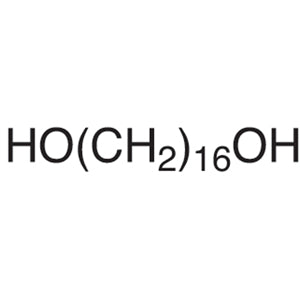
TCI H0552 1,16-Hexadecanediol is a long-chain aliphatic diol carrying a hydroxyl group at each end of a sixteen-carbon backbone. This symmetrical α,ω-diol structure makes it a valuable building block for constructing polymers, long-chain macromolecules, and lipid-like compounds in the laboratory. Both hydroxyl groups react identically, so researchers can prepare difunctional derivatives directly, or protect one side to obtain asymmetric derivatives. The substantial methylene chain length gives the molecule wax-like physical behaviour and a strongly hydrophobic central region, which distinguishes it clearly from the short-chain diols more commonly found on the bench.
The property that makes this material a preferred choice is the combination of a long hydrocarbon chain with two polar terminals. That combination yields a solid with a relatively high melting point compared with short-chain diols, limited solubility in water but good solubility in warm organic solvents, and a tendency to self-organise into ordered arrangements both in the solid phase and at interfaces. The symmetrical difunctional character suits polycondensation reactions with dicarboxylic acids or diisocyanates particularly well, because it produces regular, well-defined polymer chains. The long methylene segment then contributes flexibility and hydrophobic character to the resulting material.
In Indonesian laboratories, this reagent is typically found in university chemistry departments, polymer and materials research groups, and industrial R&D units working on coatings, surfactants, and specialty intermediates. It is usually handled in small synthetic batches rather than bulk operations, weighed out as a solid and dissolved with gentle warming before reaction. Because it is supplied by TCI in research-scale packs, it fits the workflow of method development, thesis-level synthesis, and pilot formulation work.
TCI brochures (PDF)
- Biomaterials Research Reagents 2025-02-19 · p. 20
- Monomers 2025-05-28 · p. 25
Related TCI products
- TCI O0563 3155-43-9 1,18-Octadecanediol
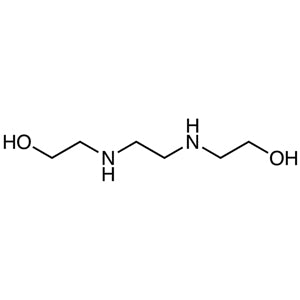
- TCI B3807 4439-20-7 N,N'-Bis(2-hydroxyethyl)ethylenediamine
- TCI B3384 821-11-4 trans-2-Butene-1,4-diol
- TCI B1643 10038-40-1 2,2'-Bis(hydroxymethyl)diphenyl Ether
- TCI B1621 20601-38-1 4,4'-Bicyclohexanol (mixture of isomers)
- TCI B1158 1455-42-1 3,9-Bis(1,1-dimethyl-2-hydroxyethyl)-2,4,8,10-tetraoxaspiro[5.5]undecane
- Polyester and polyurethane synthesis: the two terminal hydroxyl groups condense cleanly with dicarboxylic acids or diisocyanates, giving regular polymer chains with a long, flexible hydrophobic segment built into the backbone.
- Preparation of difunctional intermediates: both hydroxyl groups react identically, allowing symmetric bis-esters, bis-ethers, or bis-tosylates to be produced in a single straightforward step without complex selectivity control.
- Asymmetric derivative synthesis: chemists can selectively protect one hydroxyl terminal and functionalise the other, opening a route to mono-substituted long-chain building blocks for stepwise molecular construction.
- Lipid-like and surfactant model compounds: the long methylene chain paired with polar ends mimics amphiphilic behaviour, making it useful for studying self-assembly, interfacial ordering, and membrane-related model systems.
- Materials and coatings research: its wax-like solid character and ordered packing in the solid phase make it suitable for preparing hydrophobic segments in specialty coatings, waxes, and formulation studies.
| Brand | TCI (Tokyo Chemical Industry) |
|---|---|
| CAS number | 7735-42-4 |
| Molecular formula | — |
| Purity | — |
| Category | Chemistry > Building Blocks > Non-Heterocyclic Building Blocks |
| Pack sizes | — |
| Physical form | solid at room temperature, wax-like long-chain diol |
| Storage | keep in a tightly closed container in a cool, dry, well-ventilated place away from moisture |
- Catalogue number: H0552
Store the container tightly closed in a cool, dry, well-ventilated area, protected from moisture and away from strong oxidising agents and ignition sources. Original supplier bottles or amber glass containers with chemically resistant caps are suitable; transfer portions using clean, dry spatulas to avoid introducing water or cross-contamination. Weigh and handle the solid in a fume hood or a well-ventilated workspace to limit dust exposure. Standard laboratory protective equipment — safety glasses, gloves, and a lab coat — should be worn during handling. Where warming is used to dissolve the material, apply gentle, controlled heating only, and allow the container to return to room temperature before resealing. Always consult the manufacturer's safety data sheet before first use.
—
Product Categories
Produk Terkait
-
1,18-Octadecanediol TCI O0563
Regular price Rp 8.825.250,00Regular priceRp 6.186.600,00Sale price Rp 8.825.250,00 -
N,N'-Bis(2-hydroxyethyl)ethylenediamine TCI B3807
Regular price Rp 3.498.600,00Regular priceRp 2.446.500,00Sale price Rp 3.498.600,00 -
trans-2-Butene-1,4-diol TCI B3384
Regular price From Rp 2.809.800,00Regular priceRp 1.980.300,00Sale price From Rp 2.809.800,00 -
2,2'-Bis(hydroxymethyl)diphenylEther TCI B1643
Regular price From Rp 3.815.700,00Regular priceRp 2.683.800,00Sale price From Rp 3.815.700,00 -
4,4'-Bicyclohexanol(mixtureofisomers) TCI B1621
Regular price From Rp 1.618.050,00Regular priceRp 1.146.600,00Sale price From Rp 1.618.050,00 -
3,9-Bis(1,1-dimethyl-2-hydroxyethyl)-2,4,8,10-tetraoxaspiro[5.5]undecane TCI B1158
Regular price From Rp 1.060.500,00Regular priceRp 757.050,00Sale price From Rp 1.060.500,00 -
2-Butyl-2-ethyl-1,3-propanediol TCI B0922
Regular price From Rp 530.250,00Regular priceRp 386.400,00Sale price From Rp 530.250,00 -
cis-2-Butene-1,4-diol TCI B0693
Regular price From Rp 769.650,00Regular priceRp 553.350,00Sale price From Rp 769.650,00




![TCI B1158 1455-42-1 3,9-Bis(1,1-dimethyl-2-hydroxyethyl)-2,4,8,10-tetraoxaspiro[5.5]undecane](http://amiscientific.com/cdn/shop/files/TCI2510B1158.jpg?v=1792659572&width=533)
![1455-42-1 3,9-Bis(1,1-dimethyl-2-hydroxyethyl)-2,4,8,10-tetraoxaspiro[5.5]undecane - AMI Scientific](http://amiscientific.com/cdn/shop/files/TCI2510B1158_609993f6-3ef5-43f1-b023-4ccd96c49dd8.jpg?v=1767231560&width=533)


