TCI H0609 4-Hydroxyphthalic Acid is an aromatic dicarboxylic acid that carries an additional hydroxyl group on its benzene ring, giving it three functional groups that can be exploited at once. In the laboratory, this compound serves as a building block for the synthesis of functionalized phthalate derivatives, anhydrides, imides, and organic ligands in coordination chemistry. The presence of the hydroxyl group at an unsymmetrical position makes this compound a useful starting point whenever researchers need a phthalate framework with an extra handle for tethering, labeling, or tuning the solubility of the final product.
The property that makes it a preferred choice is the ability of the two adjacent carboxylate groups to form a cyclic anhydride on heating, which opens an easy route to phthalimides through reaction with primary amines. Those same two carboxylates are also good clamps for metal ions, making this compound a candidate ligand in the assembly of metal-organic frameworks and coordination complexes. The phenolic hydroxyl group adds polarity, permits selective etherification or acylation, and influences the electronic character of the ring. Because the structure is rigid and rich in donor groups, it behaves predictably across a range of synthetic transformations.
In Indonesian laboratories, this building block is typically found in university and institutional research groups working on organic synthesis, materials chemistry, and coordination chemistry, as well as in industrial R&D units developing polymers, coatings, and specialty intermediates. It is normally purchased in small research quantities for method development, student thesis work, and exploratory syntheses, where a reliable trifunctional aromatic scaffold is needed as the entry point to a longer synthetic sequence.
TCI brochures (PDF)
- Organic Linker Molecules for Metal Organic Frameworks (MOFs) 2026-05-11 · p. 3
Related TCI products
- TCI M1432 1885-13-8 4-Methoxyphthalic Acid
- TCI A0088 142-45-0 Acetylenedicarboxylic Acid
- TCI T3896 160248-28-2 Tetrakis(4-carboxyphenyl)methane
- TCI T3894 1078153-58-8 1,2,4,5-Tetrakis(4-carboxyphenyl)benzene
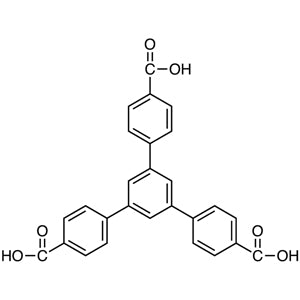
- TCI T2647 50446-44-1 1,3,5-Tris(4-carboxyphenyl)benzene
- TCI B4232 23351-91-9 5-Bromoisophthalic Acid
- Synthesis of functionalized phthalate derivatives, where the two adjacent carboxylic acid groups provide direct access to esters and related products while the hydroxyl group remains available for further modification.
- Preparation of cyclic anhydrides, since the ortho-positioned carboxylate pair closes readily on heating and gives a convenient activated intermediate for subsequent coupling chemistry.
- Phthalimide formation through reaction with primary amines, a route that follows naturally from the anhydride and is widely used to install nitrogen-containing rings in target molecules.
- Ligand design in coordination chemistry, where the paired carboxylates clamp metal ions effectively and the rigid aromatic core helps define predictable geometry around the metal centre.
- Metal-organic framework assembly, in which the rigid, donor-rich structure and unsymmetrical hydroxyl substitution allow researchers to build frameworks with tailored pore environments and linking points.
| Brand | TCI (Tokyo Chemical Industry) |
|---|---|
| CAS number | 610-35-5 |
| Molecular formula | — |
| Purity | — |
| Category | Chemistry > Building Blocks > Non-Heterocyclic Building Blocks |
| Pack sizes | available in standard TCI research-scale packaging; please confirm the size options when ordering |
| Physical form | — |
| Storage | keep in a tightly closed container in a cool, dry place away from light and moisture |
- Product code: H0609
Store the container tightly closed in a cool, dry, well-ventilated area, protected from direct sunlight, moisture, and sources of heat or ignition. Original manufacturer packaging or chemically compatible glass containers with secure closures are suitable; keep the label intact and legible. Handle the solid in a fume hood or well-ventilated workspace to avoid generating and inhaling dust, and wear appropriate personal protective equipment including safety goggles, gloves, and a laboratory coat. Avoid contact with skin and eyes, keep away from strong bases and strong oxidizing agents, and wash hands thoroughly after handling. Always consult the manufacturer's safety data sheet before use and dispose of waste according to applicable laboratory and local regulations.
—
Product Categories
- Organic-Inorganic Hybrid MaterialsMetal Organic Frameworks (MOF) and Their Raw MaterialsOrganic Linker Molecules [Metal Organic Frameworks (MOFs) Precursors]
- Polymer/Macromolecule ReagentsMetal Organic Frameworks (MOF) and Their Raw MaterialsOrganic Linker Molecules [Metal Organic Frameworks (MOFs) Precursors]
Produk Terkait
-
4-MethoxyphthalicAcid TCI M1432
Regular price From Rp 1.458.450,00Regular priceRp 1.035.300,00Sale price From Rp 1.458.450,00 -
AcetylenedicarboxylicAcid TCI A0088
Regular price From Rp 1.220.100,00Regular priceRp 868.350,00Sale price From Rp 1.220.100,00 -
Tetrakis(4-carboxyphenyl)methane TCI T3896
Regular price Rp 6.863.850,00Regular priceRp 4.799.550,00Sale price Rp 6.863.850,00 -
1,2,4,5-Tetrakis(4-carboxyphenyl)benzene TCI T3894
Regular price From Rp 2.837.100,00Regular priceRp 1.983.450,00Sale price From Rp 2.837.100,00 -
1,3,5-Tris(4-carboxyphenyl)benzene TCI T2647
Regular price From Rp 3.683.400,00Regular priceRp 2.575.650,00Sale price From Rp 3.683.400,00 -
5-BromoisophthalicAcid TCI B4232
Regular price From Rp 1.193.850,00Regular priceRp 834.750,00Sale price From Rp 1.193.850,00 -
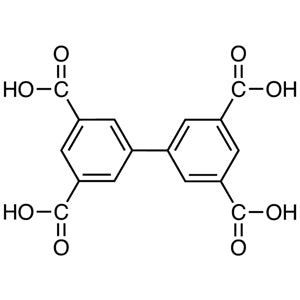
Biphenyl-3,3',5,5'-tetracarboxylicAcid TCI B3792
Regular price Rp 3.949.050,00Regular priceRp 2.761.500,00Sale price Rp 3.949.050,00 -
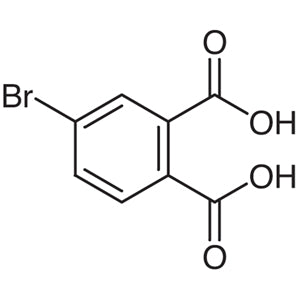
4-BromophthalicAcid TCI B2257
Regular price From Rp 584.850,00Regular priceRp 408.450,00Sale price From Rp 584.850,00