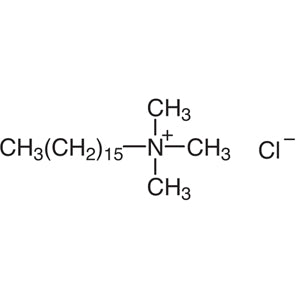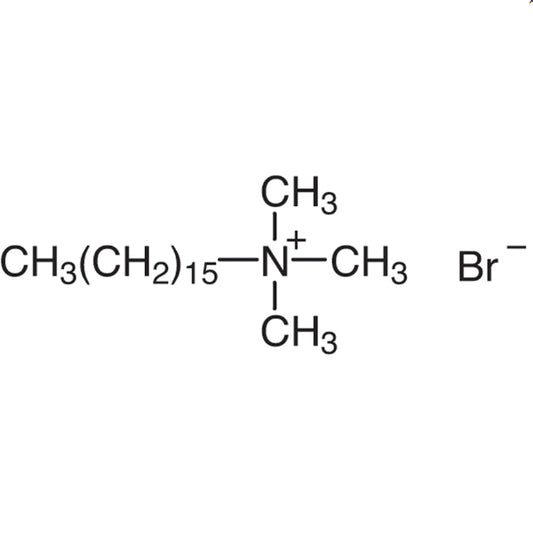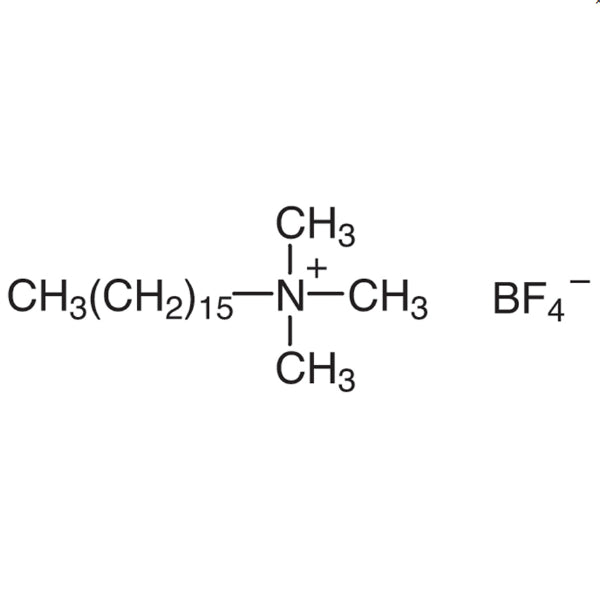
Hexadecyltrimethylammonium Tetrafluoroborate (HTFB), with the CAS number 73257-08-6, is a chemical compound widely used in scientific and industrial applications. This material is a key reagent in materials science, particularly in polymer and macromolecule research. Its cationic structure enables strong interactions with polymer molecules, making it an essential additive for polymer modification. In the laboratory, HTFB is commonly used to control surface properties or act as a catalyst in specific chemical reactions. Its versatility and effectiveness have made it a preferred choice for researchers aiming to tailor polymer characteristics.
HTFB is valued for its chemical stability and excellent solubility in organic solvents. Its complex molecular structure allows for strong interactions with various types of molecules, including polymers and organic compounds. These properties make it highly effective in modifying polymer behavior, enhancing reactivity, and controlling surface properties. Additionally, HTFB exhibits resistance to harsh chemical conditions, making it suitable for use in dynamic laboratory environments. Its reliability and performance have established it as a go-to reagent for advanced material development.
In Indonesian laboratories, HTFB is extensively used in material and chemical research. It plays a crucial role in the development of specialized polymer materials with tailored properties. Many research institutions and academic laboratories rely on HTFB for its consistent performance and compatibility with a wide range of experimental setups. Its application in both academic and industrial research underscores its importance in the scientific community.
TCI brochures (PDF)
- Boron Compounds 2025-10-07 · p. 25
Related TCI products
- TCI H1616 68214-07-3 Hexadecyltrimethylammonium Hydrogen Sulfate
- TCI H1354 505-86-2 Hexadecyltrimethylammonium Hydroxide (10% in Water)
- TCI H0735 6941-37-3 Hexadecyltrimethylammonium Perchlorate
- TCI H0733 101079-29-2 Hexadecyltrimethylammonium Hexafluorophosphate
- TCI H0082 112-02-7 Hexadecyltrimethylammonium Chloride
- TCI H0081 57-09-0 Hexadecyltrimethylammonium Bromide
- Polymer Surface Modification: HTFB is used to modify polymer surfaces, enhancing adhesion and compatibility with other materials.
- Catalyst in Polymerization Reactions: It acts as a catalyst in specific polymerization processes, improving reaction efficiency and product quality.
- Surface Property Control: HTFB enables precise control over surface characteristics, which is essential in the development of functional materials.
- Organic Compound Interactions: Its ability to interact with various organic compounds makes it valuable in synthetic chemistry applications.
- Material Science Research: HTFB is a key reagent in studies focused on advanced polymer development and material innovation.
| Brand | TCI |
|---|---|
| CAS number | 73257-08-6 |
| Molecular formula | — |
| Purity | — |
| Category | Materials Science > Polymer/Macromolecule Reagents > Polymer Additives |
| Pack sizes | Available in various quantities as per standard laboratory supply |
| Physical form | Solid powder |
| Storage | Store in a cool, dry place away from moisture and direct sunlight |
HTFB should be stored in a cool, dry environment, away from moisture and direct sunlight to maintain its chemical stability. It is recommended to use airtight containers to prevent exposure to humidity, which could affect its performance. As a solid powder, it is generally handled in a well-ventilated laboratory setting to minimize inhalation risks. Proper personal protective equipment, such as gloves and safety goggles, should be worn during handling. HTFB is non-flammable but should be kept away from incompatible substances to ensure safe storage. Regular inspection of storage conditions is advised to maintain the integrity of the material.
—
Product Categories
Produk Terkait
-
HexadecyltrimethylammoniumHydrogenSulfate TCI H1616
Regular price Rp 3.075.450,00Regular price -
HexadecyltrimethylammoniumHydroxide(10%inWater) TCI H1354
Regular price From Rp 1.485.750,00Regular price -
HexadecyltrimethylammoniumPerchlorate TCI H0735
Regular price From Rp 2.625.000,00Regular price -
HexadecyltrimethylammoniumHexafluorophosphate TCI H0733
Regular price From Rp 1.696.800,00Regular price -
HexadecyltrimethylammoniumChloride TCI H0082
Regular price From Rp 875.700,00Regular price -
HexadecyltrimethylammoniumBromide TCI H0081
Regular price From Rp 477.750,00Regular price -
DecyltrimethylammoniumBromide TCI D1467
Regular price From Rp 1.035.300,00Regular price -
DecyltrimethylammoniumChloride TCI D1306
Regular price Rp 2.704.800,00Regular price