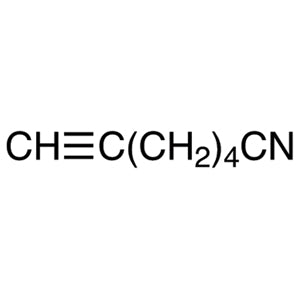
6-Heptynenitrile is a chemical compound widely used as a foundational building block in the synthesis of complex organic molecules. It serves as a key intermediate in various chemical reactions, offering versatility in both nucleophilic and electrophilic processes. Its functional nitrile group enables a wide range of chemical transformations, making it a valuable tool in synthetic chemistry. In laboratory settings, this compound is essential for constructing intricate molecular structures, particularly in organic synthesis and chemical research. Its ability to participate in substitution and addition reactions makes it a preferred choice for chemists seeking to develop new compounds with tailored properties.
The compound’s chemical properties make it a preferred choice for laboratory applications. It exhibits stability under certain conditions but remains highly reactive to various chemical environments. This reactivity allows it to be utilized in a broad spectrum of synthetic pathways. Its hydrocarbon chain structure facilitates multiple reaction mechanisms, enhancing its utility in diverse chemical processes. The compound’s reliability and consistent performance in controlled laboratory conditions further solidify its position as a go-to material for researchers.
In Indonesian laboratories, 6-Heptynenitrile is extensively used in both pure and applied chemical research. It is a common reagent in academic and research institutions, supporting experiments that require a dependable and high-quality chemical building block. Its application spans from educational purposes to advanced research projects, ensuring that it remains a critical component in the chemical toolkit of Indonesian laboratories.
TCI brochures (PDF)
- Click Chemistry 2026-09-08 · p. 16
- Organic synthesis applications benefit from 6-Heptynenitrile due to its reactivity and ability to form complex molecular structures.
- It is ideal for nucleophilic and electrophilic reactions, making it suitable for a wide range of synthetic pathways.
- The compound is frequently used in research settings where the development of new chemical compounds is required.
- Its stability under controlled conditions makes it a reliable choice for experimental studies in chemical laboratories.
- Indonesian institutions rely on this compound for both educational and applied research, ensuring its relevance in academic and industrial settings.
| Brand | TCI |
|---|---|
| CAS number | 15295-69-9 |
| Molecular formula | — |
| Purity | — |
| Category | Chemistry > Building Blocks > Non-Heterocyclic Building Blocks |
| Pack sizes | Available in standard laboratory quantities |
| Physical form | Liquid |
| Storage | Store in a cool, dry place away from light and incompatible materials |
6-Heptynenitrile should be stored in a cool, dry location, away from direct sunlight and sources of heat. It is recommended to use airtight containers made of materials compatible with organic solvents to prevent contamination and evaporation. Due to its reactivity, it should be kept separate from strong oxidizing agents and incompatible substances. Proper ventilation is essential when handling this compound to minimize exposure. Laboratory personnel should wear appropriate personal protective equipment, including gloves and safety goggles, to ensure safe handling. Regular monitoring of storage conditions is advised to maintain the compound’s integrity and ensure safe laboratory practices.
—
Product Categories
Produk Terkait
-
4-Ethynylbenzonitrile TCI E0872
Regular price From Rp 1.590.750,00Regular priceRp 1.127.700,00Sale price From Rp 1.590.750,00 -
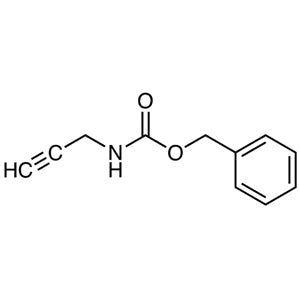
N-Carbobenzoxypropargylamine TCI B5958
Regular price Rp 4.902.450,00Regular priceRp 3.444.000,00Sale price Rp 4.902.450,00 -
3-Phenyl-2-propynenitrile TCI P2333
Regular price Rp 3.419.850,00Regular priceRp 2.406.600,00Sale price Rp 3.419.850,00 -
Nonanenitrile TCI P0020
Regular price Rp 1.801.800,00Regular priceRp 1.275.750,00Sale price Rp 1.801.800,00 -
Octanenitrile TCI O0221
Regular price From Rp 1.881.600,00Regular priceRp 1.331.400,00Sale price From Rp 1.881.600,00 -
2-Methyl-3-butenenitrile TCI M0840
Regular price From Rp 848.400,00Regular priceRp 609.000,00Sale price From Rp 848.400,00 -
2-Methyl-2-butenenitrile TCI M0839
Regular price From Rp 822.150,00Regular priceRp 590.100,00Sale price From Rp 822.150,00 -
5-Hexenenitrile TCI H0836
Regular price From Rp 3.260.250,00Regular priceRp 2.295.300,00Sale price From Rp 3.260.250,00