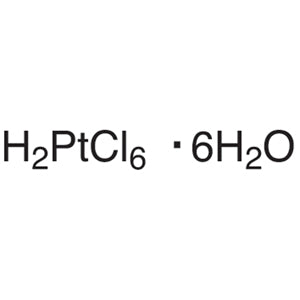
Hydrogen Hexachloroplatinate(IV) Hexahydrate, more commonly known as chloroplatinic acid or hexachloroplatinic acid, is the most widely used source of soluble platinum in the laboratory. The compound is an anionic complex in which six chloride ligands surround a tetravalent platinum centre, supplied in its hydrated form. Its role in the laboratory is fundamental: nearly every route toward a platinum catalyst, whether homogeneous or supported, and nearly every platinum plating process begins with this precursor because of how readily it dissolves and how readily it is reduced.
The reason this compound became the standard is its excellent solubility in water, in alcohols, and in several other polar solvents — something rarely found among platinum compounds. That property allows porous supports such as activated carbon, alumina, or silica to be impregnated evenly, after which the loading need only be reduced to give finely dispersed platinum nanoparticles. The complex also acts as a precursor to highly active hydrosilylation catalysts, and it converts readily into a wide range of other platinum complexes through ligand exchange. Its hygroscopic and deliquescent character is an inherent part of how the material behaves.
In Indonesian laboratories the compound is typically encountered wherever platinum chemistry is being set up from the ground up: catalyst preparation and screening work in university and institutional research groups, electrode and coating work, materials laboratories building supported metal systems, and synthetic groups that need an entry point into platinum coordination chemistry. Because it is the common starting point for all of these routes, it is usually kept as a general-purpose platinum stock rather than for one narrow procedure.
TCI brochures (PDF)
- Transition Metal Catalysts 2026-04-10 · p. 15
Related TCI products
- TCI A3667 16919-58-7 Ammonium Hexachloroplatinate(IV)
- TCI A3668 13820-41-2 Ammonium Tetrachloroplatinate(II)
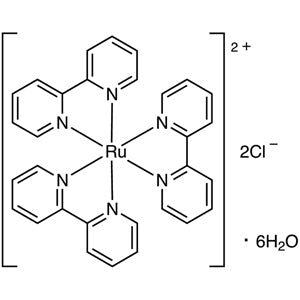
- TCI T1655 50525-27-4 Tris(2,2'-bipyridyl)ruthenium(II) Chloride Hexahydrate
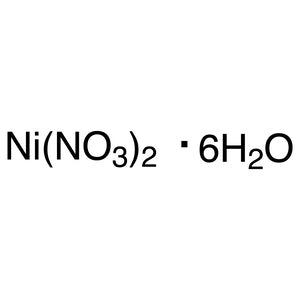
- TCI N1252 13478-00-7 Nickel(II) Nitrate Hexahydrate
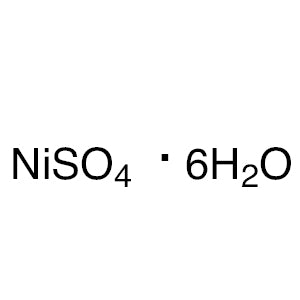
- TCI N1203 10101-97-0 Nickel(II) Sulfate Hexahydrate
- TCI N0851 7791-20-0 Nickel(II) Chloride Hexahydrate
- Supported platinum catalyst preparation — its high solubility in water and alcohols allows even impregnation of porous supports such as activated carbon, alumina, or silica before reduction.
- Platinum nanoparticle synthesis — the dissolved complex is easily reduced, giving finely dispersed platinum particles distributed throughout the support rather than concentrated at its surface.
- Hydrosilylation catalysis — the complex serves as a precursor to highly active hydrosilylation catalysts, a role for which soluble tetravalent platinum sources are conventionally chosen.
- Platinum plating and coating processes — nearly all platinum plating routes begin from this precursor because it dissolves readily and is straightforwardly reduced onto a surface.
- Synthesis of other platinum complexes — the six chloride ligands are readily displaced, so the compound converts through ligand exchange into a broad range of other platinum coordination compounds.
| Brand | TCI |
|---|---|
| CAS number | 18497-13-7 |
| Molecular formula | — |
| Purity | — |
| Category | Chemistry > Catalysis and Inorganic Chemistry > Transition Elements [Catalysis and Inorganic Chemistry] |
| Pack sizes | as listed on the product page; please enquire for currently available sizes |
| Physical form | hydrated (hexahydrate) platinum complex; hygroscopic and deliquescent |
| Storage | keep tightly closed and protected from atmospheric moisture |
- Product code: H1287
Because the material is hygroscopic and deliquescent, it will take up atmospheric moisture and may liquefy if left open, so containers should be kept tightly closed at all times and opened only briefly. Store in the original tightly sealed container, or in a well-sealed glass or otherwise chemically compatible vessel, kept in a dry location; a desiccator or dry cabinet is appropriate where available. Weighing is best carried out quickly to limit exposure to humid air, which is a practical concern in Indonesian laboratory conditions. Handle with standard laboratory precautions — gloves, eye protection, a laboratory coat, and work in a fume hood — and follow the supplier safety data sheet for this specific material before use.
—
Produk Terkait
-
AmmoniumHexachloroplatinate(IV) TCI A3667
Regular price Rp 5.672.100,00Regular price -
AmmoniumTetrachloroplatinate(II) TCI A3668
Regular price Rp 5.169.150,00Regular price -
Tris(2,2'-bipyridyl)ruthenium(II)ChlorideHexahydrate TCI T1655
Regular price From Rp 2.782.500,00Regular price -
Nickel(II)NitrateHexahydrate TCI N1252
Regular price From Rp 610.050,00Regular price -
Nickel(II)SulfateHexahydrate TCI N1203
Regular price From Rp 477.750,00Regular price -
Nickel(II)ChlorideHexahydrate TCI N0851
Regular price From Rp 505.050,00Regular price -
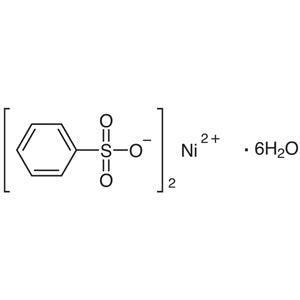
Nickel(II)BenzenesulfonateHexahydrate TCI B0034
Regular price Rp 1.988.700,00Regular price -
Samarium(III)ChlorideHexahydrate TCI A3706
Regular price From Rp 1.565.550,00Regular price