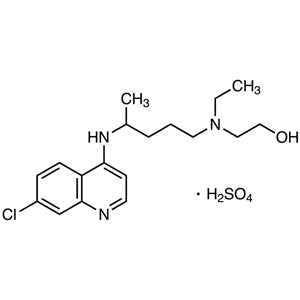
TCI H1306 Hydroxychloroquine Sulfate is the sulfate salt of hydroxychloroquine, a 4-aminoquinoline derivative widely recognised in antimalarial and immunomodulatory research. In the research laboratory setting, this material is used as an analytical reference compound and as a reagent for biological assays, not as a preparation intended for human use. Researchers employ it to develop and validate analytical methods, to prepare standard solutions for liquid chromatography, and as a treatment compound in cell culture experiments that examine lysosomal and autophagy pathways.
The property that makes this compound a frequent choice is its character as a lipophilic weak base, able to cross membranes and accumulate inside acidic cellular compartments, particularly the lysosome. This accumulation raises lysosomal pH and inhibits the fusion of autophagosomes with lysosomes, which is why the compound has become a standard pharmacological tool for blocking the late stage of autophagy in in vitro experiments. The sulfate salt form also provides substantially better water solubility than the free base, so stock solutions are easily prepared in aqueous media and sterile filtered without requiring additional organic solvents.
In Indonesian laboratories, this material is typically found in university research groups, pharmaceutical analysis laboratories, and cell biology facilities. It supports work on analytical method development, reference standard preparation for chromatographic quantification, and mechanistic studies of autophagy in cultured cells. Because the aqueous stock is straightforward to prepare, it fits routine laboratory workflows where organic solvent handling is limited and where consistent, reproducible treatment conditions are required across experimental replicates.
TCI brochures (PDF)
- Antiviral Agents Targeting RNA-Dependent RNA Polymerase (RdRp) 2025-11-25 · p. 1
- Anti-Rheumatoid Arthritis Ingredients 2025-01-29 · p. 1
- Immunology Research Reagents 2026-06-03 · p. 7
- Antimicrobials and Antitumor Agents for Research and Experimental Use 2025-04-24 · p. 10
- Pharmaceutical Ingredients for Research and Experimental Use 2026-03-09 · p. 11
- Reagents for Biological Research 2025-03-11 · p. 46
- Analytical method development and validation, where the compound serves as a well-defined reference material for establishing specificity, linearity, and reproducibility in quantitative procedures.
- Liquid chromatography standard solution preparation, in which its good aqueous solubility allows accurate standard series to be made without additional organic solvents complicating the mobile phase.
- Autophagy flux studies in cultured cells, using its established ability to block the late stage of autophagy by preventing autophagosome and lysosome fusion.
- Lysosomal pathway research, exploiting its accumulation in acidic compartments and the resulting rise in lysosomal pH as a controlled experimental perturbation of organelle function.
- Cell culture treatment experiments, where sterile filtered aqueous stock solutions can be dosed directly into media as a standard pharmacological tool compound across replicate conditions.
| Brand | TCI |
|---|---|
| CAS number | 747-36-4 |
| Molecular formula | — |
| Purity | — |
| Category | Life Science > Biochemicals and Reagents > Antibiotics |
| Pack sizes | available in standard TCI research catalogue pack sizes; please confirm the size required when ordering |
| Physical form | solid sulfate salt, soluble in aqueous media |
| Storage | store according to the manufacturer's stated conditions on the container label |
Store the container tightly closed in a cool, dry place away from direct light and moisture, following the storage conditions stated on the manufacturer's label. Keep the material in its original container or in a clean, well-sealed, chemically compatible vessel, and label any prepared stock solutions clearly with the concentration and preparation date. Handle the solid in a fume hood or with adequate ventilation, wearing a laboratory coat, gloves, and eye protection, and avoid raising dust during weighing. Prepared aqueous stocks should be sterile filtered before use in cell culture. This material is for laboratory research use only and not for human use; dispose of residues and contaminated consumables in accordance with the institution's chemical waste procedures.
—
Product Categories
- Biochemicals and ReagentsAntibioticsAntibiotics (by Application)
- Biochemicals and ReagentsPharmaceutical Research Reagents (for Experimental Use)Antiparasitic Ingredients, Antiprotozoal Ingredients, Antihelminthic Ingredients (for Research and Experimental Use)
- Biochemicals and ReagentsPharmaceutical Research Reagents (for Experimental Use)Anti-inflammatory Ingredients (for Research and Experimental Use)
- Biochemicals and ReagentsPharmaceutical Research Reagents (for Experimental Use)Anti-rheumatoid Arthritis Ingredients (for Research and Experimental Use)
- Biochemicals and Reagents
- MicrobiologyAntibioticsAntibiotics (by Application)
- Pharmaceutical Development and Drug Discovery ResearchPharmaceutical Research Reagents (for Experimental Use)Antiparasitic Ingredients, Antiprotozoal Ingredients, Antihelminthic Ingredients (for Research and Experimental Use)
- Pharmaceutical Development and Drug Discovery ResearchPharmaceutical Research Reagents (for Experimental Use)Anti-inflammatory Ingredients (for Research and Experimental Use)
- Pharmaceutical Development and Drug Discovery ResearchPharmaceutical Research Reagents (for Experimental Use)Anti-rheumatoid Arthritis Ingredients (for Research and Experimental Use)
- Pharmaceutical Development and Drug Discovery ResearchAntibioticsAntibiotics (by Application)
Produk Terkait
-
Chloroquine TCI C3730
Regular price From Rp 1.351.350,00Regular priceRp 960.750,00Sale price From Rp 1.351.350,00 -
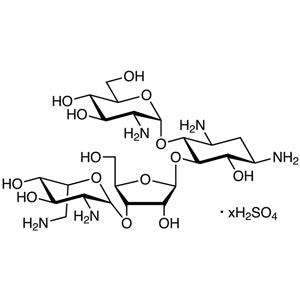
ParomomycinSulfate TCI P2092
Regular price From Rp 1.087.800,00Regular priceRp 775.950,00Sale price From Rp 1.087.800,00 -
ChloroquineDiphosphate TCI C2301
Regular price From Rp 1.538.250,00Regular priceRp 1.090.950,00Sale price From Rp 1.538.250,00 -
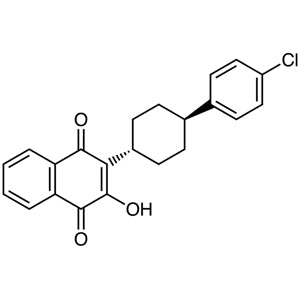
Atovaquone TCI A2545
Regular price From Rp 1.988.700,00Regular priceRp 1.405.950,00Sale price From Rp 1.988.700,00 -
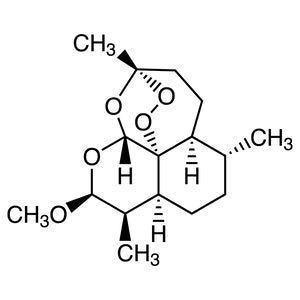
Artemether TCI A2190
Regular price From Rp 1.801.800,00Regular priceRp 1.275.750,00Sale price From Rp 1.801.800,00 -
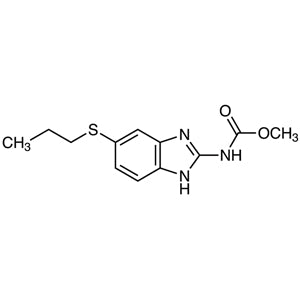
Albendazole TCI A1943
Regular price From Rp 980.700,00Regular priceRp 701.400,00Sale price From Rp 980.700,00 -
PentamidineIsethionate TCI P3098
Regular price Rp 3.683.400,00Regular priceRp 2.591.400,00Sale price Rp 3.683.400,00 -
Pyrimethamine TCI P2037
Regular price From Rp 955.500,00Regular priceRp 683.550,00Sale price From Rp 955.500,00