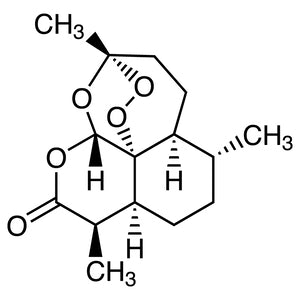
Artemether is a chemical compound widely used in laboratory research related to antibiotics and bioactive substances. As a derivative of artemisinin, it is known for its potent antimalarial activity and is frequently employed in pharmacological studies and drug development. This compound plays a crucial role in laboratories by enabling researchers to test the effectiveness of specific substances against various pathogens, particularly in the fields of public health and pharmacy. Its application extends to the investigation of how active compounds interact with target cells, contributing to the understanding of therapeutic mechanisms.
Artemether is valued for its chemical stability and solubility in organic solvents such as ethyl acetate and chloroform. These properties make it highly suitable for use in various analytical methods, including chromatography and spectroscopy. Additionally, its resistance to certain environmental conditions simplifies long-term storage and handling. The compound is non-toxic and safe for use in research settings, making it a preferred choice for scientists seeking reliable and consistent results.
In Indonesian laboratories, Artemether is commonly used in public health research and pharmaceutical development. Its role in studying antimalarial compounds and evaluating drug efficacy aligns with the country's focus on improving healthcare outcomes. Researchers in Indonesia rely on Artemether to support studies aimed at combating infectious diseases and developing new therapeutic approaches.
TCI brochures (PDF)
- Terpenes 2025-09-22 · p. 7
- Antimicrobials and Antitumor Agents for Research and Experimental Use 2025-04-24 · p. 10
- Pharmaceutical Ingredients for Research and Experimental Use 2026-03-09 · p. 10
- Antimalarial Drug Development: Artemether is used to evaluate the efficacy of antimalarial compounds against Plasmodium species, supporting the development of new treatments.
- Pharmacological Research: It is employed in studies to understand the mechanism of action of bioactive compounds on target cells and their therapeutic potential.
- Biochemical Analysis: Due to its solubility in organic solvents, Artemether is suitable for use in chromatographic and spectroscopic techniques to analyze compound purity and interactions.
- Public Health Studies: It supports research on infectious diseases, particularly in the context of malaria, aiding in the formulation of effective public health strategies.
- Drug Formulation Testing: Artemether is used to assess the stability and compatibility of compounds in different formulations, aiding in the development of pharmaceutical products.
| Brand | TCI |
|---|---|
| CAS number | 71963-77-4 |
| Molecular formula | — |
| Purity | — |
| Category | Life Science > Biochemicals and Reagents > Antibiotics |
| Pack sizes | Available in various quantities as per standard laboratory supply |
| Physical form | Solid |
| Storage | Store in a cool, dry place away from light |
Artemether should be stored in a cool, dry place, away from direct sunlight and moisture. It is recommended to keep it in a sealed container to prevent exposure to air and humidity. Due to its stability, it does not require refrigeration but should be protected from extreme temperature fluctuations. When handling, it is advisable to use appropriate personal protective equipment to ensure safety. Its non-toxic nature makes it safe for routine laboratory use, but standard laboratory precautions should still be followed to maintain a safe working environment.
—
Product Categories
- Biochemicals and ReagentsAntibioticsAntibiotics (by Application)
- Biochemicals and ReagentsPharmaceutical Research Reagents (for Experimental Use)Antiparasitic Ingredients, Antiprotozoal Ingredients, Antihelminthic Ingredients (for Research and Experimental Use)
- Biochemicals and Reagents
- Biochemicals and ReagentsTerpenesSesquiterpenes
- MicrobiologyAntibioticsAntibiotics (by Application)
- Pharmaceutical Development and Drug Discovery ResearchPharmaceutical Research Reagents (for Experimental Use)Antiparasitic Ingredients, Antiprotozoal Ingredients, Antihelminthic Ingredients (for Research and Experimental Use)
- Pharmaceutical Development and Drug Discovery ResearchAntibioticsAntibiotics (by Application)
Produk Terkait
-
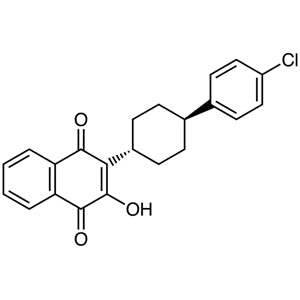
Atovaquone TCI A2545
Regular price From Rp 1.988.700,00Regular priceRp 1.405.950,00Sale price From Rp 1.988.700,00 -
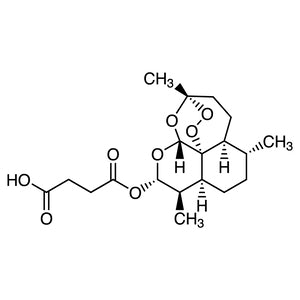
Artesunate TCI A2191
Regular price From Rp 1.405.950,00Regular priceRp 998.550,00Sale price From Rp 1.405.950,00 -
Artemisinin TCI A2118
Regular price From Rp 1.192.800,00Regular priceRp 849.450,00Sale price From Rp 1.192.800,00 -
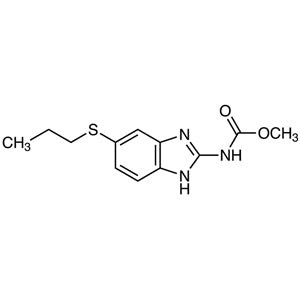
Albendazole TCI A1943
Regular price From Rp 980.700,00Regular priceRp 701.400,00Sale price From Rp 980.700,00 -
PentamidineIsethionate TCI P3098
Regular price Rp 3.683.400,00Regular priceRp 2.591.400,00Sale price Rp 3.683.400,00 -
Pyrimethamine TCI P2037
Regular price From Rp 955.500,00Regular priceRp 683.550,00Sale price From Rp 955.500,00 -
PrimaquineDiphosphate TCI P1989
Regular price From Rp 1.033.200,00Regular priceRp 738.150,00Sale price From Rp 1.033.200,00 -
MefloquineHydrochloride TCI M2313
Regular price Rp 3.498.600,00Regular priceRp 2.462.250,00Sale price Rp 3.498.600,00