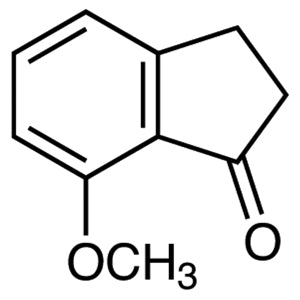
TCI H1310 6-Hydroxy-1-indanone is a bicyclic compound built on the indanone framework, in which a benzene ring is fused to a cyclopentanone ring, carrying a hydroxyl group at the 6-position. It belongs to the class of non-heterocyclic building blocks that are widely used in organic synthesis and medicinal chemistry, largely because the indanone skeleton is a recurring structural motif across a broad range of bioactive molecules and functional materials. In the laboratory, this material serves as a starting point for constructing larger molecules through modification at the carbonyl group, the phenolic group, or the position alpha to the carbonyl.
The property that makes this compound attractive is the availability of three complementary modes of reactivity within a single compact framework. The ketone group on the five-membered ring is electrophilic and readily undergoes aldol condensation, Knoevenagel reaction, reduction, and reductive amination, while the position alpha to the carbonyl is easily deprotonated for directed alkylation. The phenolic hydroxyl group on the aromatic ring can be alkylated or acylated to tune solubility, and at the same time it activates the ring toward electrophilic substitution at specific positions. The rigidity of the indanone skeleton further contributes to the defined geometry of the products derived from it.
In Indonesian laboratories, this building block is typically used in university research groups, organic synthesis laboratories, and medicinal chemistry programmes where multi-step routes are assembled from well-defined intermediates. It is generally handled on a bench scale for exploratory reactions, route scouting, and the preparation of analogue series, with the compact pack format of a specialty reagent suiting projects that consume modest quantities per experiment while requiring consistent, reliably documented starting material.
- Organic synthesis intermediate: the indanone framework acts as a starting point for building larger molecules, with modification possible at the carbonyl group, the phenolic group, or the alpha position.
- Medicinal chemistry research: the indanone skeleton is a recurring structural motif in bioactive molecules, making this compound a practical entry point for preparing analogue series.
- Aldol and Knoevenagel condensation chemistry: the electrophilic ketone on the five-membered ring readily undergoes these condensations, giving access to extended conjugated frameworks from a compact precursor.
- Directed alkylation studies: the position alpha to the carbonyl is easily deprotonated, allowing controlled introduction of substituents onto the cyclopentanone ring under standard enolate conditions.
- Functional materials preparation: the phenolic hydroxyl can be alkylated or acylated to tune solubility, while the rigid indanone skeleton supports defined molecular geometry in the resulting structures.
| Brand | TCI |
|---|---|
| CAS number | 62803-47-8 |
| Molecular formula | — |
| Purity | — |
| Category | Chemistry > Building Blocks > Non-Heterocyclic Building Blocks |
| Pack sizes | available in standard TCI research-scale pack sizes; please refer to the ordering information for currently listed options. |
| Physical form | — |
| Storage | store according to the conditions stated on the manufacturer's label and safety data sheet. |
- Chemical name: 6-Hydroxy-1-indanone
Store this product in a tightly closed original container, kept in a cool, dry, and well-ventilated place away from direct sunlight, heat sources, and incompatible materials. Follow the storage conditions specified on the manufacturer's label and safety data sheet, as these take precedence over general guidance. Handle the compound in a fume hood using appropriate personal protective equipment, including safety glasses, chemical-resistant gloves, and a laboratory coat. Avoid generating dust, and avoid contact with skin, eyes, and clothing. Reseal containers immediately after weighing to limit exposure to moisture and air, label any secondary containers clearly, and collect chemical waste in accordance with institutional laboratory waste procedures.
—
Produk Terkait
-
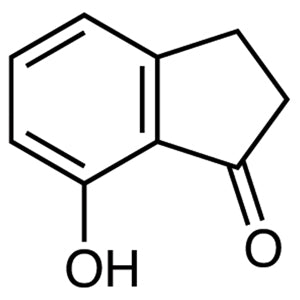
7-Hydroxy-1-indanone TCI H1526
Regular price Rp 4.188.450,00Regular price -
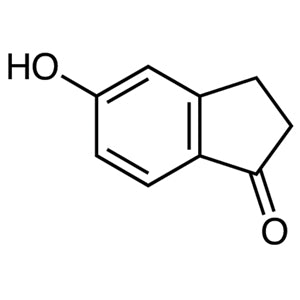
5-Hydroxy-1-indanone TCI H1051
Regular price From Rp 2.677.500,00Regular price -
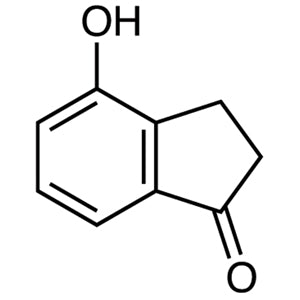
4-Hydroxy-1-indanone TCI H0723
Regular price From Rp 7.871.850,00Regular price -
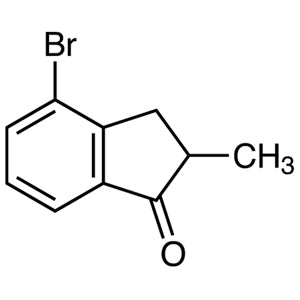
4-Bromo-2-methyl-1-indanone TCI B5096
Regular price From Rp 1.670.550,00Regular price -
4-Bromo-1-indanone TCI B3801
Regular price From Rp 769.650,00Regular price -
6-Bromo-1-indanone TCI B3711
Regular price From Rp 1.510.950,00Regular price -
5-Bromo-1-indanone TCI B2342
Regular price From Rp 743.400,00Regular price -
7-Methoxy-1-indanone TCI M3126
Regular price From Rp 1.458.450,00Regular price