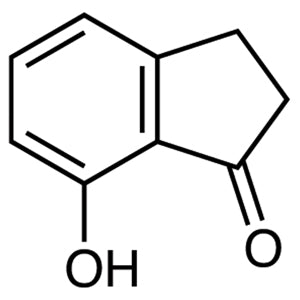
7-Hydroxy-1-indanone is a chemical compound widely used as a building block in the synthesis of complex molecules. It belongs to the category of non-heterocyclic building blocks and plays a crucial role in organic chemistry research. Its structure consists of an indan ring with a hydroxyl group at the 7-position, making it a versatile intermediate in various chemical reactions. This compound is particularly valuable for its ability to participate in a range of synthetic pathways, including oxidation, reduction, and substitution reactions. Its presence in laboratory settings allows chemists to develop new compounds with tailored properties for diverse applications.
The compound is known for its chemical stability and reactivity under controlled conditions. It dissolves well in organic solvents such as ethyl acetate and acetone, which enhances its utility in laboratory experiments. The simplicity of its molecular structure allows for easy modification, making it a preferred choice for synthetic chemists. Its compatibility with a wide range of reaction conditions and its availability in solid form further contribute to its practicality in laboratory environments. These properties make it an essential component in the toolkit of any organic chemistry laboratory.
In Indonesian laboratories, 7-Hydroxy-1-indanone is extensively used in chemical research, particularly in the field of organic synthesis. It is commonly employed in academic and industrial settings to develop new compounds with applications in pharmaceutical and material sciences. Its widespread use reflects its importance in advancing chemical research and innovation in Indonesia.
- Organic synthesis is a primary application where 7-Hydroxy-1-indanone is used due to its ability to serve as a versatile building block in the creation of complex molecules.
- Pharmaceutical research benefits from this compound as it can be modified to produce various drug candidates with specific therapeutic properties.
- Material science applications leverage its chemical properties to develop new polymers and functional materials with enhanced characteristics.
- Analytical chemistry utilizes this compound as a standard for calibration and as a reference material in chromatographic and spectroscopic analyses.
- Industrial chemical processes incorporate it as an intermediate in the production of specialty chemicals and fine chemicals.
| Brand | TCI |
|---|---|
| CAS number | 6968-35-0 |
| Molecular formula | — |
| Purity | — |
| Category | Chemistry > Building Blocks > Non-Heterocyclic Building Blocks |
| Pack sizes | Available in various quantities as per supplier specifications |
| Physical form | Solid |
| Storage | Store in a cool, dry place away from direct sunlight |
7-Hydroxy-1-indanone should be stored in a cool, dry place, away from direct sunlight and sources of heat. It is recommended to use airtight containers to prevent moisture absorption and contamination. The compound is generally stable under normal laboratory conditions but should be handled with care to avoid exposure to incompatible substances. Proper ventilation should be maintained when working with this material to ensure a safe laboratory environment. Due to its chemical reactivity, it is advisable to follow standard laboratory safety protocols when handling and using this compound.
—
Produk Terkait
-
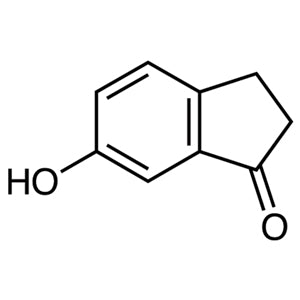
6-Hydroxy-1-indanone TCI H1310
Regular price From Rp 1.326.150,00Regular price -
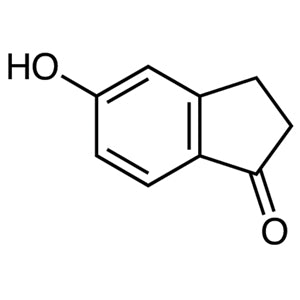
5-Hydroxy-1-indanone TCI H1051
Regular price From Rp 2.677.500,00Regular price -
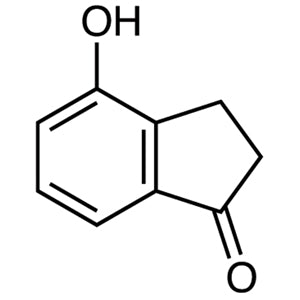
4-Hydroxy-1-indanone TCI H0723
Regular price From Rp 7.871.850,00Regular price -
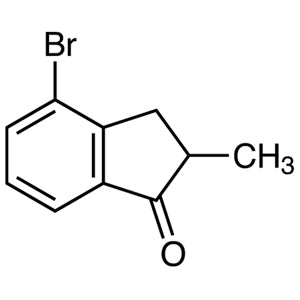
4-Bromo-2-methyl-1-indanone TCI B5096
Regular price From Rp 1.670.550,00Regular price -
4-Bromo-1-indanone TCI B3801
Regular price From Rp 769.650,00Regular price -
6-Bromo-1-indanone TCI B3711
Regular price From Rp 1.510.950,00Regular price -
5-Bromo-1-indanone TCI B2342
Regular price From Rp 743.400,00Regular price -
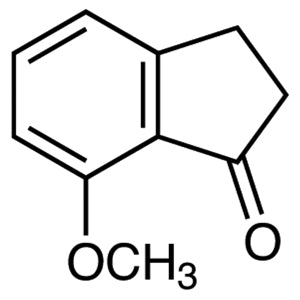
7-Methoxy-1-indanone TCI M3126
Regular price From Rp 1.458.450,00Regular price