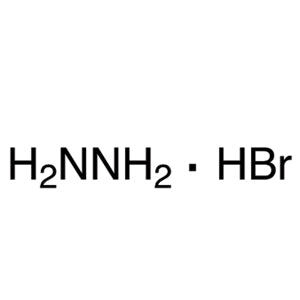
Hydrazine Monohydrobromide (ca 50% in Water) is a chemical compound widely used in laboratory settings for its versatile reactivity and utility in organic synthesis. This compound plays a crucial role in various chemical reactions, particularly in the formation of nitrogen-containing compounds. It is commonly employed as a reagent in the synthesis of organic molecules, where it facilitates functional group transformations and bond formation. Due to its unique chemical properties, it is a valuable tool for chemists working in both research and industrial applications.
The compound is known for its reactivity and solubility in water, making it an ideal choice for reactions that require aqueous conditions. Its ability to participate in multiple reaction pathways enhances its applicability across different synthetic strategies. Additionally, its moderate stability under controlled conditions allows for safe handling and storage, provided proper precautions are taken. These properties make it a preferred reagent for chemists seeking efficiency and reliability in their experimental processes.
In Indonesian laboratories, Hydrazine Monohydrobromide is commonly used in chemical research, especially in the fields of organic synthesis and analytical chemistry. Its availability and effectiveness in various reactions make it a popular choice among researchers. It is frequently used in the development of new compounds and in the analysis of complex chemical systems. Its role in both synthetic and analytical applications underscores its importance in the scientific community in Indonesia.
Related TCI products
- Organic synthesis of nitrogen-containing compounds due to its ability to form stable intermediates and facilitate functional group transformations.
- Catalytic reactions requiring a nucleophilic reagent that can participate in multiple reaction mechanisms.
- Preparation of hydrazine derivatives for use in pharmaceutical and agrochemical research.
- Analytical chemistry applications where aqueous reactivity and solubility are required for sample preparation.
- Reactions involving the replacement of functional groups in organic molecules through nucleophilic attack.
| Brand | TCI |
|---|---|
| CAS number | 13775-80-9 |
| Molecular formula | — |
| Purity | — |
| Category | Chemistry > Building Blocks > Non-Heterocyclic Building Blocks |
| Pack sizes | Available in various sizes as per supplier specifications |
| Physical form | Aqueous solution |
| Storage | Store in a cool, dark place away from incompatible substances |
Hydrazine Monohydrobromide should be stored in a cool, dark place, away from strong oxidizers and incompatible materials. It is recommended to use containers made of glass or polyethylene to prevent chemical reactions with the container material. Due to its reactivity, it should be handled in a well-ventilated area, preferably under a fume hood. Always wear appropriate personal protective equipment, including gloves, goggles, and a lab coat, when working with this compound. Proper labeling and storage conditions are essential to ensure safety and maintain the integrity of the chemical.
—
Produk Terkait
-
HydrazineMonohydrobromide TCI H0173
Regular price From Rp 689.850,00Regular price -
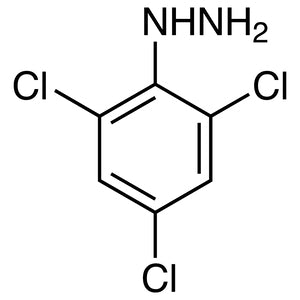
(2,4,6-Trichlorophenyl)hydrazine TCI T4137
Regular price Rp 2.359.350,00Regular price -
N,N'-Bis(dimethylaminomethylene)hydrazine TCI B3480
Regular price From Rp 3.367.350,00Regular price -
HydrazineL-(+)-Tartrate TCI H0175
Regular price Rp 2.359.350,00Regular price -
HydrazineMonohydrochloride TCI H0174
Regular price From Rp 769.650,00Regular price -
HydrazineDihydrochloride TCI H0170
Regular price Rp 505.050,00Regular price -
HydrazineDihydrobromide TCI H0169
Regular price From Rp 557.550,00Regular price -
Methyl2-(2-Chloro-1-iminoethyl)hydrazine-1-carboxylate TCI C3681
Regular price From Rp 1.298.850,00Regular price