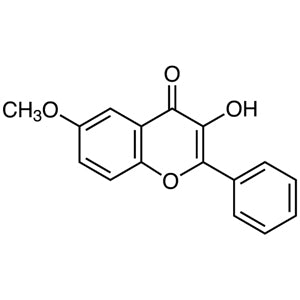
3-Hydroxy-6-methoxyflavone is an organic compound belonging to the flavonoid family, characterized by its aromatic and heterocyclic ring structure. This compound plays a crucial role in chemical laboratories as a building block for the synthesis of more complex molecules. Its versatility makes it an essential tool for researchers in various scientific disciplines. Due to its stable chemical properties and controlled reactivity, it is widely used in both organic and pharmaceutical research.
The compound’s molecular structure features two hydroxyl groups and one methoxy group, which contribute to its reactivity in substitution and oxidation reactions. These functional groups enable it to participate in a wide range of chemical transformations, making it a valuable reagent in synthetic pathways. Its solubility in organic solvents such as ethyl acetate and ethanol further enhances its utility in laboratory settings. This solubility facilitates purification and integration into experimental workflows.
In Indonesian laboratories, 3-Hydroxy-6-methoxyflavone is commonly used in organic chemistry, pharmacology, and biochemical research. Its applications span from drug development to the study of natural products. Researchers in Indonesia rely on this compound for its reliability and effectiveness in creating new chemical entities. Its consistent performance in various experimental conditions ensures its continued relevance in scientific investigations.
Related TCI products
- Organic synthesis applications benefit from 3-Hydroxy-6-methoxyflavone’s ability to participate in substitution and oxidation reactions, enabling the creation of complex molecular structures.
- Pharmacological research utilizes this compound for the development of new drugs, as its structural features can be modified to target specific biological pathways.
- Biochemical studies often incorporate this compound to investigate its interactions with enzymes and cellular components, aiding in the understanding of biological processes.
- Analytical chemistry laboratories use it as a standard reference material for the identification and quantification of flavonoid compounds in natural and synthetic samples.
- Environmental research may employ this compound to study the degradation of organic pollutants in different environmental matrices.
| Brand | TCI |
|---|---|
| CAS number | 93176-00-2 |
| Molecular formula | — |
| Purity | — |
| Category | Chemistry > Building Blocks > Heterocyclic Building Blocks |
| Pack sizes | Available in various quantities as per standard laboratory supply |
| Physical form | Solid |
| Storage | Store in a cool, dry place away from direct sunlight |
This compound should be stored in a cool, dry environment to maintain its chemical stability. It is recommended to keep it in a sealed container to prevent moisture absorption. Suitable storage containers include glass or high-density polyethylene vessels. Due to its organic nature, it should be handled in a well-ventilated area to minimize exposure. Avoid contact with strong oxidizing agents or reactive materials. Always use appropriate personal protective equipment when handling this compound to ensure laboratory safety.
—
Produk Terkait
-
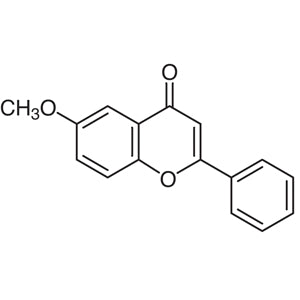
4'-Methoxyflavone TCI M2887
Regular price Rp 8.825.250,00Regular price -
6-Methoxyflavone TCI M1346
Regular price From Rp 1.220.100,00Regular price -
3',4'-Dimethoxyflavone TCI D4794
Regular price From Rp 1.881.600,00Regular price -
3-Hydroxy-4'-methoxyflavone TCI H1405
Regular price Rp 2.094.750,00Regular price -
4-Amino-6-hydroxy-2-methylpyrimidineHydrate TCI A1470
Regular price From Rp 743.400,00Regular price -
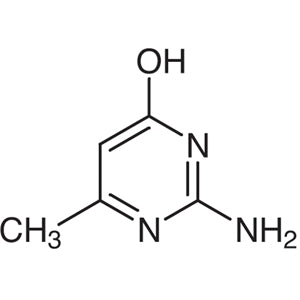
2-Amino-4-hydroxy-6-methylpyrimidine TCI A1204
Regular price From Rp 928.200,00Regular price -
4-Amino-6-hydroxy-2-mercaptopyrimidine TCI A0791
Regular price Rp 1.140.300,00Regular price -
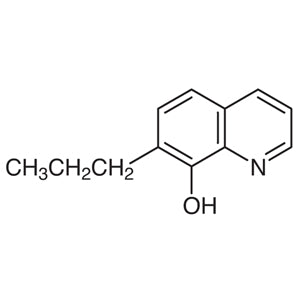
8-Hydroxy-7-propylquinoline TCI P0531
Regular price From Rp 4.877.250,00Regular price