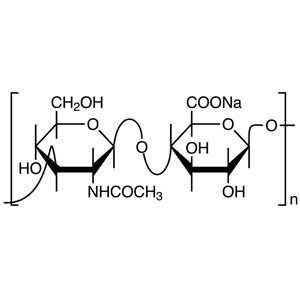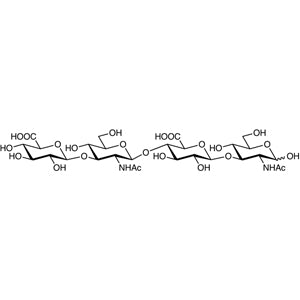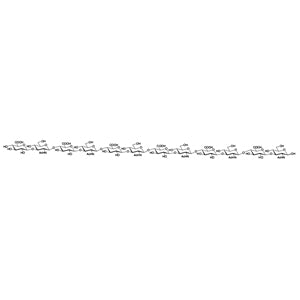
Hyaluronate Dodecasaccharide TCI H1666 is a specialized chemical compound used in laboratory settings for advanced research in glycoscience. This compound belongs to the broader category of glycoscience and is specifically classified under chemical biology. It is composed of a 12-unit polysaccharide chain, making it a valuable tool for studying the structural and functional properties of complex carbohydrates. Its unique molecular structure allows it to serve as a model compound in various biochemical and molecular biology experiments.
The compound is favored for its chemical stability and its ability to interact with a wide range of biological molecules, including proteins and lipids. These properties make it an essential component in experiments that require precise molecular interactions. Its high purity and consistent quality ensure reliable and reproducible results, which are crucial in scientific research. The specificity of its chemical interactions also makes it a preferred choice for studies involving molecular recognition and binding mechanisms.
In Indonesian laboratories, Hyaluronate Dodecasaccharide is widely used in research related to health, biomedicine, and material science. It is commonly found in academic and research institutions where scientists investigate the role of polysaccharides in biological systems. Its versatility and reliability make it a go-to material for researchers aiming to explore the molecular basis of various biological processes and develop new pharmaceutical applications.
TCI brochures (PDF)
- Sulfated Hyaluronic Acids 2023-06-08 · p. 2
- Anti-Glycosaminoglycan Antibodies 2023-07-28 · p. 2
Related TCI products
- TCI H1149 57282-62-9 Hyaluronate Decasaccharide
- TCI H1285 73603-40-4 Hyaluronate Hexasaccharide
- TCI H1148 57323-43-0 Hyaluronate Octasaccharide
- TCI H1808 31799-91-4 Potassium Hyaluronate from Bacteria
- TCI H0652 31799-91-4 Potassium Hyaluronate from Cockscomb
- TCI H0603 9067-32-7 Sodium Hyaluronate from Cockscomb
- Molecular biology research utilizes this compound to study polysaccharide structure and function, offering insights into carbohydrate-based interactions.
- Biomedical applications benefit from its ability to interact with proteins and lipids, aiding in drug development and therapeutic research.
- Glycoscience experiments rely on its stable chemical properties for accurate and reproducible results in carbohydrate analysis.
- Material science studies incorporate this compound to explore its potential in developing biocompatible materials and coatings.
- Health-related research employs it to investigate the role of complex carbohydrates in disease mechanisms and therapeutic interventions.
| Brand | TCI |
|---|---|
| CAS number | 71058-16-7 |
| Molecular formula | — |
| Purity | — |
| Category | Chemistry > Chemical Biology > Glycoscience |
| Pack sizes | Available in standard laboratory quantities as per supplier specifications |
| Physical form | Solid powder |
| Storage | Store in a cool, dry place away from moisture and direct sunlight |
This compound should be stored in a cool, dry environment to maintain its chemical stability and prevent degradation. It is recommended to use airtight containers to protect it from moisture and contaminants. Due to its chemical nature, it should be handled with appropriate personal protective equipment, such as gloves and safety goggles, to ensure laboratory safety. Avoid exposure to high temperatures and direct sunlight, as these can affect its structural integrity. Proper labeling of containers is essential to prevent mix-ups and ensure safe handling. Regular inspection of storage conditions is advised to maintain optimal quality and usability in research applications.
—
Product Categories
- GlycoscienceFunctional OligosaccharidesGlycosaminoglycan [Functional Oligosaccharides]
- GlycoscienceOligosaccharides [Glycoscience]Oligosaccharides (Other) [Glycoscience]
- GlycoscienceOligosaccharides by Component SugarGlucosamine [Oligosaccharides by Component Sugar]
- GlycoscienceOligosaccharides by Component SugarGlucuronic Acids [Oligosaccharides by Component Sugar]
Produk Terkait
-
HyaluronateDecasaccharide TCI H1149
Regular price Rp 6.520.500,00Regular price -
HyaluronateHexasaccharide TCI H1285
Regular price From Rp 3.100.650,00Regular price -
HyaluronateOctasaccharide TCI H1148
Regular price Rp 4.347.000,00Regular price -
PotassiumHyaluronatefromBacteria TCI H1808
Regular price Rp 7.234.500,00Regular price -
PotassiumHyaluronatefromCockscomb TCI H0652
Regular price Rp 9.406.950,00Regular price -
SodiumHyaluronatefromCockscomb TCI H0603
Regular price From Rp 2.359.350,00Regular price -
HyaluronateTetrasaccharide TCI H1284
Regular price From Rp 2.491.650,00Regular price -
ChitosanOligosaccharides TCI C2849
Regular price From Rp 2.650.200,00Regular price