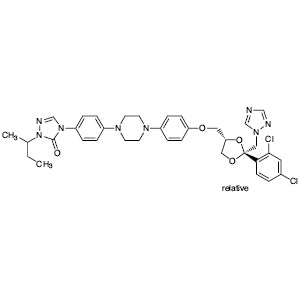
TCI H1873 is Haloprogin, a halogenated organic compound featuring an aromatic propargyl ether group, widely recognized as an antifungal active ingredient and supplied here strictly for research and laboratory experimental purposes. Within a research setting, this material serves as a reference compound in microbiological testing, as a comparative standard during the development of analytical methods for topical preparations, and as a subject of structure-activity relationship studies across the antifungal class of compounds. The availability of a pure material with clearly defined identity allows researchers to compare test results between laboratories with confidence.
The characteristics that make this compound particularly interesting are the combination of a chlorinated aromatic ring with an iodinated alkyne group, an arrangement rarely encountered in ordinary reagent inventories and one that imparts distinctive physicochemical behaviour. This includes a relatively large molecular weight and a lipophilic character that supports penetration in topical formulations. The presence of heavy halogen atoms also produces a characteristic isotope pattern in mass spectrometry, which makes compound identification considerably more convincing and reduces ambiguity when confirming analyte identity in complex sample matrices.
In Indonesian laboratories, Haloprogin is typically encountered in pharmaceutical research groups, university chemistry and pharmacy departments, and analytical method development units working on topical dosage forms. Because the compound is more soluble in organic solvents than in water, the preparation of test solutions generally begins with a suitable organic solvent before any further dilution. This behaviour should be accounted for when designing experimental protocols so that data obtained from testing remains genuinely reproducible across different work sessions and different operators.
- Microbiological reference testing: the compound serves as a defined reference material in antifungal susceptibility work, giving laboratories a consistent benchmark against which experimental results can be judged.
- Analytical method development: it acts as a comparative standard when developing and validating analytical procedures for topical preparations, supporting accurate quantification and confirmation of the target analyte.
- Structure-activity relationship studies: the unusual halogenation pattern makes it a valuable subject for investigating how molecular architecture influences activity within the antifungal class of compounds.
- Mass spectrometric identification work: the heavy halogen atoms generate a characteristic isotope pattern, which allows researchers to confirm compound identity with a much higher degree of confidence.
- Inter-laboratory comparison studies: a pure material of clearly established identity enables meaningful comparison of test outcomes between laboratories and helps verify that reported data is truly reproducible.
| Brand | TCI |
|---|---|
| CAS number | 777-11-7 |
| Molecular formula | — |
| Purity | — |
| Category | Life Science > Biochemicals and Reagents > Pharmaceutical Ingredients (for Research and Experimental Use) [USP Drug Classification] |
| Pack sizes | available in standard TCI research packaging; please confirm the size required when ordering |
| Physical form | — |
| Storage | — |
- Chemical identity: Haloprogin, a halogenated organic compound with an aromatic propargyl ether group
- Intended use: research and laboratory experimental purposes only, not for therapeutic or clinical application
Store the container in a cool, dry place away from direct sunlight and sources of heat, keeping it tightly closed in its original packaging to prevent contamination and moisture ingress. Chemically resistant containers with secure closures are appropriate for any working aliquots. Because the material is intended for research use only, handling should take place in a well-ventilated area or fume hood, with standard personal protective equipment including gloves, safety glasses, and a laboratory coat. Prepare test solutions using organic solvents, given the compound's limited water solubility, and follow institutional procedures for labelling, record keeping, and chemical waste disposal.
—
Product Categories
Produk Terkait
-
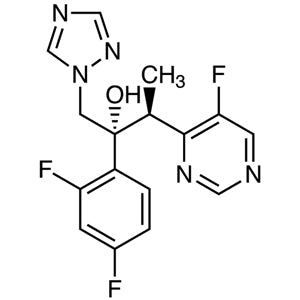
Voriconazole TCI V0116
Regular price From Rp 1.644.300,00Regular price -
ButoconazoleNitrate TCI B4801
Regular price Rp 2.411.850,00Regular price -
Posaconazole TCI P2477
Regular price From Rp 2.757.300,00Regular price -
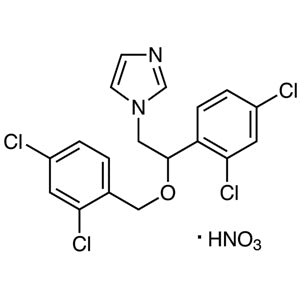
MiconazoleNitrate TCI M1769
Regular price From Rp 1.193.850,00Regular price -
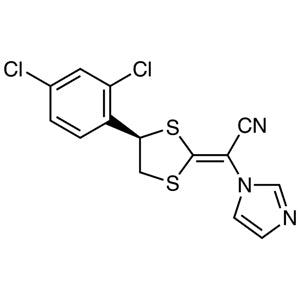
Luliconazole TCI L0306
Regular price From Rp 2.916.900,00Regular price -
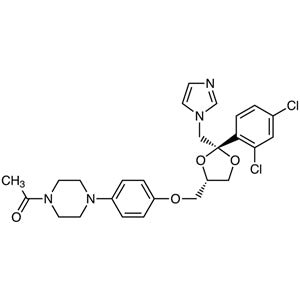
Ketoconazole TCI K0045
Regular price From Rp 1.829.100,00Regular price -
Itraconazole TCI I0732
Regular price From Rp 3.340.050,00Regular price -
(+)-Griseofulvin TCI G0384
Regular price From Rp 717.150,00Regular price