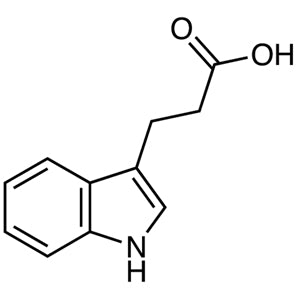
3-Indolepropionic Acid is a chemical compound widely used in laboratory experiments and scientific research. It plays a crucial role in the synthesis of heterocyclic compounds, which are essential in organic chemistry. This compound is a key building block for creating complex molecular structures, such as pharmaceuticals and industrial materials. Its unique molecular structure, consisting of an indole ring connected to a three-carbon chain, makes it a versatile tool in chemical synthesis.
The compound is valued for its chemical stability and reactivity under controlled conditions. It dissolves well in organic solvents like ethyl acetate and acetone, making it suitable for various chemical reactions. Its ability to undergo substitution, coupling, and redox reactions makes it a preferred choice for researchers. The active chemical properties of 3-Indolepropionic Acid allow it to be used in a wide range of applications, from basic research to applied science.
In Indonesian laboratories, 3-Indolepropionic Acid is commonly used by chemists, pharmacologists, and environmental scientists. It supports research in drug development, material science, and environmental analysis. Its availability and reliability make it a go-to compound for both academic and industrial research settings. The compound’s versatility and chemical properties ensure its continued use in diverse scientific fields.
TCI brochures (PDF)
- Synthetic Auxin and Selective Binding to Modified Receptor 2025-05-26 · p. 2
- Plant Hormones 2025-01-30 · p. 1
- Agrochemical Ingredients for Research and Experimental Use 2026-01-08 · p. 7
- Plant Research Reagents 2026-02-24 · p. 13
- Reagents for Biological Research 2025-03-11 · p. 55
- Pharmaceutical research utilizes 3-Indolepropionic Acid for synthesizing drug molecules due to its structural versatility and reactivity in organic reactions.
- Environmental analysis employs this compound to study the behavior of organic pollutants in various solvents and reaction conditions.
- Organic chemistry laboratories use it as a building block for creating complex heterocyclic structures, which are fundamental in synthetic chemistry.
- Biochemistry studies incorporate it to investigate its potential role in metabolic pathways and biological interactions.
- Industrial chemical processes benefit from its solubility and reactivity, making it a valuable component in the production of specialty chemicals.
| Brand | TCI |
|---|---|
| CAS number | 830-96-6 |
| Molecular formula | — |
| Purity | — |
| Category | Chemistry > Building Blocks > Heterocyclic Building Blocks |
| Pack sizes | Available in various quantities as per supplier specifications |
| Physical form | Solid (as per standard product description) |
| Storage | Store in a cool, dry place away from direct sunlight and moisture |
3-Indolepropionic Acid should be stored in a cool, dry environment to maintain its chemical stability. It is recommended to keep it in a sealed container to prevent exposure to moisture and air. The compound is typically stored in a well-ventilated laboratory area to ensure safe handling. When handling, it is advisable to use appropriate personal protective equipment such as gloves and safety goggles. Avoid direct contact with skin and eyes, and ensure proper disposal of any unused material. Regular monitoring of storage conditions helps maintain the integrity of the compound for long-term use in research applications.
—
Produk Terkait
-
N6-Benzyladenine TCI B1088
Regular price From Rp 903.000,00Regular price -
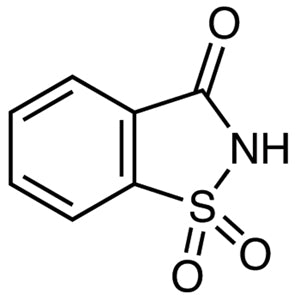
o-Sulfobenzimide TCI B0004
Regular price From Rp 530.250,00Regular price -
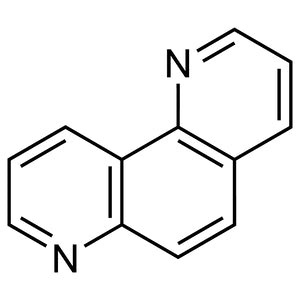
1,7-Phenanthroline TCI P3288
Regular price From Rp 1.565.550,00Regular price -
MethylIndole-3-acetate TCI M2605
Regular price From Rp 2.094.750,00Regular price -
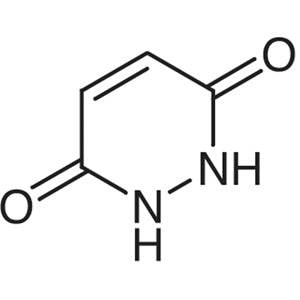
MaleicHydrazide TCI M0015
Regular price From Rp 530.250,00Regular price -
3-Indoleacetonitrile TCI I0024
Regular price Rp 769.650,00Regular price -
3-IndoleaceticAcid TCI I0022
Regular price From Rp 769.650,00Regular price -
Ethyl3-Indoleacetate TCI E0878
Regular price From Rp 2.041.200,00Regular price