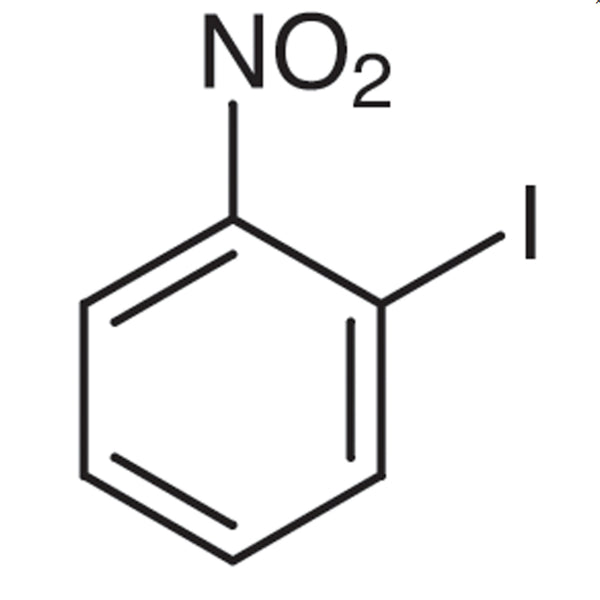
TCI I0062 1-Iodo-2-nitrobenzene is a halogenated aromatic compound carrying a nitro group in the ortho position relative to the iodine atom. As a non-heterocyclic building block, it is widely used as a starting point for constructing carbon–carbon and carbon–heteroatom bonds on an already activated benzene ring. The combination of two functional groups within a single molecule makes it particularly valuable: the iodine atom provides a reaction site for transition-metal-catalyzed cross-coupling, while the nitro group can be reduced to an amine in a subsequent step, opening a route toward nitrogen-containing heterocyclic frameworks.
The property that makes this compound a preferred choice is the ease with which the carbon–iodine bond undergoes oxidative addition at a catalytic metal center, far more readily than the carbon–bromine or carbon–chlorine bonds of comparable substrates. As a consequence, coupling reactions can proceed with lower catalyst loadings and at milder temperatures. The strongly electron-withdrawing nitro group in the ortho position further influences the reactivity of the ring and creates opportunities for downstream transformations, including cyclization toward indoles, carbazoles, and other fused ring systems once the nitro group has been converted.
In Indonesian laboratories, this building block is typically used in university and institutional synthetic organic chemistry groups, in medicinal chemistry programs exploring nitrogen heterocycles, and in research units developing functional aromatic materials. It is normally handled at gram to sub-gram scale on a bench equipped with a fume hood, ordered as a catalogue item for multi-step route development rather than bulk production, and stored alongside other halogenated aromatic intermediates in a shared reagent inventory.
- Transition-metal-catalyzed cross-coupling — the reactive carbon–iodine bond undergoes oxidative addition readily, allowing carbon–carbon bond formation at lower catalyst loading and milder temperature than bromo or chloro analogues.
- Synthesis of nitrogen heterocycles — reduction of the ortho nitro group to an amine after coupling gives an aminobiaryl or aminoaryl intermediate positioned for cyclization to indole and carbazole frameworks.
- Carbon–heteroatom bond formation — the activated iodoarene serves as an electrophilic partner for installing nitrogen, oxygen, or sulfur substituents onto the aromatic ring in metal-mediated substitution chemistry.
- Multi-step route development in medicinal chemistry — two orthogonal handles in one molecule let researchers sequence coupling and reduction steps, building complex scaffolds from a single, readily available aromatic starting material.
- Functional aromatic materials research — fused ring systems accessible from this intermediate are of interest in groups preparing conjugated and nitrogen-containing aromatic structures for materials-oriented investigations.
| Brand | TCI (Tokyo Chemical Industry) |
|---|---|
| CAS number | 609-73-4 |
| Molecular formula | — |
| Purity | — |
| Category | Chemistry > Building Blocks > Non-Heterocyclic Building Blocks |
| Pack sizes | available in standard TCI catalogue pack sizes; please confirm the currently listed options when ordering |
| Physical form | — |
| Storage | keep in a cool, dark place in a tightly closed container, following the manufacturer's stated storage conditions on the label and safety data sheet |
- Product code: I0062
Store the container tightly closed in a cool, dark, well-ventilated area away from heat, ignition sources, and strong oxidizing agents, and follow the storage conditions stated on the manufacturer's label and safety data sheet. Keep the material in its original supplier container, or in an equivalent chemically compatible, tightly sealed amber glass vessel, clearly labelled with the compound name and CAS number. Handle inside a fume hood and wear safety goggles, chemical-resistant gloves, and a laboratory coat, avoiding inhalation of dust and any contact with skin or eyes. As a nitroaromatic compound it should be kept away from reducing agents outside controlled reaction conditions. Consult the current safety data sheet before use, and collect residues and contaminated materials as halogenated organic chemical waste for disposal according to institutional procedures.
—
Produk Terkait
-
1-Bromo-2-chloro-4-nitrobenzene TCI B5348
Regular price From Rp 1.298.850,00Regular price -
1-Benzyloxy-4-nitrobenzene TCI B4706
Regular price Rp 5.300.400,00Regular price -
4-Bromo-1-chloro-2-nitrobenzene TCI B4374
Regular price From Rp 1.246.350,00Regular price -
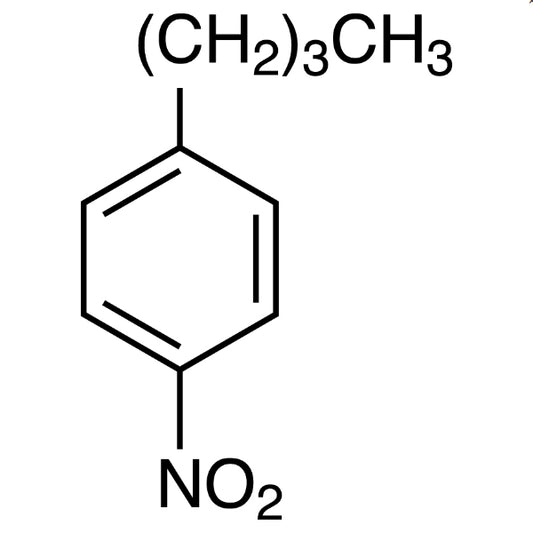
1-Butyl-4-nitrobenzene TCI B3092
Regular price From Rp 5.380.200,00Regular price -
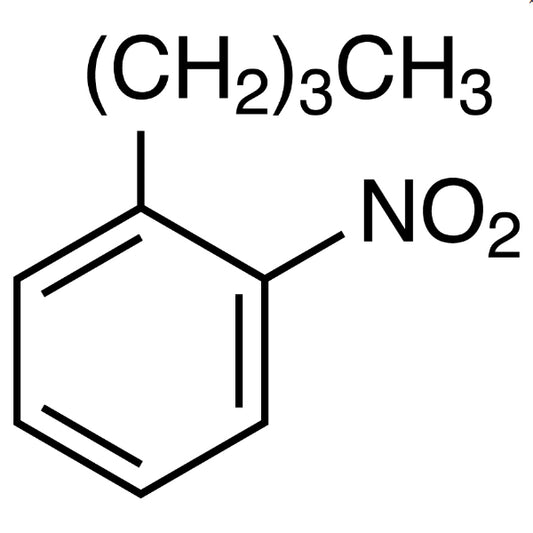
1-Butyl-2-nitrobenzene TCI B3091
Regular price From Rp 3.287.550,00Regular price -
1-Bromo-4-nitrobenzene TCI B0624
Regular price From Rp 1.908.900,00Regular price -
1-Bromo-3-nitrobenzene TCI B0623
Regular price From Rp 1.538.250,00Regular price -
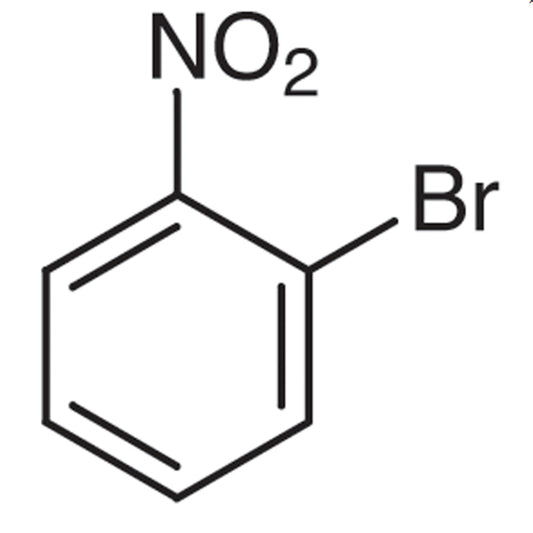
1-Bromo-2-nitrobenzene TCI B0622
Regular price From Rp 1.936.200,00Regular price