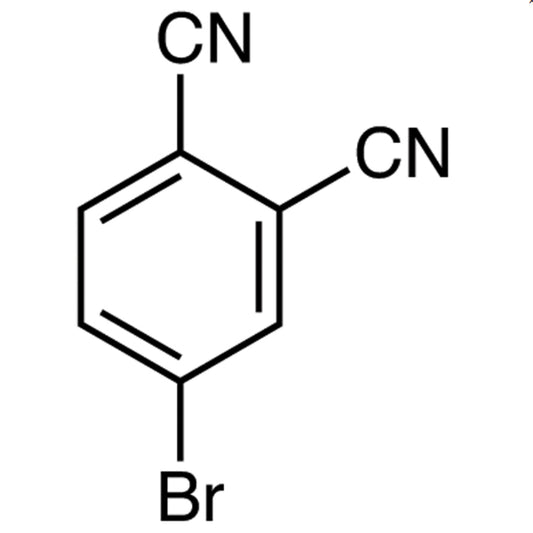
Isophthalonitrile (TCI I0158, CAS 626-17-5) is a chemical compound widely used in organic synthesis as a fundamental building block. It serves as a versatile reagent in laboratory settings, enabling the creation of complex organic molecules through various chemical reactions. Its nitrile functional group allows for nucleophilic and electrophilic reactions, making it a valuable tool in synthetic chemistry. This compound is particularly useful for the development of heterocyclic compounds and polymers, contributing to the advancement of chemical research in both academic and industrial environments.
The compound’s high reactivity and stability under specific conditions make it a preferred choice for researchers. Its ability to participate in a wide range of chemical transformations, such as condensation and substitution reactions, enhances its utility in synthetic pathways. Additionally, its high melting and boiling points allow it to be used in reactions requiring elevated temperatures. These properties ensure that Isophthalonitrile remains a reliable and effective reagent in diverse chemical applications.
In Indonesian laboratories, Isophthalonitrile is commonly used in research related to drug synthesis, polymer development, and the creation of other organic compounds. Its role in advancing chemical research is significant, as it supports the development of new materials and pharmaceuticals. As a key component in many research programs, it plays an essential part in the scientific community's efforts to innovate and explore new chemical frontiers.
- Organic synthesis is a primary application where Isophthalonitrile is used to create complex molecules through nucleophilic and electrophilic reactions.
- Drug development benefits from its reactivity, allowing for the synthesis of pharmaceutical compounds with specific functional groups.
- Polymer research utilizes its nitrile group to form stable and functional polymers with unique properties.
- Heterocyclic compound formation is enhanced by its ability to participate in ring-opening and condensation reactions.
- Material science applications involve its use in creating advanced materials with tailored chemical and physical properties.
| Brand | TCI |
|---|---|
| CAS number | 626-17-5 |
| Molecular formula | — |
| Purity | — |
| Category | Chemistry > Building Blocks > Non-Heterocyclic Building Blocks |
| Pack sizes | — |
| Physical form | — |
| Storage | Store in a cool, dry place away from moisture and direct sunlight. |
Isophthalonitrile should be stored in a cool, dry environment to maintain its chemical stability. It is recommended to keep it in a sealed container to prevent exposure to moisture and air, which could affect its reactivity. Due to its high reactivity, it should be handled with care, using appropriate personal protective equipment such as gloves and safety goggles. It is advisable to store it in a well-ventilated area to minimize any potential risks associated with its chemical nature. Avoid contact with incompatible materials and ensure proper disposal procedures are followed to comply with safety regulations. Regular monitoring of storage conditions is essential to ensure the compound remains suitable for use in laboratory applications.
—
Produk Terkait
-
Phthalonitrile TCI P0404
Regular price From Rp 505.050,00Regular price -
4-Bromophthalonitrile TCI B5509
Regular price From Rp 2.094.750,00Regular price -
4-Iodophthalonitrile TCI I1050
Regular price Rp 4.823.700,00Regular price -
4-Fluorophthalonitrile TCI F1169
Regular price From Rp 2.466.450,00Regular price -
4,5-Dichlorophthalonitrile TCI D2189
Regular price Rp 3.287.550,00Regular price -
4-Butoxyphthalonitrile TCI B1353
Regular price Rp 1.565.550,00Regular price -
Tetrachloroterephthalonitrile TCI T1058
Regular price From Rp 769.650,00Regular price -
Terephthalonitrile TCI T0016
Regular price From Rp 769.650,00Regular price