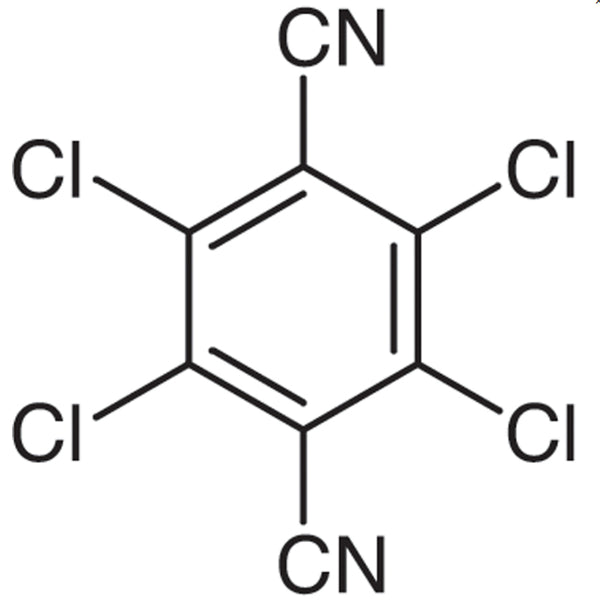
Tetrachloroterephthalonitrile (TCI T1058), with CAS number 1897-41-2, is a chemical compound widely used in laboratory settings as a building block for the synthesis of complex organic compounds. This compound is characterized by its molecular structure, which features two nitrile groups attached to a benzene ring. Its unique chemical structure makes it a versatile reagent in various synthetic pathways. In research and development, it serves as a foundational material for creating a wide range of chemical products, including heterocyclic compounds, polymers, and industrial chemicals.
The stability and controlled reactivity of TCI T1058 make it a preferred choice for chemists and researchers. Its chemical stability allows it to remain intact under a variety of reaction conditions without degrading easily. This property ensures consistent results in experiments, which is crucial for scientific reproducibility. Additionally, TCI T1058 is well-suited for substitution and coupling reactions, enabling the formation of more complex molecular structures. These characteristics contribute to its popularity among scientists working in both academic and industrial laboratories.
In Indonesian laboratories, TCI T1058 is commonly used in organic chemistry research, especially in higher education institutions and research organizations. It is an essential component of experimental setups aimed at developing new materials and chemical compounds. Its high purity and reliable quality make it a trusted resource for researchers seeking to advance their work in chemical synthesis and material science.
- Organic synthesis applications benefit from TCI T1058 due to its reactivity and structural versatility, enabling the creation of complex organic molecules.
- Polymer development often incorporates TCI T1058 as a building block, allowing for the formation of diverse polymer structures with specific functional groups.
- Heterocyclic compound synthesis relies on TCI T1058 for its ability to participate in substitution and coupling reactions, leading to the formation of ring-based structures.
- Industrial chemical production utilizes TCI T1058 as a stable and reliable reagent, contributing to the synthesis of various chemical intermediates.
- Research and development in material science frequently employs TCI T1058 to explore new chemical properties and applications in advanced materials.
| Brand | TCI |
|---|---|
| CAS number | 1897-41-2 |
| Molecular formula | — |
| Purity | — |
| Category | Chemistry > Building Blocks > Non-Heterocyclic Building Blocks |
| Pack sizes | Available in standard laboratory quantities |
| Physical form | Solid, crystalline appearance |
| Storage | Store in a cool, dry place away from moisture and direct sunlight |
Tetrachloroterephthalonitrile should be stored in a cool, dry environment to maintain its chemical stability. It is recommended to keep the compound in a tightly sealed container to prevent exposure to moisture and air. Due to its chemical nature, it should be handled in a well-ventilated laboratory setting. Avoid direct contact with skin and eyes, and use appropriate personal protective equipment when handling. The compound is generally stable under normal storage conditions, making it suitable for long-term use in research applications. Always ensure that storage areas are free from potential contaminants and follow standard laboratory safety protocols to ensure safe handling and usage.
—
Produk Terkait
-
Terephthalonitrile TCI T0016
Regular price From Rp 769.650,00Regular price -
Phthalonitrile TCI P0404
Regular price From Rp 505.050,00Regular price -
2,5-Dichloroterephthalonitrile TCI D1734
Regular price From Rp 5.009.550,00Regular price -
Isophthalonitrile TCI I0158
Regular price From Rp 530.250,00Regular price -
4-(2',6'-Dimethylphenoxy)phthalonitrile TCI D1983
Regular price From Rp 2.625.000,00Regular price -
4-Iodophthalonitrile TCI I1050
Regular price Rp 4.823.700,00Regular price -
TCI D2218 2,5-Dimethylterephthalonitrile
Regular price Rp 6.095.250,00Regular price -
4-Bromophthalonitrile TCI B5509
Regular price From Rp 2.094.750,00Regular price